
For a mother, or any housekeeper today, deciding what’s for lunch and dinner carries a new weight: Everything costs more.
For an employee or laborer waking at 4 a.m. to beat the rush, the “national energy emergency” isn’t just a headline or policy brief. It’s the daily struggle to stretch a budget just a little further.
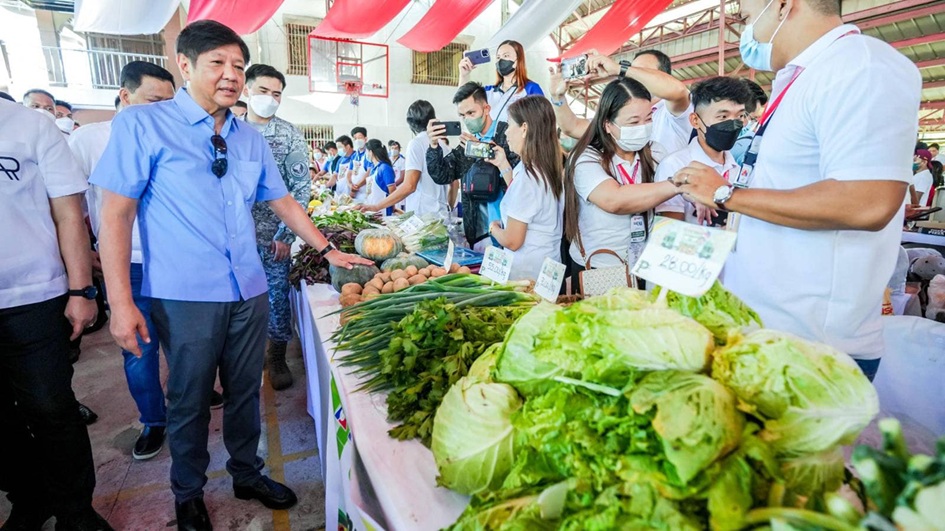
It lurks in grocery aisles, where prices keep rising despite assurances from the Department of Trade and Industry that basic goods would hold steady for 30 days. It strikes at night, when the threat of rotational brownouts turns a tropical evening into an endurance test.
While Congress moved swiftly to grant President Ferdinand Marcos Jr. emergency powers to address the country’s 98% dependence on imported fuel, a bitter truth remains: this is a crisis of choice, not just circumstance.
The sad truth is that we didn’t have to be here. While the government is rushing to fix things now, what we’re seeing are bandages on a wound that has been bleeding for years.
Some call it a “procrastination tax;” others term it as a “waiting tax,” the price we pay for the fact that our leaders failed to prepare when they had the chance.
For decades, the Philippines has relied heavily on imported refined fuels (diesel, gasoline, kerosene) from South Korea, Singapore, China and Malaysia, and crude oil largely from the Middle East, particularly Saudi Arabia, the United Arab Emirates and Iraq, with occasional shipments from Russia.
To understand today’s pain at the pump, we have to look back at years of missed opportunity. For over a decade, experts warned that the Malampaya gas field — once the crown jewel of our energy independence — was running dry. We were told to develop alternatives: solar, wind, more stable long-term sources.
What happened? Very little.
Plans were announced in speeches. Targets were drafted. Proposals were filed. But real progress stalled in red tape and inertia.
How many times did we hear presidents mentioning a litany of energy projects in their state of the nation addresses and other public speeches, as well as Congress leaders legislating measures to ease the country’s growing energy demands? We’ve lost count already.
Administration after administration played a game of musical chairs with energy policy, passing the burden along and hoping prices would stay low. Promises of cleaner energy were made. The revival of the Bataan Nuclear Power Plant was floated. Yet most of it remained stuck on paper.
Now, amid a conflict halfway across the world, one we had no part in, it is the mother or housekeeper who decides what to cut from the family meal, because fuel-driven price hikes have made nearly everything more expensive.
Too little, too late response
Recent government measures, such as fuel vouchers, cash subsidies, emergency declarations, may ease the pain today, but they don’t solve tomorrow’s problem.
These are stopgaps. The bill keeps growing because the root issue remains untouched. We are told to tighten our belts, but how much tighter can we go and still breathe?
Subsidies, while necessary, come at a cost. Every peso spent on aid is money diverted from classrooms, hospitals, or agricultural support.
This crisis, which the administration tries to downplay by insisting there is an adequate fuel supply for at least 30 days, acts like a daily tax on every Filipino. We are not just paying for fuel; we are paying for years of missed opportunity to build an energy system of our own.
When diesel prices rise, so does the cost of moving food. That burden reaches every household. A single truck delivering vegetables from La Trinidad to Metro Manila now reportedly costs as much as P40,000 — more than double the old P15,000.
Small business owners feel it sharply. For sari-sari stores and food stalls, rising costs of goods, fuel and electricity can make survival impossible.
Even transport is at risk. Drivers are cutting back, unable to sustain fuel costs. Some operators have already stopped deploying units after weeks of relentless price hikes.
This cannot go on.
Government must do more than distribute aid. It must lead to a serious, long-term plan to free us from dependence on foreign oil — investing in local, affordable energy and modernizing transport.
That means cutting bureaucratic red tape, curbing corruption, and making it easier for investors to build alternative energy sources.
Excuses are no longer enough. Accountability is overdue.
Filipinos are resilient. We always find ways to cope. But we shouldn’t have to keep surviving problems that could have been prevented.
We deserve leadership that plans ahead.
It’s time to hold leaders to the promises they made when they sought our votes. The cost of waiting is too high. And perhaps, from this hardship, we draw a lesson, painful as these may be: to choose better, and to reject the kind of governance that led us here.
The views in this column are those of the author and do not necessarily reflect the views of VERA Files.
This column also appeared in The Manila Times.