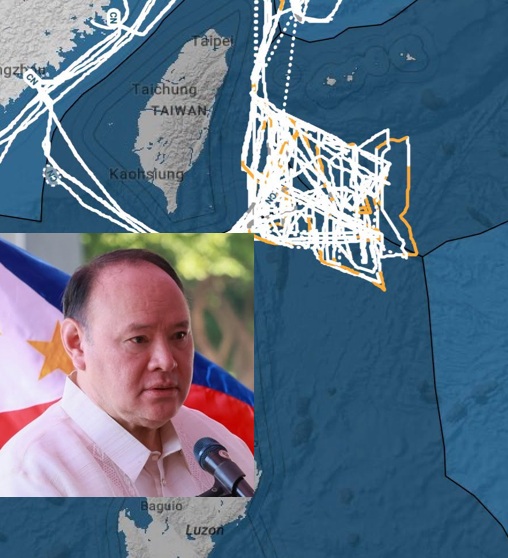

Chinese scholars claimed during a symposium two weeks ago in a university in Guangzhou that the Batanes Group of Islands is a natural geographic extension of Taiwan, and therefore a part of China’s territory. This claim triggered a frenzy of response from Manila, particularly among government officials, academics, and in the media. It is obviously a trial balloon launched by the Chinese Communist Party for its own ends.
The drivers for this ridiculous claim are fairly obvious. First is the talk about maritime boundary delimitation between the northern Philippines and the southern islands of Japan, following President Ferdinand Marcos Jr.’s Tokyo state visit last May. The limits of both countries’ Exclusive Economic Zone (EEZ) obviously impact Taiwan’s claimed waters, hence a concern for China as well. Second, China is wary of the growing defense and security cooperation between Manila and Tokyo. Marcos’s last visit resulted not only in initial discussions about delimitation, but also the signing of the information-sharing agreement and the transfer of five Abukuma-class destroyer escorts to the Philippine Navy (PN),
On the other hand, naval practitioners clearly understand the logic behind China’s recent expression of madness. Any Chinese plans to invade Taiwan would include seizure of the port of Kaohsiung located in the southern part of the island. But to do so, the People’s Liberation Army (PLA) Navy must have effective sea control of the Bashi Channel, a strategic sealane which is essential for maritime, connecting East Asia with the rest of the Pacific.
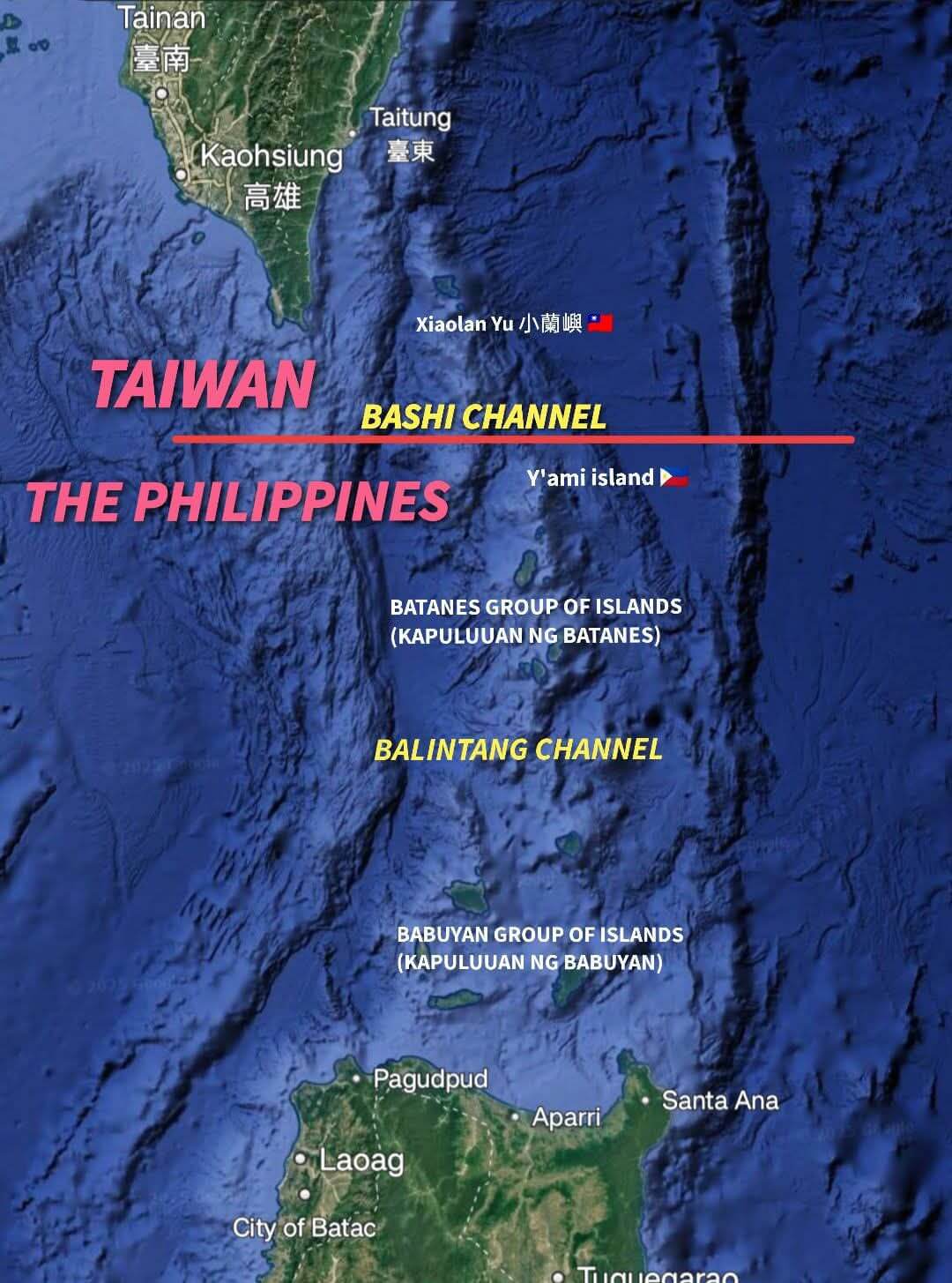
This can only prosper if they occupy specific objectives in the Batanes Group of Islands, such as airfields, seaports, elevated positions, and any local military or naval forces in the area are effectively suppressed. China’s game plan in Taiwan is disrupted should they fail, and they may need to rethink their entire strategy. On its own, the Bashi Channel is a decisive point in the strategic theater of operations. Either America or China needs to control this waterway to support its naval operations in the South China Sea and in the mid-Pacific Ocean.
However, the public should not be too alarmed over the Chinese claims over the northern part of the country. Unlike the government’s incoherent posture in the West Philippine Sea, the Armed Forces of the Philippines (AFP) has a more structured and disciplined approach to countering Chinese moves in the Batanes Group of Islands and with elements of a viable “denial strategy” in play.
Around 2001, the Philippine Navy was reviewing its maritime defense posture. This process eventually led to the formulation of its Active Archipelagic Defense Strategy (AADS). One approach it undertook was to reverse-engineer the Japanese invasion of the Philippines during WW2. It recognized that one of the vectors of attack was launched from Formosa (now Taiwan), during which Japanese forces seized key airfields in Batanes, Cagayan, Isabela, and Ilocos provinces. These facilities were used as staging points for Japanese airpower to dominate the Philippine skies. The review offered valuable lessons that remain valid to this day.
Fast forward to 2019, the Cagayan Economic Zone Authority (CEZA) and the Fong Zhi Enterprise Corporation of China signed a deal in Beijing for an industrial park and tourism complex in Fuga Island. The Philippine Navy was caught by surprise and learned of this development only through our mainstream media. This deal was a “red flag,” considering that the island sits astride the key waterways of the Luzon Strait and the Balintang Channel. A Chinese presence there provides a clear view of the maritime and naval traffic transiting between the South China Sea and the Pacific Ocean. Moreover, the nearby Barit Island hosts a private airfield. Another “red flag.” The PN raised a strong objection against the Fuga investment proposal, and the government relented by allowing for the establishment of a naval detachment on the island.
Historically, the PN’s presence in the northern part of Luzon was very limited. To cover the gaps, its reserve force development program was focused on recruiting Marine Corps reservists from the islands. However, in 2018, a Marine Battalion was transferred from Mindanao to a naval facility in Sta Ana, Cagayan. Later on, its deployment covered key islands of the Batanes and Cagayan provinces. In 2019, this included Fuga Island, following the furor over the controversial Chinese “smart city” project. Three years later, the 4th Marine Brigade was repositioned from the south to Burgos, Ilocos Norte.
In recent years, the AFP has also taken the cudgels in escalating its presence in the region. Over time, multilateral exercises such as BALIKATAN and other joint and bilateral undertakings, such as the Army’s SALAKNIB and the Marine Corps’ KAMANDAG. The year-round tempo of the exercises ensured a sustained presence of Philippine and allied troops in the north conducting training and related activities. From a diplomatic standpoint, the exercises served as a signaling tool conveying to China that the Philippines and the AFP are wary of its designs in the north, and that it has taken proactive measures against it.
From a capability development standpoint, the PN’s acquisition of the Brahmos anti-ship missile system (AShM) for the Coastal Defense Regiment (CDR) supports a sea denial strategy in the northern waters. Its maximum effective range can deal with Chinese large surface combatant vessels transiting the Luzon Strait. However, this is not enough. Recent conversations to acquire short-range versions of AShM batteries from America, Japan, or South Korea, or armed drones, would hopefully provide a more agile capability to defend the islands. The gaps in the kill-chain are another area requiring improvement. These matters address China’s use of hard power.
But the more insidious aspect of the CCP’s exercise of statecraft, the conduct of united front work activities, requires the immediate attention of the national government. The midnight deal over Fuga Island exemplified how investments are weaponized to take over important “real estate” of military value without firing a shot. At Grande and Chiquita Islands located at the mouth of Subic Bay, a similar project was being undertaken at the same time. The location served as a vantage point for observing the ingress of naval vessels into the former American base. This was made possible through cultivation of influence over local government officials, the proliferation of sister-city and sister-school arrangements, or the promise of jobs and opportunities from investments that later turned out to be toxic.
In summary, Chinese interest in the Batanes Group of Islands was expected. The AFP has adopted policies and programs to disrupt the CCP militarily, in collaboration with our US ally and other strategic partners. The recent efforts to strengthen defense cooperation with Japan also provide another “line of effort” to complement the country’s unilateral defense posture in the north. Wanting is an economic intervention that offers local governments and provinces business opportunities that can compete with weaponized Chinese investments. We need to accept that Batanes is the new frontline. It is better to harden our defense posture in the north now and deter China, rather than talking the problem to death and being forced to respond to an actual crisis in an avoidable future.
*Rear Admiral Rommel Jude Ong (ret.) is currently Professor of Praxis at Ateneo School of Government. An experienced naval officer specializing in strategic planning, operations, intelligence, and naval diplomacy, his last posting was as Vice Commander of the Philippine Navy until his compulsory retirement in September 2019.