
Allow me to share an experience at the Incheon International Airport in Seoul during a recent trip — one where my excitement to get a glimpse of the city and appreciate its culture turned into disappointment and embarrassment. The reason? I am Filipino.
In mid-March, I was informed that my flight to and from Almaty, Kazakhstan via Doha, Qatar had to be changed due to escalating tensions in the Middle East, which disrupted flight operations. I welcomed the rerouting via Incheon, not only for safety but also because I have long wanted to visit Korea.
A few days after my new tickets with Asiana Airlines were issued, the conference organizer in Almaty relayed a message from their travel agency: Unconfirmed information suggested Filipino citizens might require a transit visa, possibly due to specific rules for travelers departing from the Philippines.
We checked publicly available sources but found no such requirement. What we did find was that Filipinos could transit visa-free, provided they remained in the transit area for less than 24 hours and held a confirmed onward ticket to a third country.
I even found the airport’s complimentary sightseeing program for travelers with 4- to 24-hour layovers. It’s a guided tour of popular sites in Korea. With nearly 12 hours to spare, I had hoped to make the most of my time before flying back to Manila.
So, as soon as I reached Incheon and passed through the immigration check, I proceeded right away to the transit tour desk. It was past 8 a.m. The lady manning the desk said the tour may already be full, but I should go to the Asiana Airlines transit desk to be sure.
After about 15 minutes in line, I asked if I could join. The lady asked whether I had a valid US, Schengen, or Japan visa. I said none. She asked if I had a Korean e-visa. Again, none. Then she looked at my passport and said, “No, because you are Filipino.”
I asked, “I cannot join the tour because I am Filipino?” She replied, “Yes.”
I wanted to argue. Public information says the transit tour is visa-free for layovers under 24 hours. The requirements are simple: passport, onward ticket, boarding passes for both arrival and departure flights, and registration. I had all of these, except, apparently, the right nationality.
Despite brochures suggesting the transit tours are open to all, I found myself being set aside. I felt treated like a potential undocumented worker, not a tourist excited to explore the city.
The Korea Tourism Organization Manila Office even said in an advisory in November: “Filipino travelers transiting in Korea can now enjoy visa-free entry for up to 30 days — the perfect chance to explore Korea’s culture, cuisine and iconic sights between flights! Make the most of your journey with Korea’s Free Transit Tour and K-Stopover programs.” The options range from one- to five-hour tours of temples, Gyeongbokgung Palace and shopping districts.
I didn’t want to make a scene. There were around 10 other people in line and I was also too exhausted to argue. I decided to just stay at the transit lounge, and eat bibimbap while waiting for my flight back to Manila. Browsing the shelves at duty-free stores was not an option because it would be stressful to see items I wanted to buy but could not afford.
Stories of Filipinos being treated with suspicion abroad are not new. This is the reality of the “weak” Philippine passport. Even if you have a good job and money to spend, your passport can still feel like a barrier, not a key.
As of early 2026, the Philippine passport remains stuck in middle-tier limbo, ranking 73rd on the Henley Passport Index. While we can go to about 64 countries without a visa, the reality is that most of the world’s “dream destinations” like the U.S., Europe, or Japan require piles of paperwork and expensive fees.
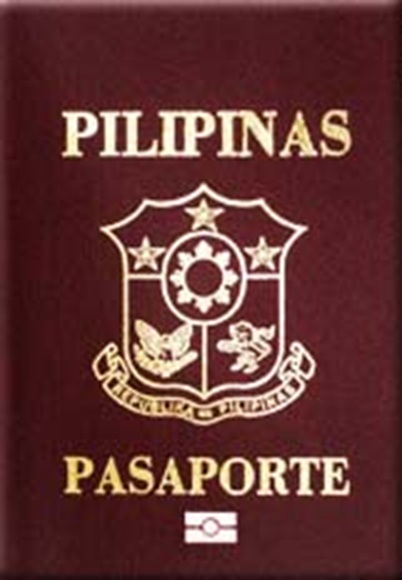
The problem isn’t just about the inconvenience of filling out forms or paying visa fees. The biggest issue is trust. Because so many Filipinos have overstayed or worked abroad illegally (often out of desperation), foreign immigration officers often see every Filipino traveler as a flight risk. They don’t see a tourist; they see someone who might never go home. It’s unfair, but it’s a stigma we all carry the moment we show our IDs or our maroon passports.
When a Filipino traveler is denied a simple transit tour in Seoul, it is micro-aggression on a diplomatic scale. It underscored how the Philippines still lacks the “passport power” to guarantee its citizens’ dignity abroad.
Why does our passport remain so weak? The traditional answer is a mix of economic and security factors. Decades of labor migration have created a global perception of the Filipino as a “worker first, traveler second.”
The world sees us as the world’s helpers: nurses, sailors and domestic workers. They want our labor, but they aren’t always ready to welcome us as casual visitors.
While the remittances from overseas Filipino workers keep the domestic economy afloat, the sheer volume of undocumented migration, driven by a lack of opportunities at home, has led foreign governments to view every Filipino traveler through the lens of skepticism.
There is also a perceived lack of reciprocity. We let citizens from over 150 countries enter the Philippines easily, but we don’t get the same treatment in return. Our government hasn’t been “tough” enough in demanding better deals for us.
We shouldn’t have to feel “shame” at an immigration counter. To fix this, the government needs to do more than just print new passport booklets.
My experience in Seoul is particularly frustrating because it contradicts South Korea’s own “Hallyu” diplomacy. Filipinos love K-dramas, buy their electronic products and listen to K-pop music. By saying that I could not join the free transit tour “because [I am] Filipino” was like treating me as an intruder. I would not have felt so annoyed if I was told the slots were full or that I was late for the registration.
The Philippine passport should be a source of pride, a shield of protection, not a badge of suspicion. Every Filipino deserves to see the world without being treated like a criminal just because of where they were born. It’s time our leaders treated “passport power” as a priority, ensuring that the maroon booklet we carry is respected everywhere it goes.
If a country like South Korea enjoys our tourism and our love for their culture (Hallyu), they should treat our travelers with respect. We should demand better access in exchange for the access we give them.
The views in this column are those of the author and do not necessarily reflect the views of VERA Files.
This column also appeared in The Manila Times.