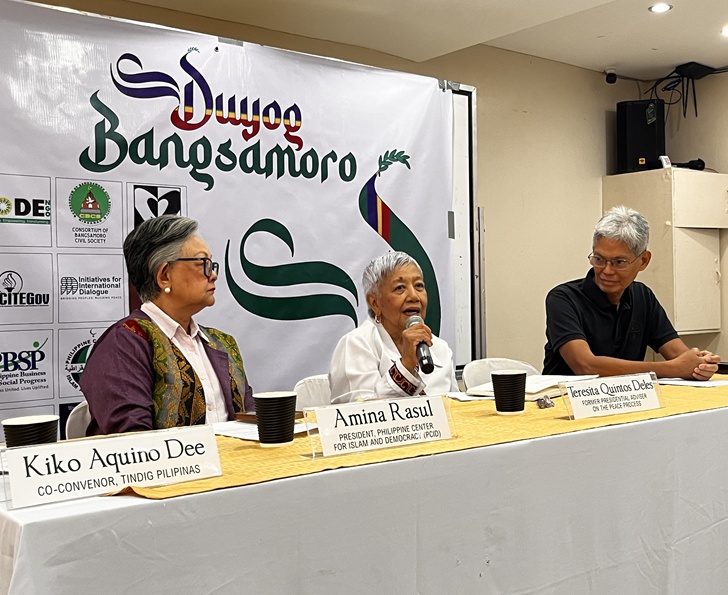

Civil society groups called on President Ferdinand Marcos Jr. on Tuesday to prevent any effort by actors outside the autonomous region to influence the results of the Sept. 14 Bangsamoro Autonomous Region in Muslim Mindanao parliamentary elections, whether for or against any regional political party.
In a statement released on Sept. 8, Duyog Bangsamoro, an independent multisectoral alliance of regional and national civil society organizations, noted a “persistent perception” on the ground regarding the national government’s meddling to influence the outcomes of BARMM polls and the “region’s political landscape” post-election.
“This perception took root with Malacañang’s irregular appointments to the Bangsamoro Transition Authority (BTA, the BARMM’s interim government) last year, which resulted in deepened factionalism within the Moro Islamic Liberation Front (MILF),” the coalition said.
The same call was made by the National Citizens’ Movement for Free Elections Sept. 9 in its pre-election assessment reminding stakeholders that the principal risks to the election’s legitimacy include “unresolved allegations of national patronage in the MILF succession contest.”
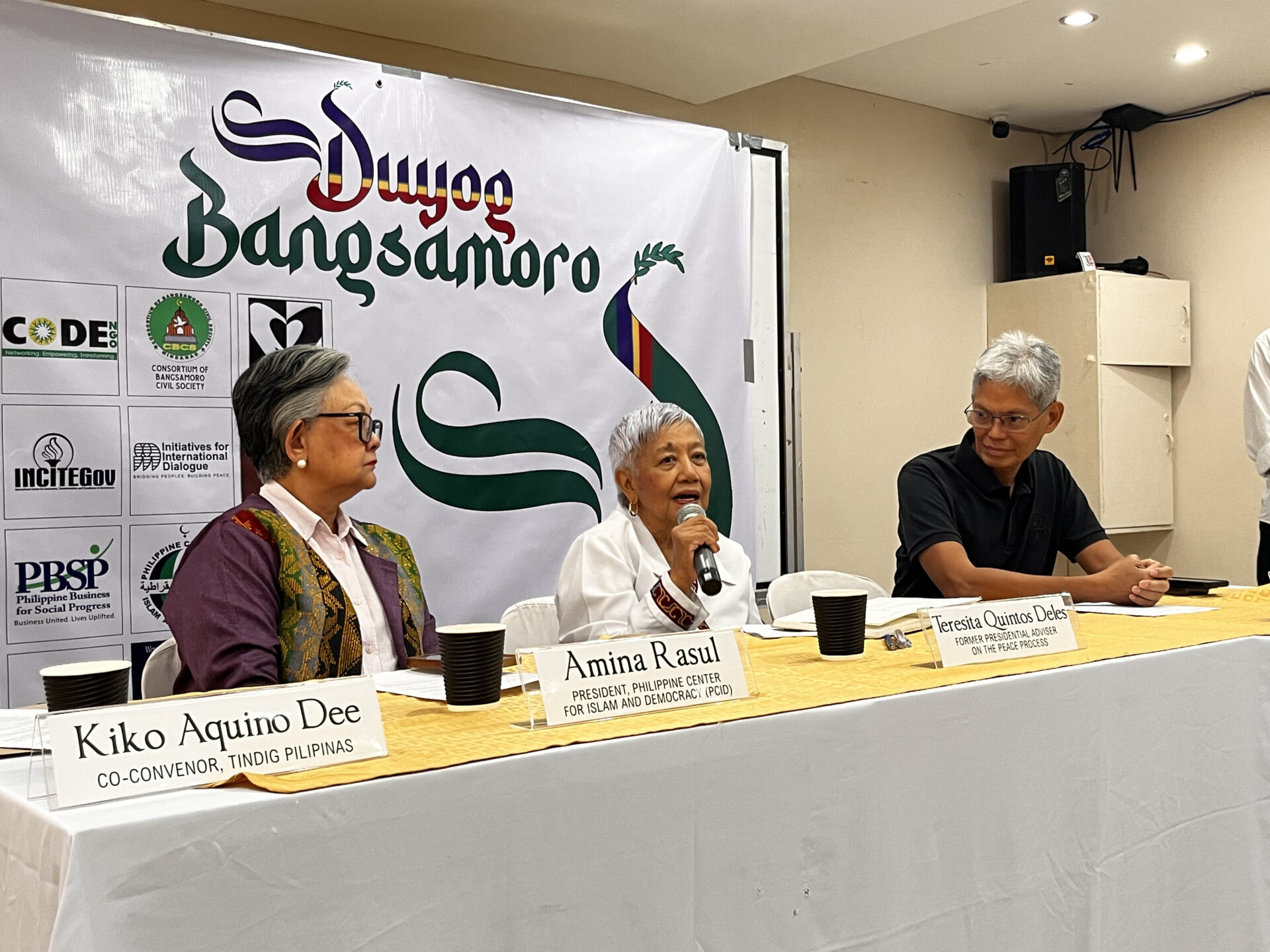
During a press conference on the same day at the University Hotel of the University of the Philippines Diliman, Teresita Quintos Deles, former presidential adviser on the Peace Process, further stated that such perception started when Moro Islamic Liberation Front (MILF) Chairman Ahod “Al Haj Murad” Ebrahim was replaced by Marcos-appointed Abdulraof Macacua as the new chief minister of BTA in March 2025, seven months before the election’s previous October 2025 schedule.
“Hindi naman ‘yung gumalaw ‘yung parliament na sabi kailangan palitan na. Hindi naman gumalaw ‘yung [BTA]. Parang out of the blue, napalitan,” Deles said, adding that Murad was removed in a “questionable way.”
Republic Act No. 11054 or the Bangsamoro Organic Law, which serves as the legal foundation of the BARMM, states that MILF shall lead the interim government. The group previously said it did not endorse Macacua for the position.
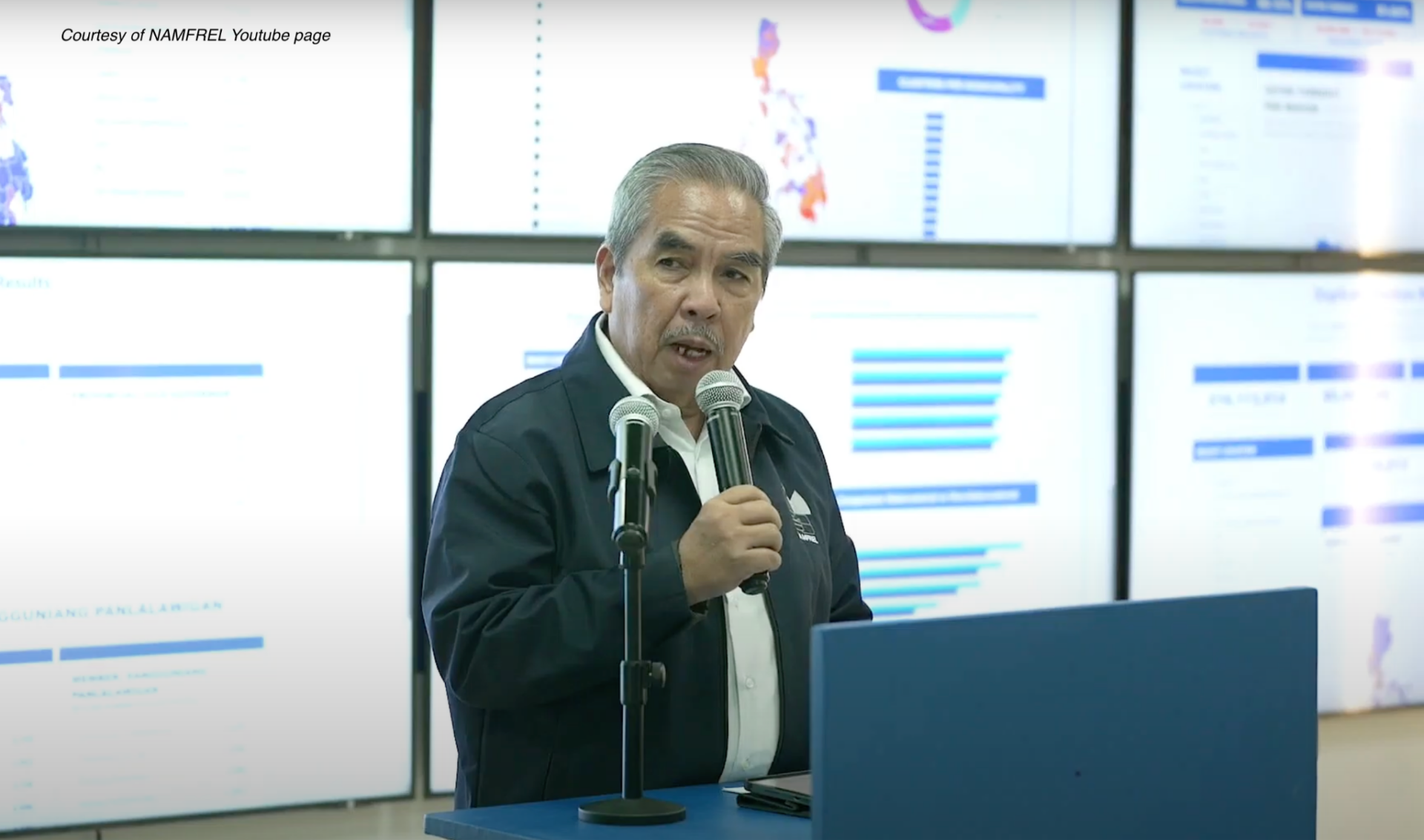
NAMFREL pre-election assessment
In a pre-election assessment released by the National Citizens’ Movement for Free Elections on Sept. 9, the election watchdog likewise pointed out that “perceived Malacañang / national-patronage interference” is a “critical threat” with “almost certainty” in the run-up to the region’s parliamentary elections.
The NAMFREL noted how the alliance of Malacañang’s own party, Partido Federal ng Pilipinas, chaired by Marcos, with United Bangsamoro Justice Party (UBJP), the MILF’s political party, in October 2024 appears to have “migrated” toward Bangsamoro Federalist Party following Macacua’s installation.
The poll watchdog added that the accusations of MILF Peace Implementing Panel chair Mohagher Iqbal regarding “unnamed ‘Malacañang officials’ pressuring local [government] executives towards BFP” mirrored the “2024 accusation pattern when the Mangudadatu bloc made the same allegation against the same officials for allegedly favoring UBJP.”
“No independent finding has substantiated either round of allegations, but the repeated, bilateral nature of the claim is itself the risk: it hands either side a ready-made delegitimization narrative regardless of the outcome, and it implicates the national government — not only BARMM actors — in any post-election legitimacy dispute,” the report read.
The 2028 elections angle
Meanwhile, Deles also suspected the 2028 elections to be another factor behind this perception of supposed outside intervention in BARMM’s regional politics beyond the parliamentary polls.
“Huwag sana mangyari ulit ‘yung nangyari noon doon sa ARMM na tuwing eleksyon, alam mo na may kandidato ang Malacañang at ‘yun ang lumalabas,” she said, asserting the importance of autonomy the people of Bangsamoro have struggled for decades.
While everything political will get involved in the 2028 elections, she discouraged viewing the BARMM as a “vote bank.”
“Let not the BARMM be one of the casualties of our 2028 politics.”
The Duyog Coalition urged the national government to continue supporting the BARMM’s regional and local governments, “regardless of which parties win the elections.”
Post-election normalization process
While the first-ever BARMM election is a significant milestone, the alliance reiterated its call to fulfill the normalization process under the Comprehensive Agreement on the Bangsamoro (CAB), the final peace agreement signed by the Government of the Philippines and the MILF in 2014.
“These include the decommissioning of the remaining armed members of the [Bangsamoro Islamic Armed Forces], amnesty and socioeconomic development for BIAF members beyond the BARMM’s annual block grant, the redeployment of [Armed Forces of the Philippines] personnel currently assigned to the region, the detection and clearance of mines and unexploded ordnance, the disbanding of private armed groups, and the establishment of a national transitional justice program,” Duyog Coalition said.
Emphasizing that the peace process between the Philippine government and the MILF will not end with the election, Deles said the normalization track must be done to achieve “full transformation from our struggle to democratic politics.”
“What’s important is that this is done in a democratic way, no longer with arms. Kaya napaka-importante na ‘yung normalization mangyari. So that ‘yung full transformation of discourse, which includes always, conflict of interest, will happen with full participation without the use of arms.”
It was during Deles’ tenure as peace adviser under the administration of the late President Benigno Aquino III that the CAB was signed, ending decades of armed conflict in Central Mindanao.
In a chance interview with VERA Files, she also stressed that completing the normalization process must be between the Philippine government and the MILF, regardless of whether the group’s political party remains in power.
“Kung iba na ‘yung naghahawak ng parliament, okay lang ‘yan. Pero siguraduhin na ‘yung party with whom you signed, who committed to all of these things, sila ‘yung kasama hanggang matapos,” Deles said.
With less than a week before the election, she called on the Filipino people to “pay attention to what is happening in the BARMM and to help make sure that parties prevail as real locus for the growth and advancement of interests, not just of personalities, and, in the end, the full welfare of the Bangsamoro peoples.”
Over 2.3 million individuals in the BARMM are set to participate in the historic parliamentary elections scheduled for Sept. 14. Voters will choose 40 political parties, 32 district representatives, and eight sectoral representatives. The 80 members of the region’s first elected parliament then select among themselves who will become the Chief Minister.