The fatal shooting of Arlene Gibaga’s partner Sherwin Bitas in Barangay 19, Tondo, Manila on October 11, 2017 is one of the most chilling videos ever published in media of the deadly operations under former president Rodrigo Duterte’s drug war, yet she still watches the video.
It has been nine years but the disturbing images of the incident, especially the moment the men carried Bitas’ lifeless body out of the alley, is still on Gibaga’s phone, one of the videos she constantly plays.
“Has it been nine years? I never noticed. I’ve been living but stuck and numbed,” she said in an interview during the Feb. 23 “watch party” of the drug war victims’ families on the first day of the confirmation of charges hearing against Duterte at the International Criminal Court in The Hague, livestreamed in the families’ meeting place in Manila.
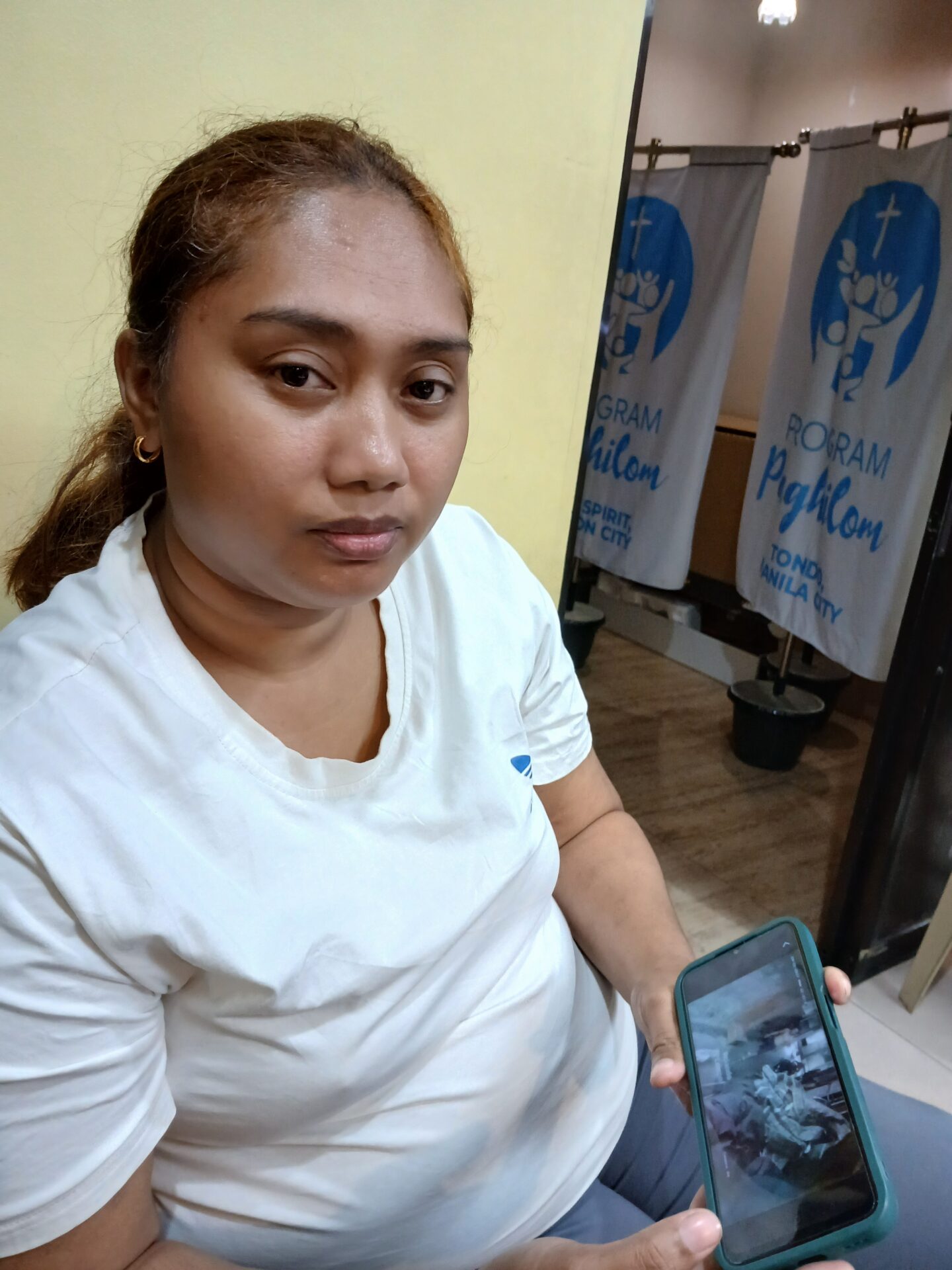
Left to take care of three children now aged 17, 15 and 12, Gibaga said she holds on to her vivid memories of that day she heard gunshots that resulted in three fatalities, including Sherwin. And she still remembers the days she was being followed by men in black jackets.
“The police coerced me to sign false statements, and ordered me to keep quiet when I wanted to file a report,” she said. “I know each day and time and I hold on to these recollections so that I know how to answer if I’m asked in court.”
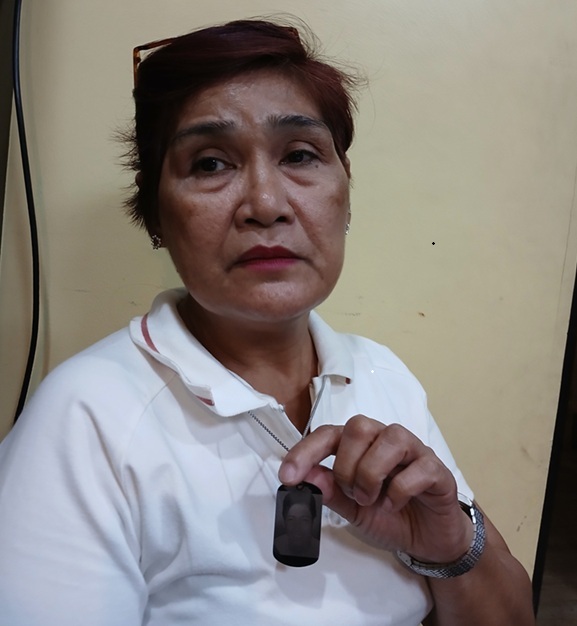
Just like Gibaga, the story of Nanette Castillo has also been narrated many times in the news media, including images of her holding a picture of her son Aldrin, who was shot dead on October 2, 2017 by seven masked men while he was with his friends along Herbosa St., Tondo, Manila.
“Do you feel sad when you remember a loved one who’s gone? It’s different in our case,” she said. “You feel the pain many times over especially when you remember witnessing your unconscious son on the pavement being finished off by armed men putting three more gunshots to his chest.”
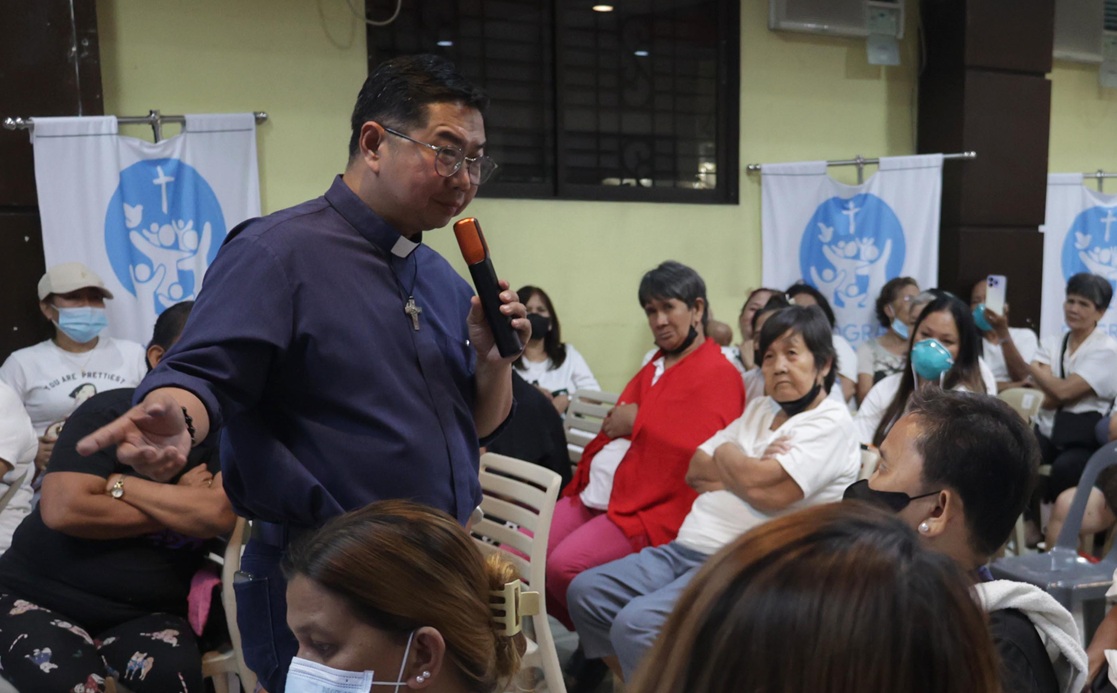
Gibaga and Castillo were both in the “watch party” gathering organized by the Paghilom (Healing) Project founded by Roman Catholic missionary priest Fr. Flavie Villanueva that provides legal and spiritual support for the families of victims of extrajudicial killings in the drug war.
The long 60 days and beyond
On Feb. 27, the last day of the confirmation of charges hearing which would determine if the cases of ‘crimes against humanity’ should proceed to trial, Castillo also attended the “justice watch” convened by the Initiatives for Dialogue and Empowerment through Alternative Legal Services (IDEALS), an alternative lawyers’ group, and at least five organizations formed by the families.
Some organizations organized activities before the Feb 23 start of the ICC hearing by holding a Black Friday protest and masses in Catholic churches, in addition to the protests coinciding with the anniversary of the People Power revolution, and dozens of “watch parties” and “justice watches.”
“We can’t wait for justice, healing and peace of mind but we will wait, for as long as it does not take 60 years,” Castillo told the Feb. 27 gathering, in reference to the 60 calendar days the ICC judges are to issue a decision on whether to proceed to trial, decline to confirm the charges and stop proceedings or request additional evidence from the prosecution.
Wearing a necklace bearing her son Aldrin’s photo, while holding a photo of Aldrin, Castillo said she longs for the day when she will no longer hold and touch images of her son.
“That day will come, and it will mean that Aldrin will be at peace, because we have achieved truth and justice,” she said tearfully.
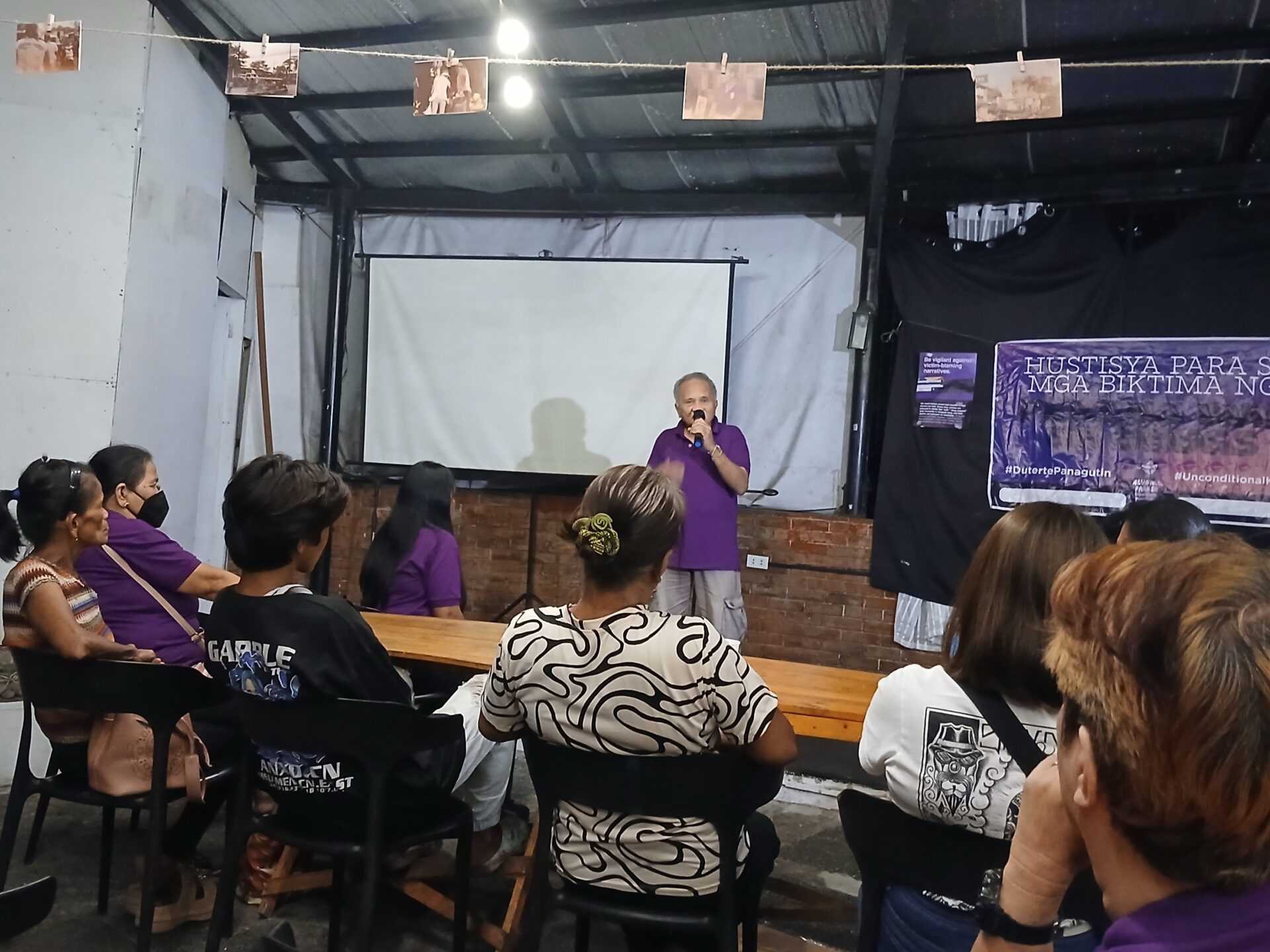
Rodrigo Baylon, one of a few men among mostly women representing the families, lost his nine-year-old son Lenin, who was killed by a stray bullet in a shootout by masked men allegedly pursuing drug suspects on Dec. 2, 2016 in Caloocan City, just three days before the boy’s 10th birthday.
“The so called drug war of Duterte started that year and my youngest nine-year-old son, who was not into drugs, was with his playmates in Caloocan City when he was hit and killed by a stray bullet,” said Baylon, his voice trembling.
“Duterte did not even care that a child died. He never cared that many other children died in his war on drugs,” he said. “My child had a dream, and so did the other children, but they’re all gone,” he said.
PH gov’t asked to step up
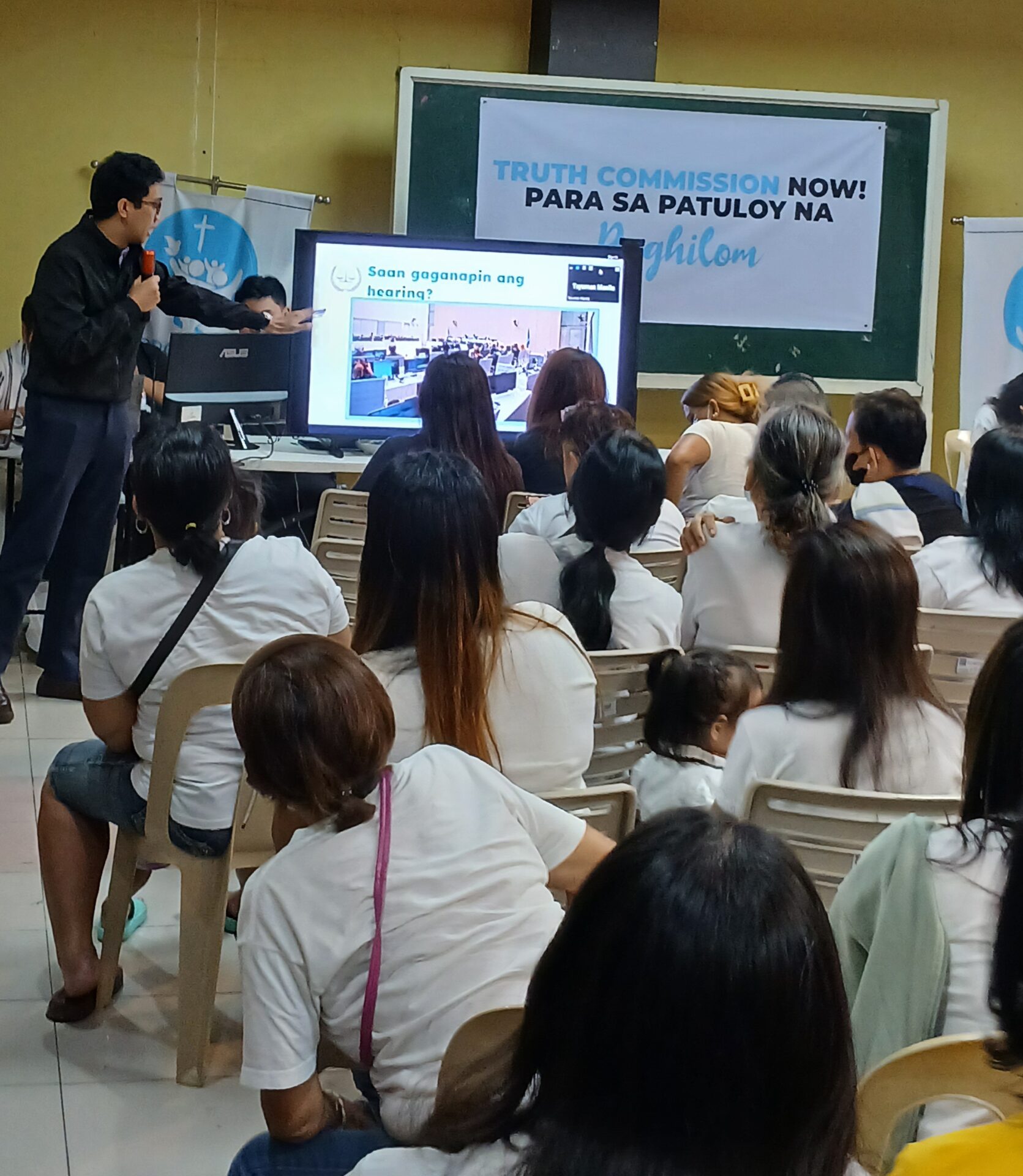
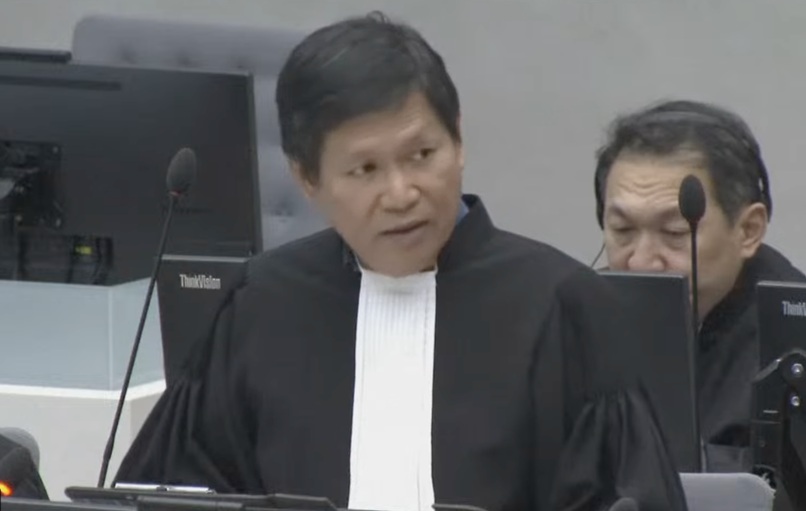
On Day 1 of the confirmation hearing, the families paid close attention to the proceedings, with some women taking down notes. Some openly laughed and booed Duterte’s lead counsel Nicolas Kaufman while he was presenting his arguments, and describing videos presented as evidence as “hyperbole.”
Human rights lawyers of IDEALS provided the families with recaps and explanations about the proceedings and what to expect on both the opening day and the Feb. 27 closing day of the hearing.
Lawyer Ansheline Mae Bacudio, human rights manager of IDEALS, told the families on the last day that the “voices have changed” in the course of the struggle of the drug war victims’ families.
“In the early years, you were so afraid when you asked us, ‘Attorney, what do I do?’ or ‘Please help me’ after you lost your family member from the killings. Now, you are saying you are hoping for the best,” she said.
She said it is helpful that the family members, who are all part of organizations that support and check on each other, have also become advocates of human rights.
Calls for truth and justice also resonated worldwide, with the Duterte Panagutin Europe Network saying, “The stories of the victims were not mere statistics as Duterte’s defense team tried to portray. In bringing their lived realities before the ICC, both the prosecution and the Common Legal Representative of Victims (CLRV) ensured that the voices long ignored in the Philippines were finally heard on the international stage.”
“The charges must be confirmed. Duterte must face the full weight of the law. Even as (he) remains detained, it is worth remembering that he continues to enjoy rights and protections that he so callously denied his victims,” said the statement of the group of Europe-based Filipino human rights advocates.
Agnes Callamard, secretary-general of Amnesty International, urged the Philippine government to “cooperate with the ICC’s investigation into crimes committed in the country, by promptly enforcing any further arrest warrants issued by the Court.”
Callamard said the government’s surrender of Duterte to the ICC does not absolve it of responsibility to deliver domestic accountability for violations in the ‘war on drugs’.
“Alongside the ICC, the government must carry out effective investigations against all others suspected of involvement in extrajudicial executions and hold perpetrators accountable in fair trials,” she said.
“Duterte’s long-awaited day in court is a significant step towards delivering justice for victims and survivors of his ‘war on drugs’,” said Callamard in a statement.
“It also reminds the international community that nobody is above the law, no matter the ferocity of attacks, sanctions and threats aimed at the ICC from some world leaders.”