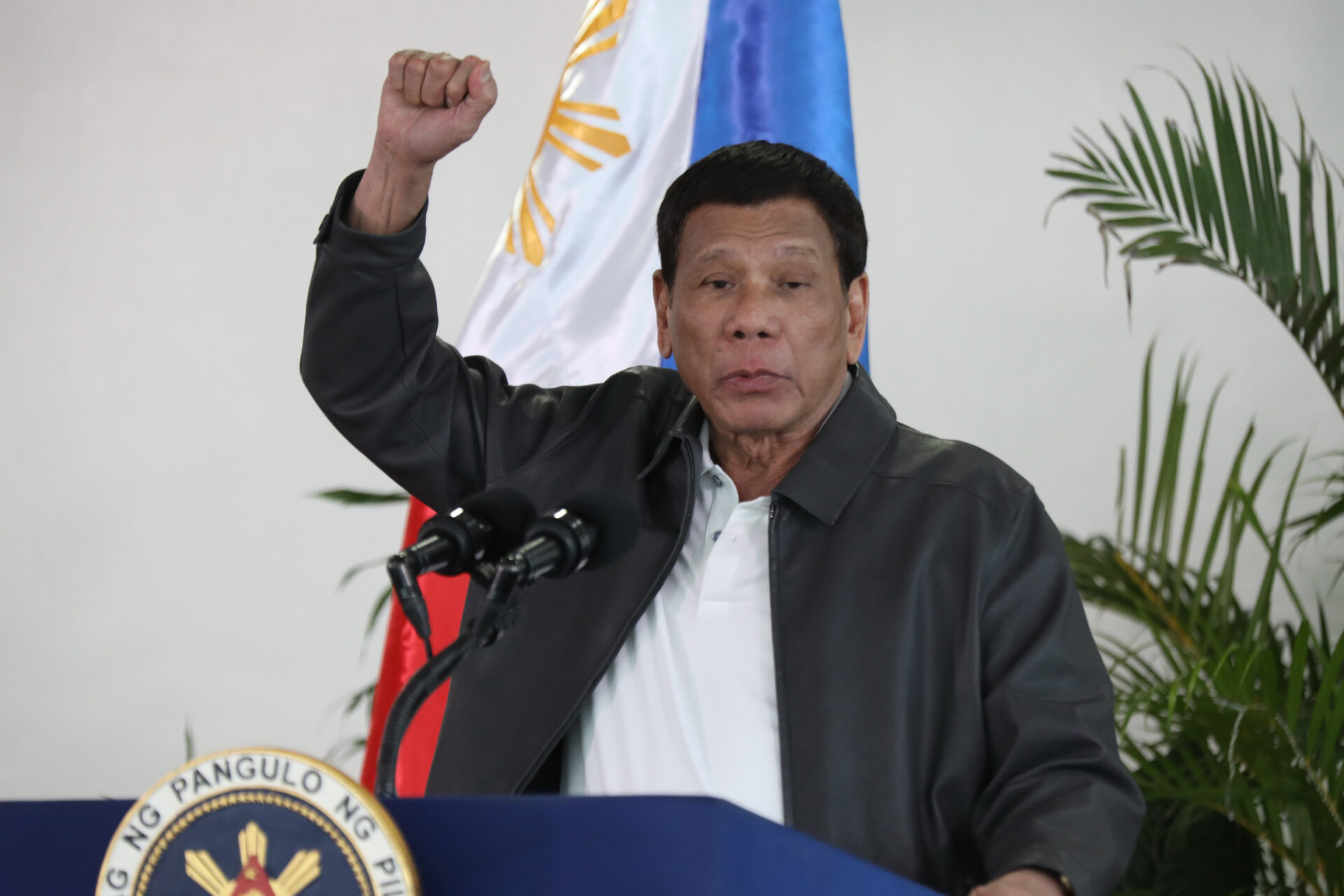
Foul language became a defining, and often controversial, hallmark of former president Rodrigo Duterte’s persona. His political brand was built on a “big mouth.”
Supporters cheered his profanity-laced tirades as the raw authenticity of a “punisher” willing to do whatever it took to keep the streets safe. But at last week’s confirmation of charges hearings at the International Criminal Court in The Hague, that same bluster was transformed from political theater into the prosecution’s Exhibit A.
Over four days, the court saw a high-stakes tug-of-war over the weight of Duterte’s words. Prosecutors called his public statements the “smoking gun” linking the mayor-turned-president to a systematic campaign of extrajudicial killings. The defense called them the “colorful and crusty” hyperbole of a populist whose words were never meant as literal death warrants.
The prosecution: Words as weapons
The prosecution argued Duterte’s rhetoric was not noise but instruction. Senior trial lawyer Julian Nicholls said Duterte’s “big mouth” supplied the “moral support” and “practical encouragement” for a widespread, systematic attack on civilians carried out as state policy to violently “neutralize” alleged criminals.
Prosecutors played video clips and cited speeches in which Duterte appeared to confess to the crimes charged, promised to shield police from prosecution and assured them they would not go to jail for actions taken in the drug war. In a 2013 video, the then-mayor of Davao City discussed “neutralizing” criminals, evidence, prosecutors say, of the so-called Davao Death Squad model later exported nationwide after he assumed the presidency in July 2016.
In a 2016 clip, Duterte told police: “Do your duty, and if in the process you kill 1,000 persons because you were doing your duty, I will protect you.” Prosecutors contend that the pledge of impunity dismantled the rule of law.
He also publicly claimed to have personally killed suspects as mayor to “show the guys [police] that if I can do it, why can’t you?” The prosecution framed these statements as proof of a broader, systematic attack on civilians.
The defense’s ‘hyperbole’ shield
Lead defense counsel Nicholas Kaufman has built his case on “political hyperbole.” Duterte’s language, he argued, was “uniquely colorful,” not criminal. The prosecution, he said, “cherry-picked” quotes while ignoring “exonerating” qualifiers that often followed his most violent outbursts.
Kaufman sought to sever words from deeds, arguing there is no “causal nexus,” no proof a specific officer pulled a trigger because of a specific speech. To the defense, Duterte’s rhetoric was meant to instill fear and respect for the law, not to break it.
He also faulted the media for amplifying the profanities. “Journalists and their editors have a tendency to fixate on the salacious elements of a person’s speeches while ignoring the less interesting parts,” he told judges, noting that Duterte often invoked “lawful self-defense.”
Inconsistencies
The most damaging evidence may be the contradictions in Duterte’s own words. His lawyers said he consistently upheld the law. The record shows a leader who often mocked it.
“This was the pattern, your honors,” prosecutor Edward Jeremy told the three-judge panel led by presiding judge Iulia Antonella Motoc. “Out of one side of his mouth, quietly, occasionally, he would speak about self-defense… And the other side, loudly, frequently, he would say, ‘Kill, and I will protect you, I will pardon you, and I will promote you.’”
Duterte had said, “I never ordered anyone to be killed.” He also said, “I will be happy to slaughter three million addicts.” He declared, “I am a man of the law,” but also: “My order is shoot to kill… I don’t care about human rights.” Kaufman himself acknowledged that some speeches paired calls to “kill” with reminders to act only in self-defense, even as Duterte told audiences to “forget laws on human rights.”
These contradictions sit at the heart of the court’s deliberations. If judges see the “shoot to kill” lines as intent and the “self-defense” caveats as legal cover, a full trial appears likely.
The verdict on the voice
As president and commander-in-chief, Duterte’s words carried the force of policy, not private bluster.
Now detained at Scheveningen Prison at The Hague, deemed fit for trial despite defense claims of cognitive impairment, Duterte faces the irony that the tough talk that fueled his rise may prove his greatest liability.
Prosecutors say his “big mouth” was not mere talk but an operating manual for a state-sanctioned killing machine. The defense must persuade the court that thousands of officers simply misunderstood their president for six years.
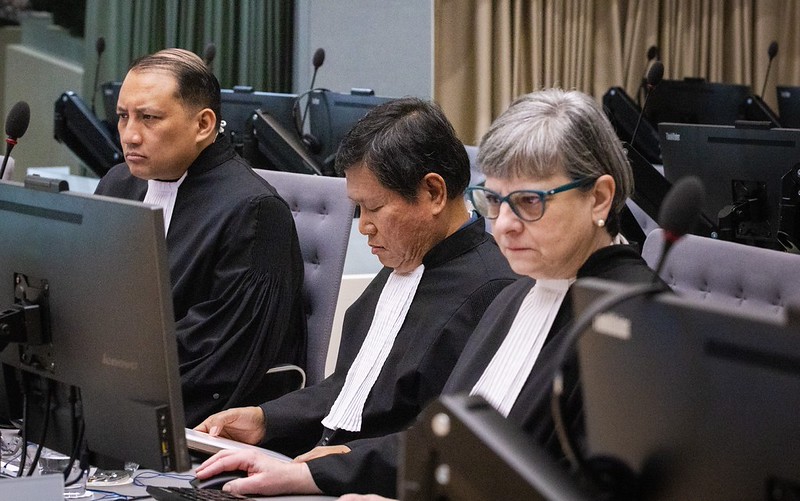
The ICC Pre-Trial Chamber 1 has 60 days to decide whether those words amount to “substantial grounds” for crimes against humanity. If they do, the question will be stark: Can a head of state be held accountable not only for what he did, but also for what he said? In the end, it may not be a secret memo or a taped call that will bring down “the Punisher,” but the echo of his own voice.
The views in this column are those of the author and do not necessarily reflect the views of VERA Files.
This column also appeared in The Manila Times