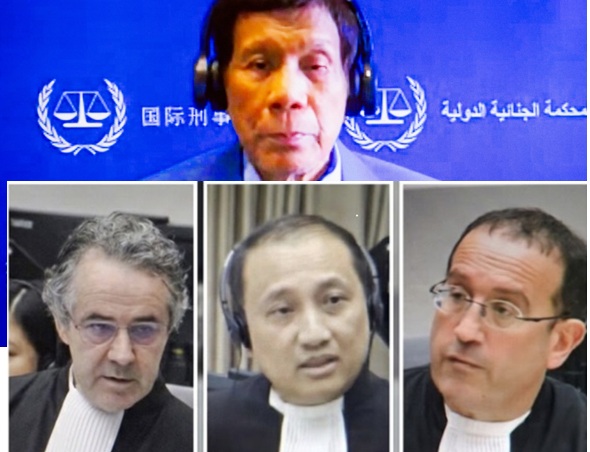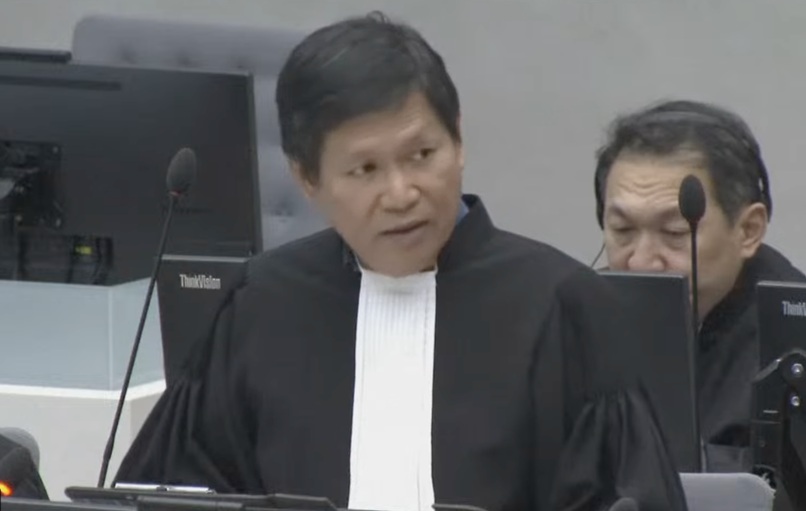
Winters in the Netherlands are bitingly cold. On the day the Confirmation of Charges Hearing on the Rodrigo Duterte case opened in the International Criminal Court, the skies were downcast. For whom was it ominous?
The public gallery was full. Media, diplomats, human rights workers, NGOs, anti Duterte advocates – these comprised the majority. The minority was represented by a sprinkling of about 5-8 Duterte Diehard Supporters, and 6 Duterte lawyers, who, being non-accredited by the ICC, stayed in the public gallery rather than in the court room.
On the first day February 23, an unexpected spectacle happened inside the jam-packed public gallery. While the hearing was progressing, an ICC security man approached Salvador Panelo to wake him up from dozing off from his seat. Somebody with bravado had reported him to ICC security.
Decorum is strict inside the public gallery. Placards are expressly forbidden. Mobile phones and communications devices have to be stored in lockers. Entry is preceded by x-ray machines.
Here the population attending the hearing is small on those who believe that drug users are not humans, that the social order is maintained by the power of the state’s guns.
In essence, Filipinos and foreigners of the anti-tyranny persuasion waited for this dawn of Rodrigo Duterte’s trial that a year ago we thought would have never come to pass in the era of impunity that he had ushered our country into.
At the end of the first day, it was easy to see which side rose and fell – the Prosecution or the Defense.
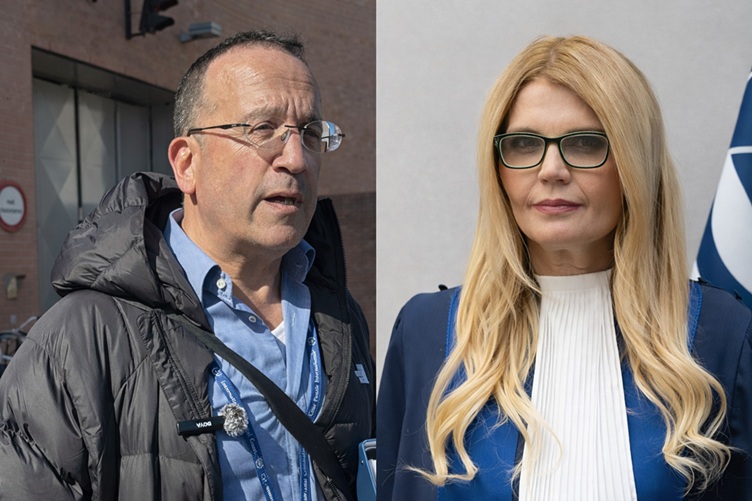
A star was born on the first day – the Filipino lawyer accredited by the ICC who was defending the victims’ families – Joel Butuyan. (Disclaimer – Joel is a member of the board of Vera Files.) He is also a friend from way back Inquirer days where he continues to churn out op-ed columns of profundity and sociopolitical relevance.
Was it because Butuyan represented the most gruesome face of the case – the families of EJK victims – that gave him the mantle to pronounce the hearing as a “Day of Reckoning”?
The Butuyan presentation clothed the opening day with a sense of urgency by framing the proceedings as the “last boat” for the families seeking accountability in a Philippine justice system, the doors of which Duterte and his co-perpetrators had “permanently closed.”
Butuyan warned that if the charges were not to be confirmed, Duterte would return to the Philippines as a “conquering hero” who would continue to preach a “ gospel of impunity,” further endangering victims’ families who continue to live under a Sword of Damocles of fear.
By the time Butuyan concluded, there were not a few dry eyes in the gallery. He had articulated to a T the general public sentiment of the Duterte case in the ICC. We in the gallery were momentarily suspended in a state of disbelief.
Perhaps the public expectations were high that lawyers would deliver their presentations in perfect eloquence. After all, this was an international tribunal. That members of the diplomatic corps attended was an indication of international interest.
Lawyers are not expected to deliver ad hominem fallacies. No lawyer can be forgiven by a jury by using fake news to frame his arguments. No lawyer acts cheaply by name calling. But it happened.
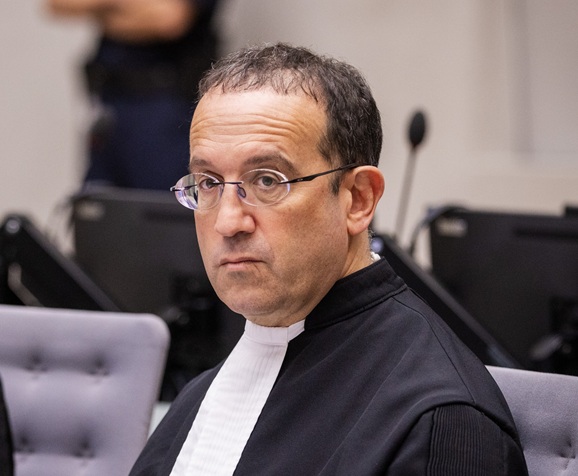
Nicolas Kaufman opened by name-calling Butuyan a “political demagogue.” That was foul in a courtroom. Had he said it in a hotly contested political rally in a dynastic turf somewhere, he would have been cheered. But this was an international tribunal where grey matter was brainpower. Sadly, there was none such wisdom.
Kaufman spoke in a rhetoric that mirrored Duterte’s own populist style. He used personal attacks and provocative language. He could have used the same speech in a campaign rally in Davao City where the city’s rabid DDS would shout hosannas with mouths frothing.
He blamed the fallout of Duterte’s image on writers and media who portrayed him as a killer and mass murderer. He singled out “License to Kill: Philippine Police Killings in Duterte’s ‘War on Drugs.” Sitting beside me was the human rights writer Carlos Conde, formerly of Human Rights Watch that produced that 2017 comprehensive report.
Seated next to Caloy was Raffy Lerma of “The Nightcrawlers,” a dedicated group of photojournalists in Manila who documented the nightly killings during the violent war on drugs. Their work, particularly in exposing the brutality of the campaign, is the focus of a 2019 National Geographic documentary of the same name.
Kaufman used an illogic by gaslighting writers and journalists for the derision that Duterte’s name is now languishing in. He did not address the evidence at hand as a defense lawyer should. He justified the Duterte bluster by using a typical DDS non-sequitur – look at Davao City today, “one of the safest cities in the world.” But that has already been discredited by this writer as the fake product of the crowd-sourced platform Numbeo.
This was supposed to be a trial to convince the judges that there was evidence to pin down the accused. Instead, this expensive multimillion-fee lawyer did not say anything about evidence. Instead, he chose to reduce himself into a rage baiter and a rabble-rouser, and a political demagogue was born.
Was it because Kaufman knew that the evidence the prosecution had gathered all these years was more than enough to convict Duterte and lock him up in jail the rest of his life?
By Tuesday February 24, the mood in the gallery was upbeat: the trial of the century would very likely come to pass sometime this year. Thanks to the extortionate chicanery of Nicolas “Political Demagogue” Kaufman.
The views in this column are those of the author and do not necessarily reflect the views of VERA Files.