It is 5:00 p.m. on a sweltering Wednesday afternoon. John Aries Jeffrey Tuazon, 39, starts another round trip of his usual route. He has spent the last 11 years measuring his life by the revolutions of his blue jeepney’s steering wheel.
He plies the route from PhilCoA to Montalban, San Mateo — that long stretch connecting the heart of Quezon City to the fringes of Rizal. PhilCoA is the entry to Commonwealth Avenue from the Quezon Memorial Circle.
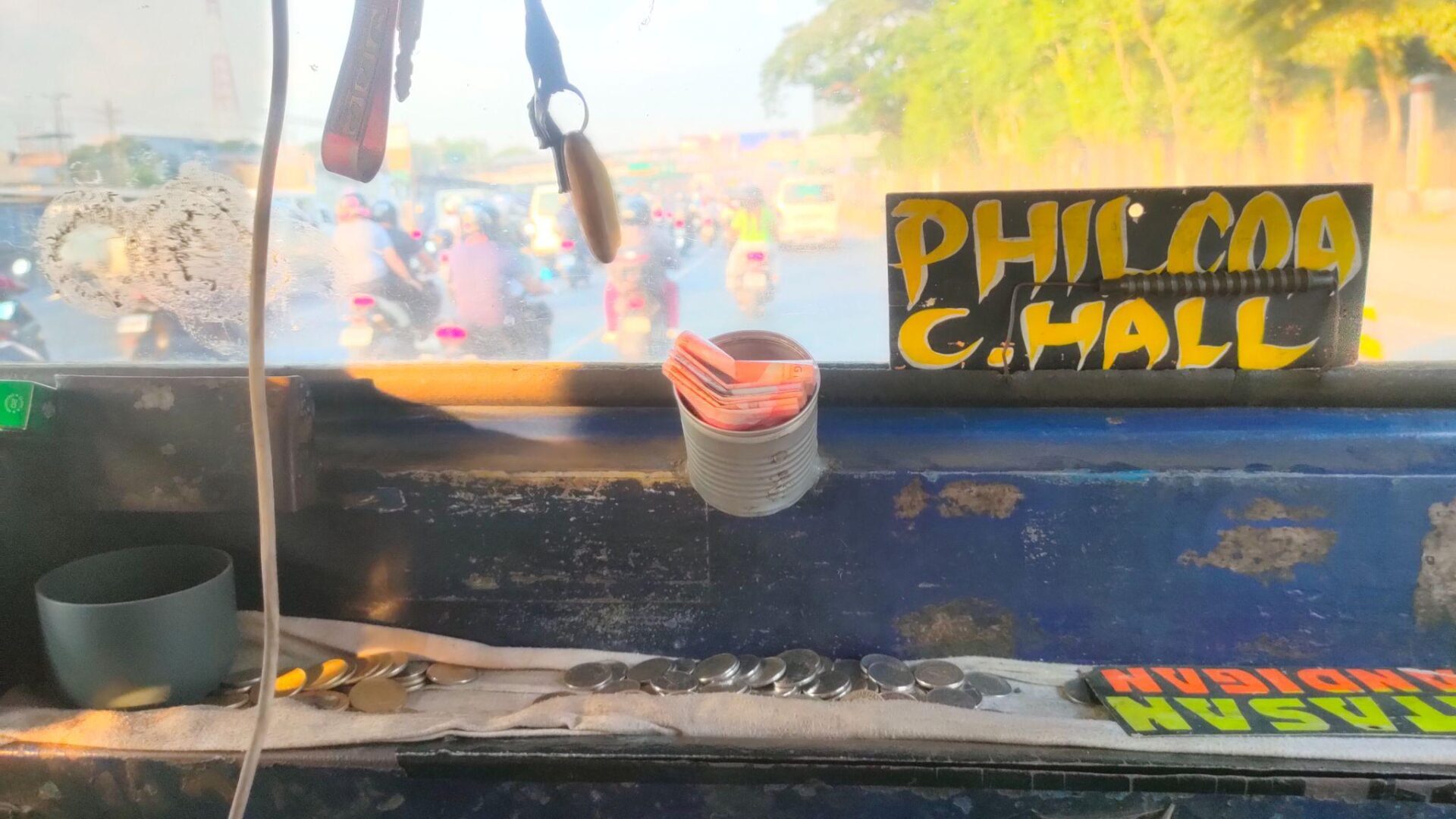
A passenger hands over the 13-peso fare. As Tuazon takes the coins, his eyes never leave the road. He drops them into the dashboard, just below a label-less grey tin can mounted on the dashboard, right beside the “PHILCOA C. HALL” signboard.There is no brand name, no rust visible— only the dull, industrial gray of metal.
It makes one wonder what its contents were a week or two ago. Was it a can of sardines, maybe tuna?
The coins land with a soft clink. Tuazon is already doing the math in his head. It is his fourth round of the day. In 2026, each coin matters. It counts twice—once for the ride, once for what’s left after.
6-to-6 for 200
Back at the PhilCoA terminal, just right by the overpass where the smell of diesel fumes mixes with the aroma of fish balls from a nearby corner food stall, sits Amando Tenegra. At 74, he is a veteran of the asphalt.
He began his career in 1973 as a taxi driver, back when the streets were wider and the cost of living was a fraction of today’s masa reality. In 1995, he shifted to the jeepney, thinking it as a more stable way to provide for his four children. He was then 44 years old.
Today, he plies the UP-PhilCoA route. If you are a University of the Philippines (UP) Diliman student, you’ve likely ridden his green jeepney—the same one his father once drove.
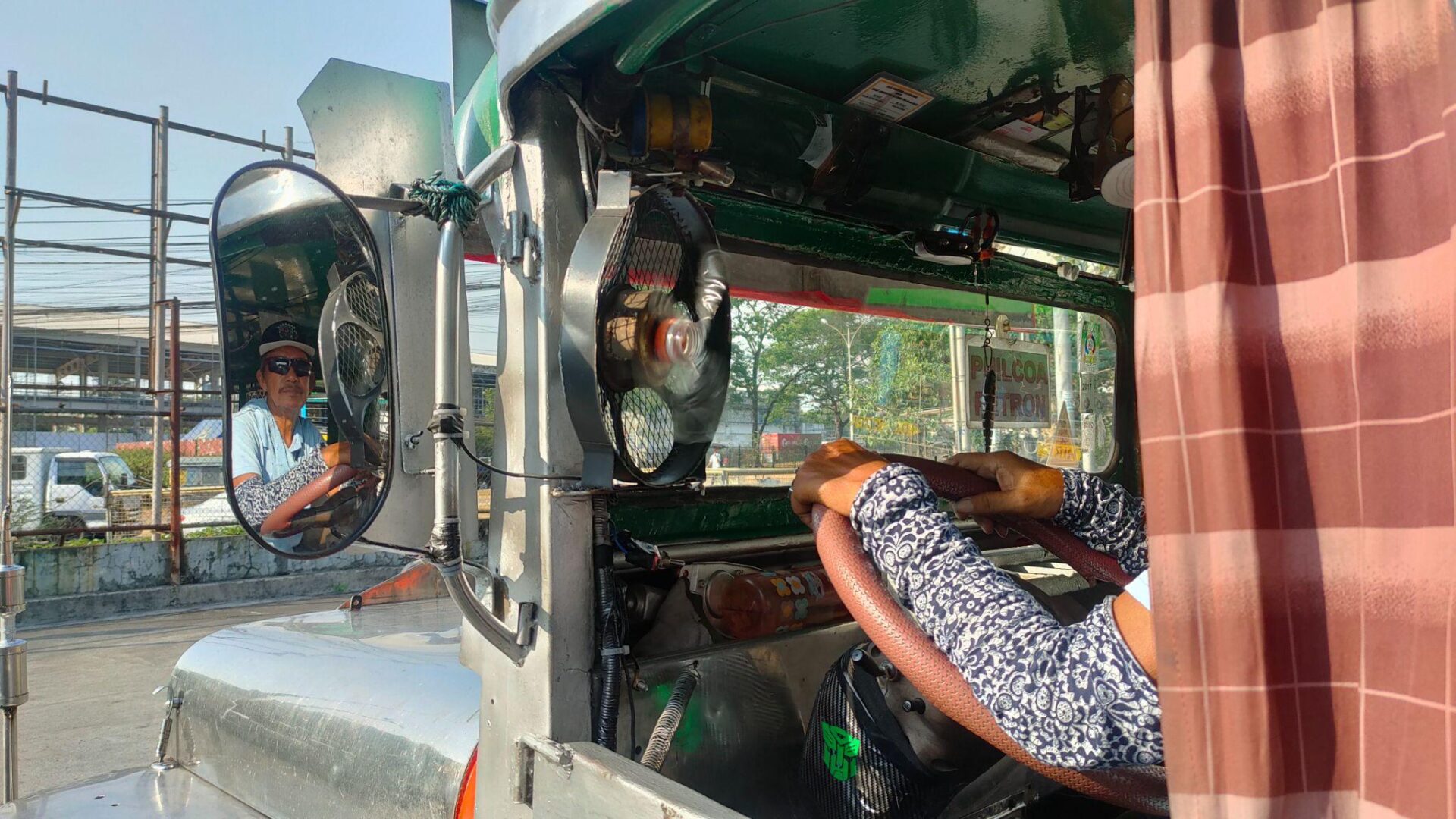
Tenegra’s route is a shorter ikot (loop), but the math is no easier. He revs his engine as early as 6:00 a.m. and doesn’t turn it off until 6:00 p.m. That’s twelve hours looping through campus roads and the bottleneck of Commonwealth Avenue.
Tenegra’s daily gross earnings hover around P2,500. It might sound like a significant sum but the math is grim. Between P1,500 to P1,700 goes to diesel per day. He loads gas at the end of the day, meaning today’s hard-earned cash pays for tomorrow’s grind. Then there is the P500 boundary fee. His operator originally charged P700, but in a rare act of solidarity, lowered it to P500 to account for the oil price hike.
Deducting those, Tenegra’s take-home pay is a dismal P150 to P200. In a world where a kilo of the cheapest rice can cost P50, a day’s work for a 74-year-old man can only buy exactly four kilos of rice—and nothing else.
”Hindi sapat ang ayuda lang (Subsidies aren’t enough),” Tenegra rued. His youngest child is still in Senior High, and his wife sells soap to help cover the bills. “Nakakatulong, pero hindi sapat. Yung akin, pinambayad lang sa mga utang (They help, but aren’t enough. Mine just went straight to paying off debts).”
The breaking point
The government’s response is often measured in hours spent under the sun. On April 15, Tenegra joined the desperate queue for a P5,000 subsidy for public utility vehicle drivers. He arrived at 3:00 a.m. and stood in line for nine hours, before finally receiving the cash at noon.
”Magdudusa ka sa init at gutom sa pila (You’ll suffer through the heat and hunger just standing in line),” he shared.
Others weren’t as lucky. According to Tenegra, some drivers reached the front only to find their names missing from the masterlist despite plying the same roads for decades. In March, Tenegra himself was denied a subsidy because his name had vanished from the official rolls.
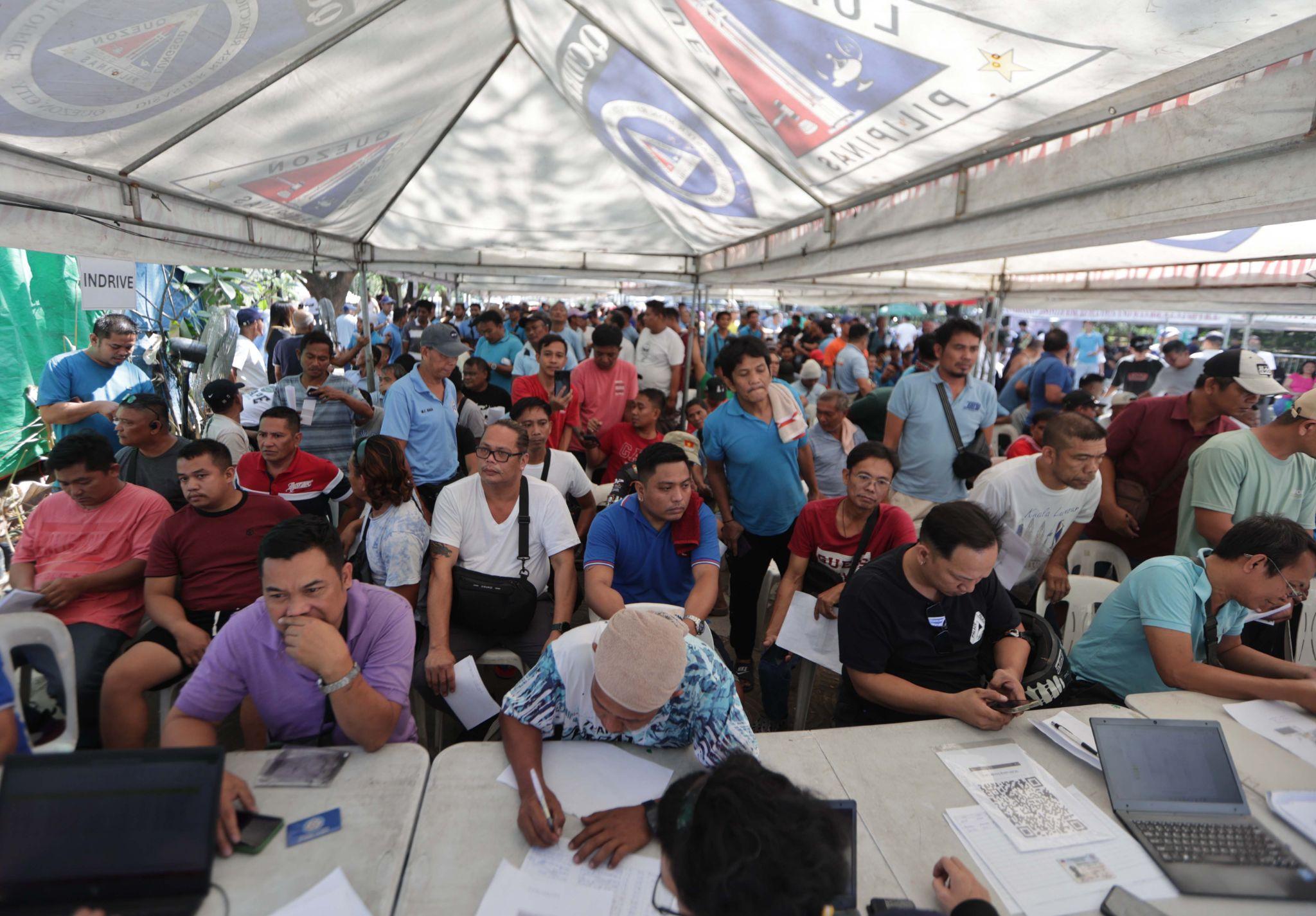
At the Quezon City Memorial Circle, payout site, the gates often close long before the sun sets. By 12:00 p.m. on a recent payout day, drivers were already being turned away by police and security guards.
Aries Castillo, a Joyride rider from Marikina, stood by the gate. He had driven from as far as Zambales and Bulacan.
“Mahirap bang mag paskil ng kapirasong papel para sabihing cut off na sila? Sabi ay may lalabas na representative pero anong oras pa?” Castillo asked.
(Is it that hard to post a simple piece of paper saying they’ve hit the cutoff? They said a representative would come out, but who knows when?)
Another rider, who asked not to be named, shows a text: payout from 7:00 a.m. to 5 p.m. The quota was apparently hit five hours early.
“Naghihimutok kami kasi bigyan lang sana kami ng malinaw na impormasyon kung ano ba talaga ang mangyayari. Kung cut off na ba, wala na bang chance, para umuwi na rin kami,” Castillo told VERA Files.
(We’re fuming because we just want clear information on what’s actually happening. If it’s a cutoff, if there’s no more chance, just tell so we can just go home.)
The desperation turned fatal on April 18, when a motorcycle taxi driver died while waiting in a subsidy line. Two days later, Quezon City Mayor Joy Belmonte announced that the city would explore distributing the ayuda via e-wallets to prevent further tragedies.
Of bread and borrowed mugs
As the jeepney traversed the path toward San Mateo on Tuazon’s fifth round, talk shifted from the government to the community.
At both the PhilCoA and San Mateo terminals, small shelves stand as the only physical markers of the current crisis. Labeled “Community Pantry,” these shelves are often initiated by students for the drivers whose daily earnings have been swallowed by fuel costs.
Tuazon remembers the days he was able to take home vegetables and rice from the shelf. But as he drove, a message from a fellow driver popped up on his phone: “Bilisan mo. May laman uli yung pantry sa terminal!” (Hurry up! The pantry at the terminal has been re-stocked!)
However, Tuazon didn’t bother to hurry. He knew the odds.
“Wala na ‘yun (It’s likely gone),” he said. “Isang oras pa bago tayo makarating [sa] San Mateo. Matagal na ang 25 minutes. Minsan 15 minutes lang, wala na (It’ll take another hour before we reach San Mateo. Twenty-five minutes is already a long time for the food to last. Sometimes, it’s gone in 15).”
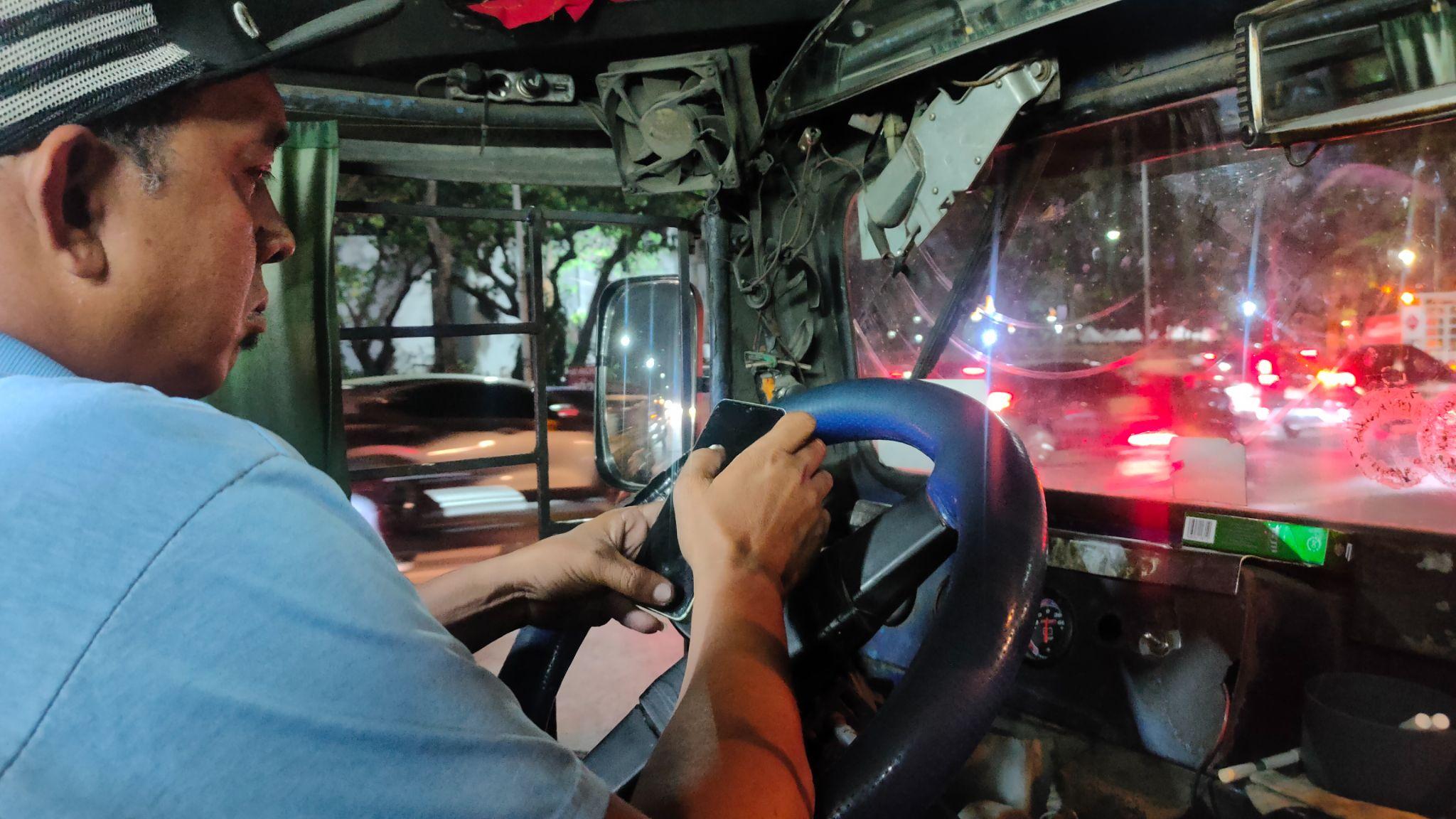
This is the 15-minute safety net. In a country where the minimum wage cannot keep pace with the cost of living, the survival of the transport sector has been outsourced to the kindness of strangers.
The pantry shelf empties faster than a jeepney fills with passengers.
In the absence of a working government safety net, the drivers have built their own small rituals of survival. On the way to San Mateo, Tuazon stopped at a small bakery along the way. He bought three pieces of bread—his merienda (snack), that he insisted was for sharing.
Once the jeepney reached the San Mateo terminal, the routine continued. At a small eatery, the tindera handed him a hot cup of 3-in-1-coffee. There is silent trust there; if he hasn’t finished the coffee by the time he needs to head back to PhilCoA, he simply takes the ceramic mug with him, returning it on his next trip.
But the warmth of the coffee doesn’t lessen the weight of the traffic. The vehicle pulled out of PhilCoA at 5:29 p.m. and didn’t pull up into the San Mateo terminal until 6:31 p.m. It was a relatively fast hour, but for Tuazon, every minute idling in Batasan Road is diesel wasted.
He looks at the private cars surrounding his jeepney. Most of them with only a driver on board.
“Ang mga mayayaman, kunwari anim ang anak, tapos lahat may kotse. Sabay-sabay aalis sa magkakaibang kotse (The wealthy, say they have six kids, and they all have cars. They all leave at the same time in separate cars),” Tuazon says.
“Wala silang ibang sakay, nakakadagdag pa ‘yun sa traffic. Kung sana puno ang sasakyan ng upuan nila gaya namin.”
(They have no other passengers and it just adds to the traffic. If only their seats were as full as ours.)
Driving by several gasoline stations, the numbers were climbing from P115 to P119, even P124 per liter of diesel. Tuazon only refuels at one specific station he knows, where diesel is priced at P107 per liter. He uses roughly five liters per round trip. By 6:30 p.m., as the sky turned a bruised purple in color, he had yet to earn his P1,000 boundary fee.
Ripple’s edge
The war in the Middle East is thousands of miles away. The Philippines is not directly targeted by the missiles or the blockades in the Strait of Hormuz, but the effects are felt every single day on the pavement.
There is no escape from the ripple effect. When global supply chains stall, it is the ordinary people—the ones already living on the edge—who suffer first and most.
While the government debates masterlists and digital wallets, the burden is carried by men like Tenegra, Tuazon, and Castillo.
During the ride, a commuter paid P25 and got off, not bothering to get the P7 change.
“Madalang man, pero na-appreciate namin (It’s rare, but we appreciate it),” Tuazon said. “Isipin mo na ang 7 pesos, kung sampu ang magbigay, 70 pesos na. Malaki na (Think about it, if ten people give seven pesos, that’s seventy pesos. That’s already a lot).”
For them, the wait continues. Reflecting on Castillo’s words outside the payout site, “Siguro nahihirapan sila sa dami. Hintay lang, baka meron pa rin (Maybe they’re just overwhelmed by the numbers. Let’s just wait, maybe there’s still something for us).”
Whether it is for an ayuda (subsidy), for a pantry refill, or simply for the next P7 tip to hit the bare tin can, the wait becomes the only constant. In the race to survive, they are driving on empty, waiting for a government that is still checking the list.
Editor’s note: Ayannah Raven Nuyles is a Bicol University student writing for VERA Files as part of her internship. She interviewed all three drivers for this article.