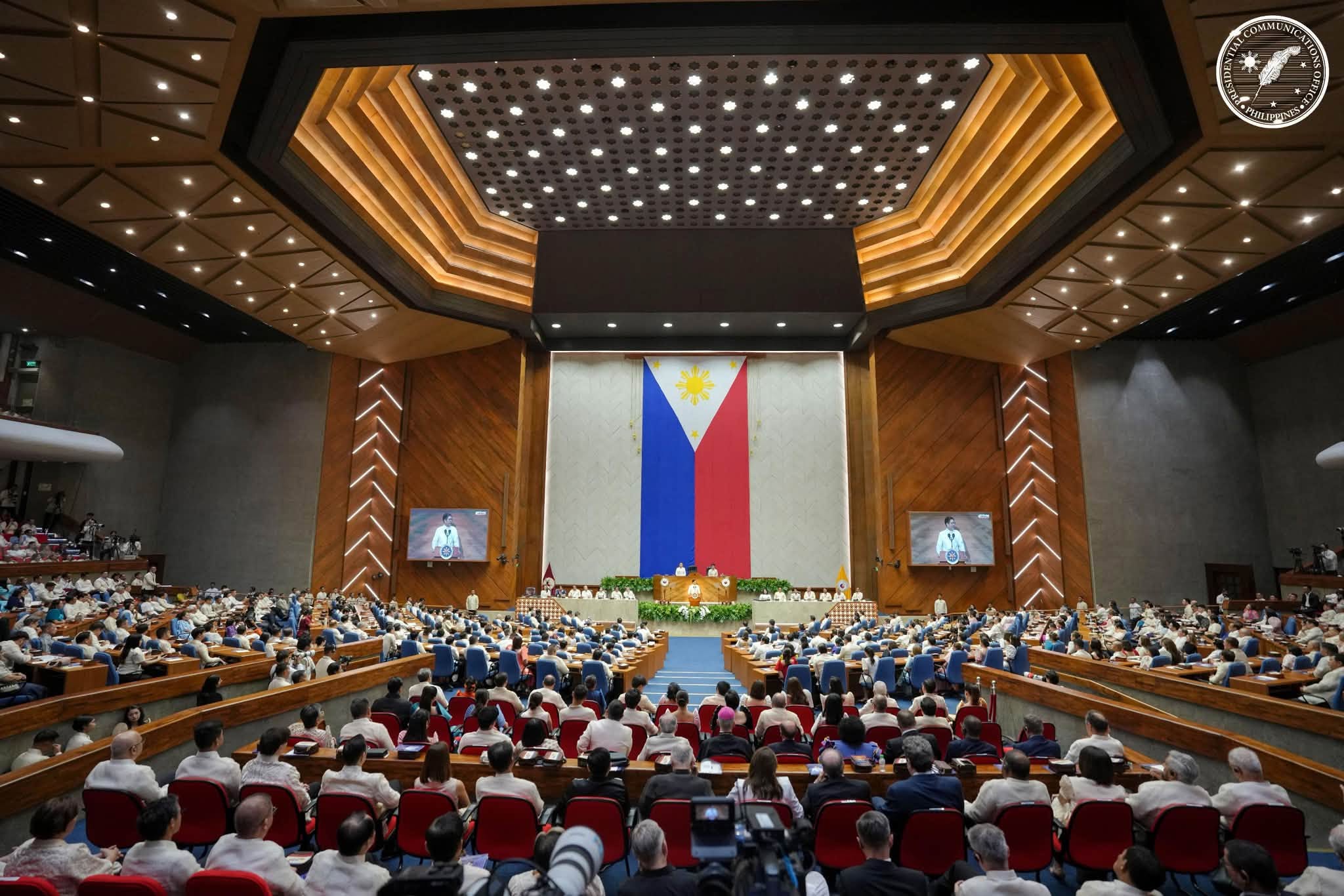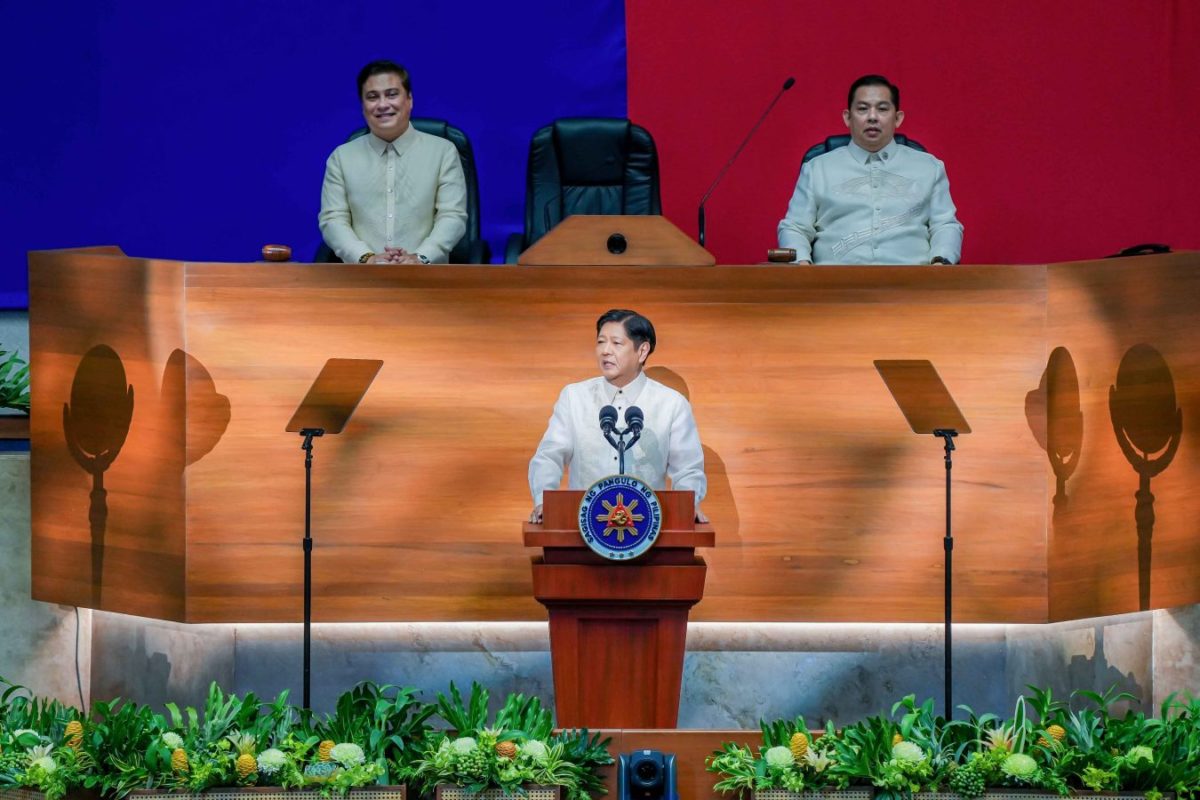
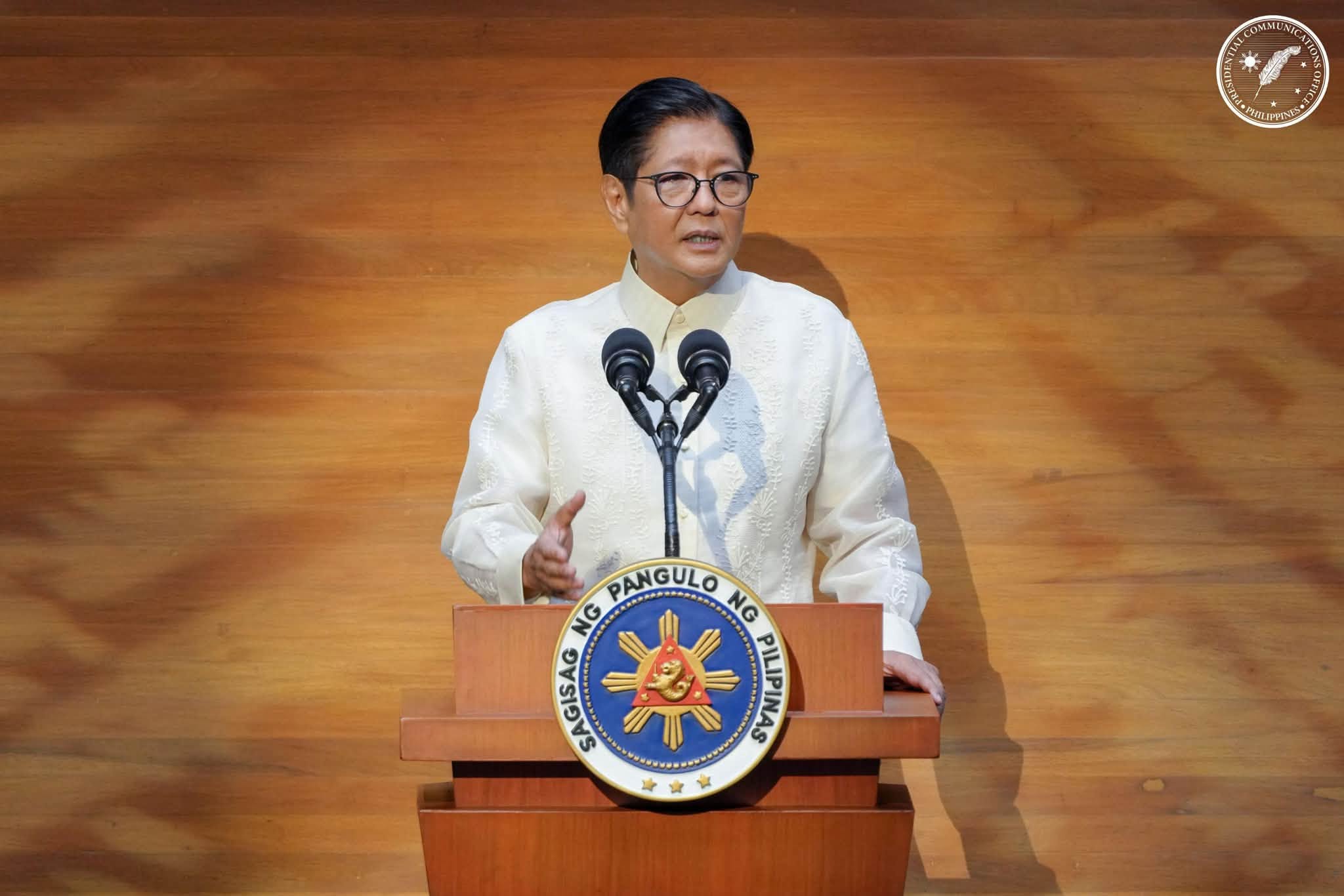
Without mentioning China, President Ferdinand Marcos Jr. blasted what he called a threat to the country’s dignity and self-respect as he pledged to uphold the 2016 Arbitral Award in his penultimate State of the Nation Address on Monday.
“Our unity and collective consciousness are challenged now greater than ever before. A common threat lies before us, directed against our dignity and self-respect as a people. Of late, our very humanity has been called into question,” he declared, earning him thunderous applause and a standing ovation from the audience at the joint session of Congress.
In a booming voice, the president said that his administration would use all means against any attempt to undermine the arbitral ruling, which defines the Philippines’ sovereign rights in the West Philippine Sea but ignored by China.
“This is not a claim that we advance alone, nor one that we will abandon,” he stressed. “We are Filipinos, and we do not yield.”
Marcos went on to honor the military, the Coast Guard, and the fisherfolk who continue to patrol the country’s waters despite the risks, mainly from Beijing’s violent actions. “To them we owe collective gratitude and appreciation for they give life to the letter and spirit of the Arbitral Award,” he said.
The president called on Filipinos to stand up and hold their heads high in defending their country. “Sa mga pang-aalipusta, hindi tayo matitinag. Sa manlulupig, hindi tayo pasisiil,” he declared.
The president ended his one-and-a-half-hour SONA on this powerful and dramatic message. He began his speech by addressing the controversial flood control projects that he had exposed in his 2025 SONA.
He said that some P25 billion have already been returned to the government, in addition to properties that have been frozen. He mentioned the cases that have been filed against lawmakers, government officials, and corrupt contractors as he assured that no one will be spared in apparent reference to his cousin and former speaker, Martin Romualdez, who has been implicated in the scam.
Marcos acknowledged that the Office of the Ombudsman may soon be filing criminal charges against Romualdez that could eventually lead to his detention, but said personal ties would not stand in the way of accountability.
“Masakit man sa atin ito, ngunit kailangan nating gawin ang tama (Painful as it may be for us, we have to do what is right),” he said.
“Hindi ako pangulo ng aking pamilya, hindi ako pangulo ng aking kaibigan.Pangulo ako ng Pilipinas at ang tungkulin ko ay sa inyo, ang aking kapwa Pilipino,” he stressed.
(I am not the president of my family; I am not the president of my friends. I am the President of the Philippines, and my duty is to you—my fellow Filipinos.)
Romualdez issued a statement, saying he respects the president’s remarks. “Masakit man ito sa aming pamilya, iginagalang ko ang naging pahayag ng Pangulo. Hindi ako kailanman humingi ng pabor o espesyal na pagtrato.” He vowed to face the charges even as he maintained his innocence.
(While this is painful for our family, I respect the president’s statement. I never asked for any favor or special treatment.)
For the most part of his fifth SONA, Marcos listed his administration’s achievements this year and his priority legislation for Congress.
Notably the president was silent on the ongoing impeachment trial of Vice President Sara Duterte, politics and the wranglings in the Senate.
Here are the highlights of the president’s SONA:
On agriculture
Marcos said the government continues to strengthen the agriculture sector through better technology, infrastructure and mechanization to guarantee food supply at low prices. As a result, the country has increased the production of palay, corn, sugar, as well as poultry and hogs.
Meanwhile, the areas for coconut planting have also increased, resulting in 18 million coconut trees planted across the country, and the government aims to plant 100 million trees by the end of his administration. This would guarantee a stable coconut industry until the next decade.
Amid the surge in commodity prices as a result of the crisis in the Middle East, Marcos said the government provided support to about two million farmers and fishermen under the Presidential Assistance to Farmers, Fishermen and Families, while its Benteng Bigas Meron Na Program helped more than 12 million Filipinos across the country. Its more than 800 Kadiwa centers offered products at low prices, including goods from farmers and fisherfolk.
On energy
Marcos asked Congress to immediately overhaul the country’s power pricing framework by removing the “systems loss” charges currently being passed on to consumers, saying it is unfair to make the public pay for inefficiencies in the power sector.
“We, the people, request—no, we demand—for the immediate amendment of the EPIRA (Electric Power Industry Reform Act) and to prohibit charging systems loss against consumers, including the value-added-tax thereon.”
He pressed Congress to pass the “Sariling Kuryente Act,” which aims to make it simpler and more affordable for every Filipino household to install rooftop solar panels and battery storage systems.
These reforms, he said, are in response to public clamor for lower electricity rates, which remain among the highest in Southeast Asia.
In the midst of the continuing fuel crisis, Marcos stressed that the rise of petroleum prices was not sudden but driven by global market pressures. He said the government had moved to cushion the impact through diesel subsidies, assistance to more than a million public transport drivers, and free rides. Additionally, the president temporarily barred power disconnections for households paying bills in installments for June and July to provide some protection in electricity bills at the height of price hikes.
He also pointed out the efforts to diversify and expand the country’s energy sources as a long-term response to costly fuel and supply vulnerabilities, citing around 200 energy projects being closely monitored until the end of his term, with a combined capacity of about 10,000 megawatts, including more than 60 new plants powered by geothermal, solar, hydro, wind, and biomass.
On the environment
Marcos emphasized flood mitigation and solid waste management as key priorities, citing the nationwide “Oplan Kontra Baha,” creek and drainage cleanups led by the Metro Manila Development Authority in and around the capital, and cash-for-work programs that cleared more than 200 creeks and waterways from Luzon to Mindanao.
Moreover, he called for updating the 25-year-old Ecological Solid Waste Management Act to align with modern technologies such as waste-to-energy and waste treatment, and pointed to MMDA waste recovery and upcycling initiatives, including the conversion of the former Carmona Sanitary Landfill into MMDA Nature Park, a planned hub for high-level disaster preparedness training and simulations.
Alongside these measures, Marcos reported that his administration has extended assistance to more than 600,000 calamity-affected families with allocations of over P3 billion for emergency food, medical, care, cash aid, and housing assistance, delivered through a nationwide disaster response network of disaster resources centers in Luzon, Visayas, and Mindanao. He also highlighted the new crisis-readiness systems such as a Government Emergency Communications System and a private sector-led, first ever satellite -to-mobile service designed to keep telecommunications running during disasters under a state of imminent calamity framework.
On the economy
Following the lingering economic impacts of the Middle East fuel crisis, Marcos called on Congress to expand the tax exemption measures to ensure the “continued progress” of the middle class. “We will pursue tax relief measures that promote growth, generate revenue, and advance equity toward socio-economic sustainability.”
The president’s proposed tax reforms include the income tax exemption for workers earning not more than P350,000 per year, alongside the lowering of income tax rates for other wage earners. Marcos also sought to spare small enterprises from the minimum corporate income tax. Meanwhile, granting amnesty covering unsettled income, estate, donor’s, and value-added taxes, including their corresponding fines, was also among the economic reliefs highlighted by the chief executive.
Aside from proposals, Marcos mentioned the Bureau of Internal Revenue’s implementation of a “one-time tax abatement” this year, which micro-entrepreneurs can avail of. “It aims to provide some relief to those who have suffered losses or whose income has declined due to difficult economic conditions,” he said in Filipino.

On infrastructure
The president highlighted his administration’s push to modernize transport systems, strengthen disaster response infrastructure, and improve the quality of public works, saying the government has shifted from a reactive to a predictive approach in addressing emergencies and national development.
He said the government has built a nationwide disaster response network that allows emergency relief to reach affected communities within 24 hours. The network consists of disaster resource centers in Luzon and the Visayas, with another to be established in Mindanao, supported by 15 hubs, 76 spokes and 919 last-mile facilities nationwide.
To strengthen disaster preparedness, Marcos said construction of the first Ligtas Pinoy Centers will begin this year in disaster-prone areas, including Bicol, Eastern Samar, Bukidnon and Davao de Oro. The facilities are designed to withstand super typhoons with wind speeds of up to 340 kilometers per hour and earthquakes of up to magnitude 8.4, he said. He also called for amendments to the National Building Code to align it with modern engineering standards and ensure that both public and private structures can better withstand natural disasters.
On transportation
The chief executive said the administration is prioritizing railways, busways, transport hubs, airports and seaports to expand capacity and improve public services, particularly as more Filipinos rely on mass transportation.
He announced that operations of the North-South Commuter Railway between Valenzuela and Malolos are expected to begin next year, with the Department of Transportation aiming to extend the line to Clark before the end of his term. Also, 12 stations of the MRT-7 will open next year, marking the first new MRT line in nearly three decades. The line will initially run from North Avenue to Sacred Heart in Quezon City before its planned extension to San Jose del Monte, Bulacan, serving nearly one million passengers daily.
He credited the recently enacted Accelerated and Reformed Right of Way Act for helping remove one of the biggest obstacles to mass transit projects by speeding up right-of-way acquisition.
On social services
The president described how money recovered from the flood control corruption scandal, which would have otherwise been used to line the pockets of corrupt officials and contractors, was instead redirected toward essential public services.
Marcos highlighted that the government repatriated over 12,000 OFWs, and provided food, medicine, shelter, and financial assistance to more than 140,000 OFWs still in the Middle East.
Beyond the response to the crises brought about by the war, Marcos spotlighted progress in health care, housing, and social protection. On health care, he cited YAKAP, which has given early check-ups to 4.5 million of the 25 million Filipinos enrolled this year, and the GAMOT program, which covers 75 essential medicines for PhilHealth members with a P20,000 annual benefit limit. He also noted VAT removal on over 2,000 medicines–including those for cancer, hypertension, diabetes, and mental health– and Zero-Balance Billing, which allowed nearly three million patients to leave DOH hospital wards without paying out of pocket.
On housing, the president reported what the government has done to make home ownership more attainable for Filipino families. He said the Pambansang Pabahay para sa Pilipino Program (4Ps) has built or funded more than 100,000 homes in the past year alone, and that the PAG-IBIG Fund raised its housing loan limit from P6 million to P10 million this year. On social protection, Marcos said aid is being redirected to reach roughly 7.5 million families most in need, including 4Ps and Walang Gutom beneficiaries, minimum-wage SSS members, and poor households that have not yet received government assistance. Meanwhile, the Benteng Bigas Meron Na program has allowed over 12 million Filipinos to purchase up to 10 kilos of rice monthly at the subsidized rate of P20/kilo.
On foreign relations
Without mentioning China, Marcos hit back at the neighboring superpower whose controlled media recently put out a cartoon portraying Filipinos as monkeys.
“A common threat lies before us, directed against our dignity and self-respect as a people,” he warned as he tapped into the Filipino sense of pride and patriotism to the audience’s resounding applause.
“Let me remind our friends and our detractors: Filipinos are a noble, kind, gracious, and great race. We are not greedy. We are not racists. We are not liars. We are respectful, and we are dignified. We are Filipinos, and we do not yield.”
In an extended celebration of the 10th anniversary of the July 12, 2016 Philippine legal victory against China at the Arbitral Tribunal, Marcos paid tribute to the Armed Forces, Coast Guard and the fishermen who bore the brunt of Chinese hostile maritime activities: “To them we owe collective gratitude and appreciation for they give life to the letter and spirit of the Arbitral Award.”
Marcos described the 11-member Association of Southeast Nations as “our safe harbor.”
With the Philippines as the 2026 ASEAN chair, he shared the benefits from the organization’s solidarity and cooperation: ASEAN Plus Three Emergency Rice Reserve System that will guarantee emergency rice supply in case of shortage in our domestic production; ASEAN Digital Economy Framework that will harmonize digital rules and enable cross-border digital transactions;and the Framework Agreement on Petroleum Security for the joint stockpiling of energy assets in the region.
Beyond ASEAN, the President promoted the US-led Pax Silica Initiative which he described as an industrial hub that will create an eco-system that will have AI at its core. “It will bring quality jobs to our people, accelerate our industrial competitiveness, and revitalize our economy,” he said.
The Initiative is being opposed by progressive groups citing adverse effects on the environment and the displacement of indigenous tribes in identified sites of the hub.
The President said government trade facilitation efforts have resulted in integrating our country into the international free trade network that is the widest and most active one we have ever had in our history.
“It has yielded transformative economic agreements, such as the Regional Comprehensive Economic Partnership. And now, we are set to seal yet another promising Comprehensive Economic Partnership Agreement, this time with the United Arab Emirates,” he said, adding that there are now 23 free trade agreements in force or under active negotiations with other countries.
He credited continuous foreign investments to policies that promote ease of doing business and accelerate digital transformation that curb red tape and corruption. He said six trillion pesos in investments have been facilitated through our Green Lanes which translate to over 400,000 jobs.
He boasted that indigenous farm products, such as ube, coconut, bananas, and other tropical fruits are competting in the global market. He said we will soon be exporting enoki mushrooms.

On education
Public schools will hire returning overseas workers, who are licensed teachers, affected by war in the Middle East. Some 30, 000 teaching positions need to be filled up to address the teacher backlog, Marcos said.
The senior high school curriculum will be strengthened to help prepare Filipino students to be globally competitive, including intensifying work immersion experience. More than half of the 140 higher educational institutions included in the World University Ranking Innovation are local state universities and colleges.
The president stressed the need for reskilling and upskilling of workers, including drivers, farmers and fisherfolk, encouraging them to take advantage of TESDA’s technical and vocational courses, citing the high placement rate of tech-voc graduates or those who earned national certification for highly-employable skills.
To encourage 4th-year college students to graduate, a Presidential Scholarship program has allotted P100,000 for five students in every barangay nationwide.
On labor, OFWs
President Marcos’ remarks on labor and overseas Filipino workers focused on the administration’s efforts to support Filipino workers both domestically and abroad. He cited the repatriation of more than 2,000 OFWs from the Middle East and how they were assisted in restarting their lives through OWWA’s livelihood program, as well as finding jobs overseas.
At the same time, the government will not neglect the welfare of the workers in the Philippines, particularly the middle class and small businesses that are burdened by the effects of the crisis. Among the measures he mentioned are the initiative for increasing employment, a fair reduction in income tax, and removing the minimum corporate income tax for small businesses.
Marcos also broadened the discussion on jobs to cover the wider sectors of the economy and education. Through the Bagong Pilipinas Serbisyo Fairs held in March, more than 1,500 senior high school graduates were hired on the spot and can now apply for entry-level positions in government. Under the programs of the Department of Labor and Employment and the Department of Agriculture, more than ten thousand farmers and fisherfolk across the country will be trained in new knowledge and skills.
On good governance
Aside from the cases set to be filed against Romualdez, Marcos cited that some contractors, lawmakers, and top officials of the Department of Public Works and Highways involved in the flood control corruption have been charged or imprisoned. He also highlighted the administration’s efforts to recover public funds lost to anomalous flood control projects, with nearly P25 billion in cash and assets recovered, frozen, or preserved. More than P800 million of this was returned to the National Treasury.
Saying that “the wheels of justice are moving,” Marcos mentioned that reforms in the DPWH have begun, including the hiring of new graduates as well as “upright and reliable” job order and contract of service personnel. He assured the public that each project and its allocated budget would be closely monitored by the government and partnered civil society organizations. The citizens’ role in reporting complaints through Isumbong sa Pangulo was also recognized by the chief executive as part of efforts against corruption.
The president, however, did not mention the ongoing impeachment trial of Vice President Sara Duterte.
On the peace agenda
Marcos cited the first parliamentary BARMM elections, in accordance with R.A. 12317, which he said is a critical achievement under the Comprehensive Agreement on the Bangsamoro.
He highlighted the soon-to-be formalized historic completion of the peace pact with the Cordillera Bodong Administration (CBA) Cordillera People’s Liberation Army (CPLA) after 15 years.
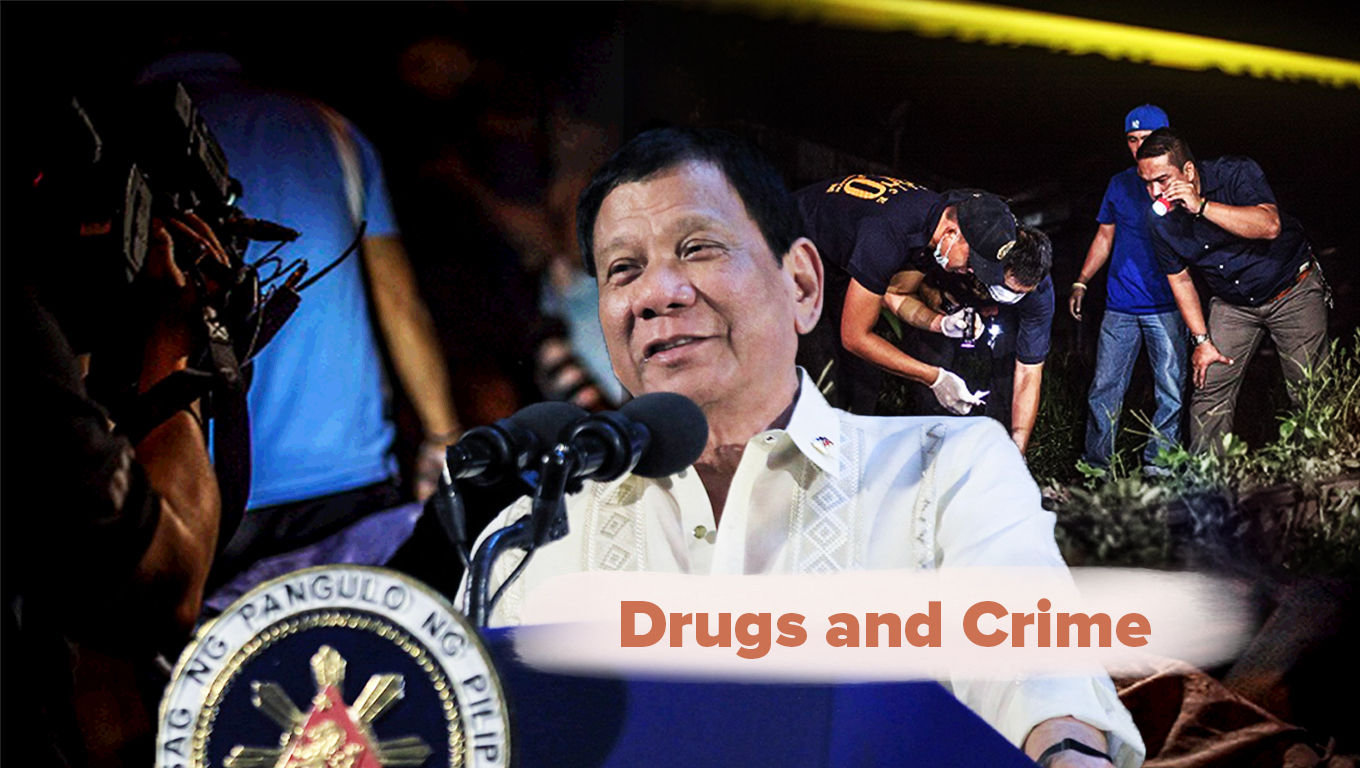
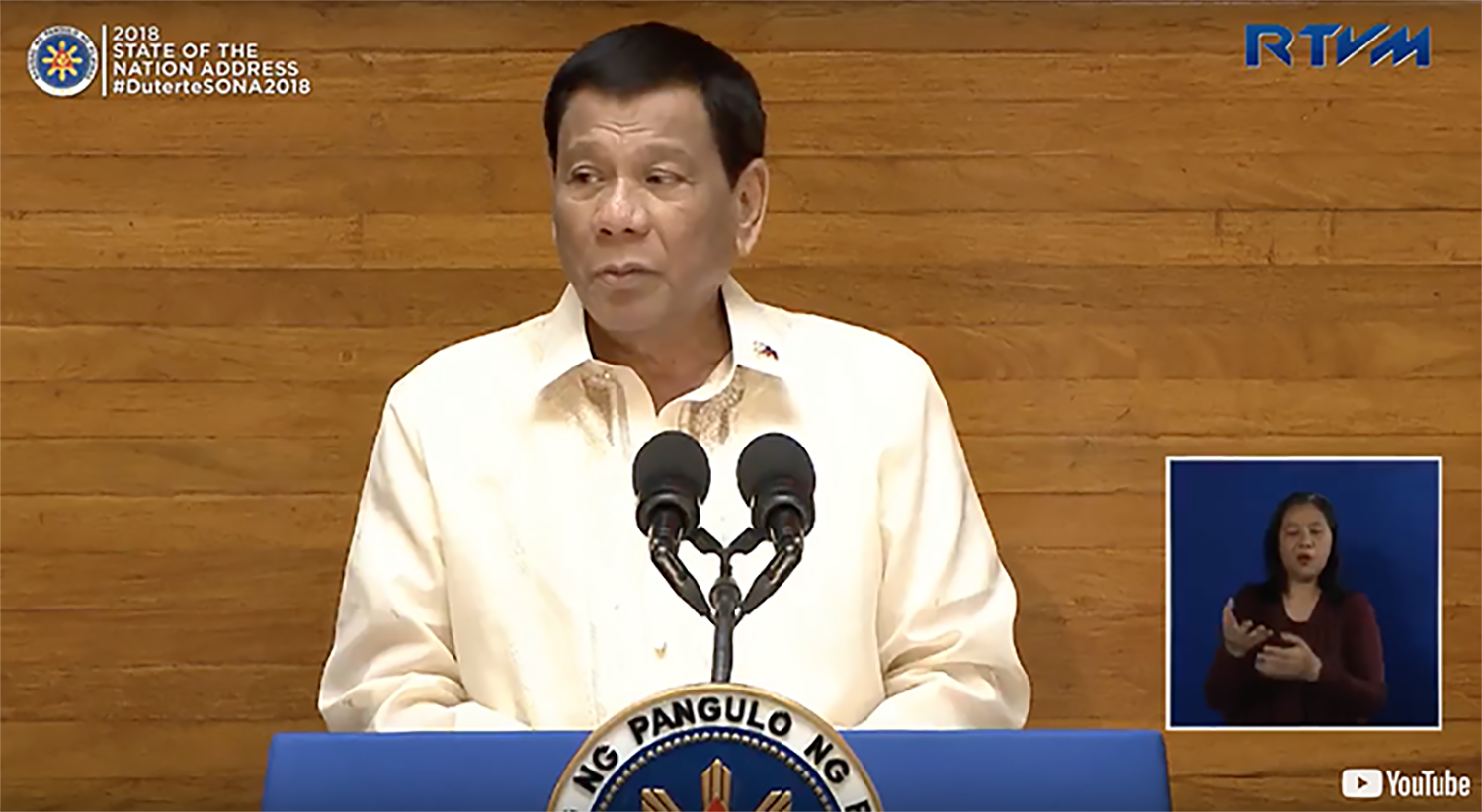
On drugs and crime
Veering away from his usual talk on illegal drugs and crime statistics, Marcos addressed criminality involving minors and called for the protection of children.
The president’s speech zoomed in on the deadly Tacloban school shooting where two minors killed three students on a rampage this July. Citing “fake news,” pornography, depiction of casual violence and hate culture online as harmful influences, Marcos pushed for a whole-of-society approach to safeguard and guide the Filipino youth.
The president promised wider cooperation among local governments, the Philippine National Police and the Department of Education in strengthening security and programs that aim to address bullying incidents, conflict among students and other emergencies. He also mentioned DepEd’s plan to hire 10,000 School Counsellor Associates who will provide mental health support to learners. – With reports from Ellen Tordesillas, Rosario Liquicia, Tita C. Valderama, Elma Sandoval, Celine Isabelle Samson, Valerie Nuval, Vincent Galaura, Janna Millenas, Aira Delfin, and John Raniel Docot