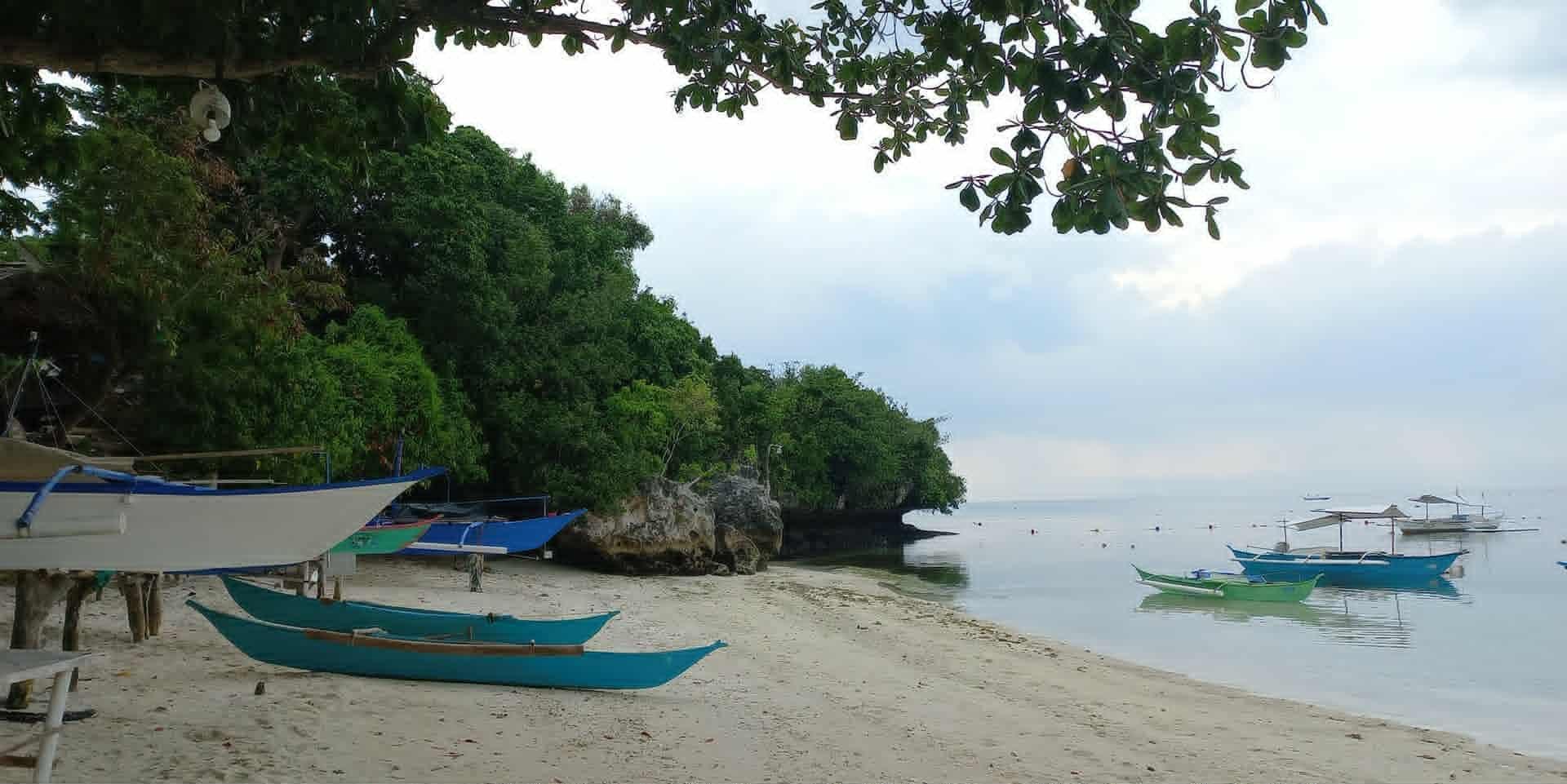
On an overcast Friday morning, a blue motorized outrigger boat ripples through undulating dark slate-blue seawater a few meters off the municipal waters across Sta. Fe Beach in Barangay Sta. Filomena in the town of Alburquerque (locally known as Albur).
Junri Cagubcub, 46, stands at the front of the boat, gazing toward the horizon.
“Our job is to watch over this”, pointing to the waters dotted with bobbing white buoys marking the core zone of the Sta. Filomena Marine Sanctuary.
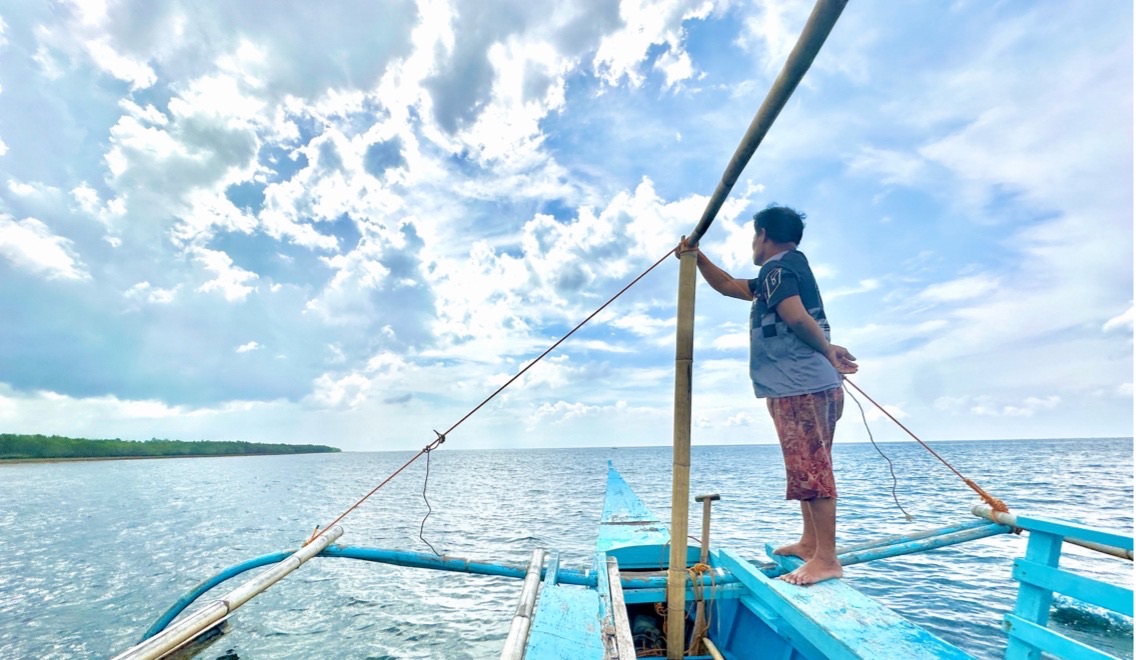
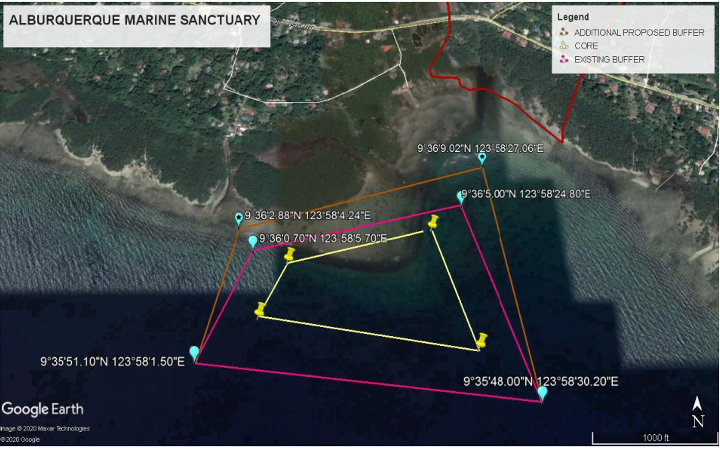
The demarcated area is the core zone of Sta. Filomena Marine Sanctuary of Barangay Sta. Filomena in Albur, which was established in 2001 and institutionalized in 2003 through Municipal Ordinance No. 08. In this 11.5251-hectare marine protected area (MPA), all fishing and extractive activities within its designated core and buffer zones are prohibited.
Duly registered local artisanal fisherfolk may pass through the sanctuary area when following a run of “bolinao” (anchovies) but may not harvest these anchovies within the sanctuary. Regulating human activities in the designated marine sanctuary gives the reef system time to regenerate and provides fish and other marine life with a safe place to breed and thrive – supporting healthier ecosystems, greater biodiversity, and more stable fisheries over time.
Junri is a member of the 8-man Bantay Dagat (Sea Patrol) team under Albur’s Municipal Agriculture Office. They work two shifts to specifically patrol the Sta. Filomena MPA, day and night, with four people per shift.
“We protect this sanctuary so that the fish can breed and grow, but how will they multiply if they are looted?”
They have not caught any violators this year. Last year, they only captured one.
Rising fish stocks in Albur
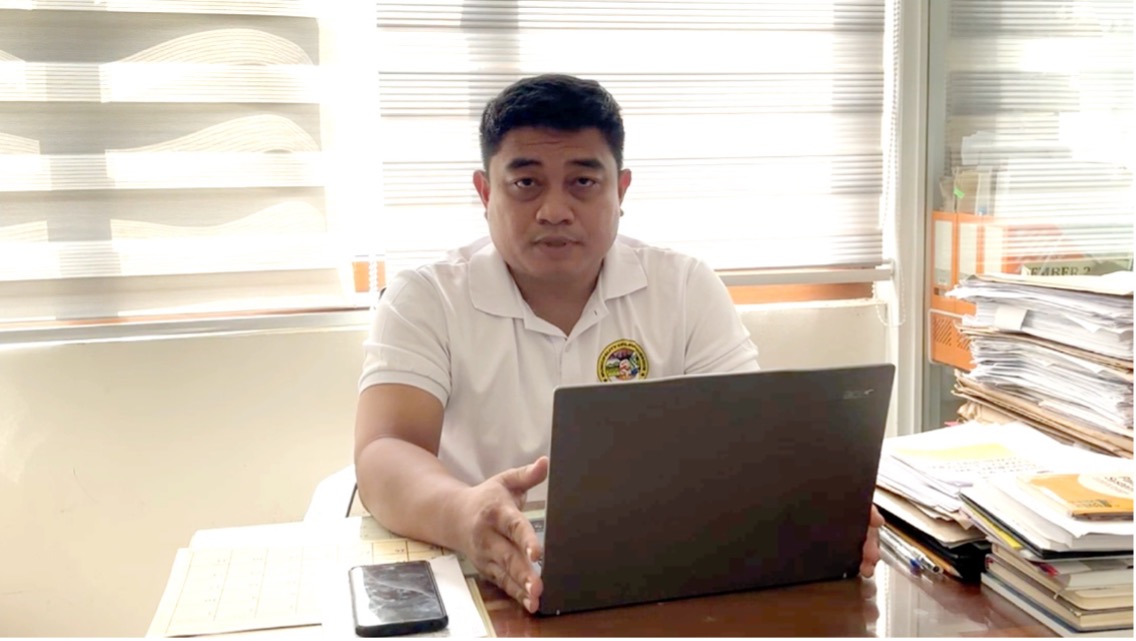
“The MPA is important to us. We need to protect our sanctuary as it is the breeding ground for our fishes. It benefits our fisherfolks and all Alburanons,” says Municipal Agriculture Officer Windel N. Malaran.
Habitat mapping and assessment conducted in October 2018 in Barangay Sta. Filomena by the Coastal and Marine Ecosystems Management Program (CMEMP) Team of the Department of Environment and Natural Resources (DENR) Community Environment and Natural Resources Office (CENRO) – Tagbilaran City, reports that the marine sanctuary contributed to rising fish stocks in Albur.
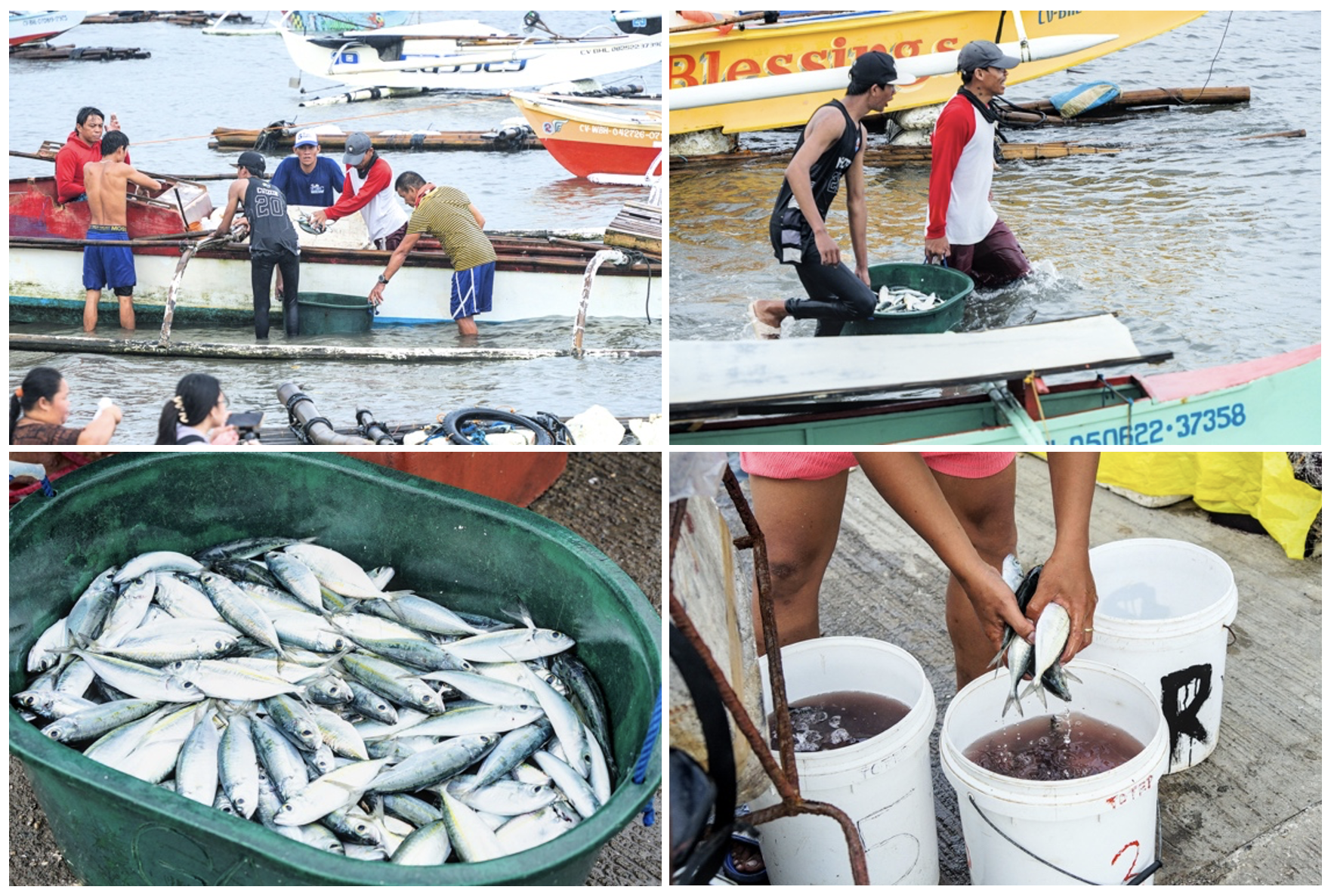
Based on the Sta Filomena Sanctuary Management Plan 2021-2025, fish density and fish biomass were both rated high in the 2018 habitat mapping and assessment in the area.
Common fish species documented include bolinao (anchovies), bakay (threadfin bream), tulingan (bullet tuna), kamuhoy (humpack red snapper), danggit (rabbitfish), anduhaw (mackerel), tamarong (big-eye scad), and burotburot (round scad). Coral conditions, however, were reported to be gradually declining, attributed to sediment and silt deposition during heavy rains, climate change, and destructive human activities.

While illegal and destructive fishing methods in Albur have waned over the past two decades following stricter local enforcement of fisheries laws and the sanctuary’s establishment, a few illegal fishers still persist.
“It was common before, illegal fishing, like cyanide and dynamite fishing. But people have realized their dangers, not just to our coastal environment but to lives,” says Dennis Bitoy, 51, a member of the Sta. Filomena – Tagbuane Fisherfolks Association, recalling someone from the village who was blinded and maimed when a dynamite charge exploded in his hand.
“Most MPA violators are “compressor” fishers, and they’re not from here,” says Malaran, Albur’s Municipal Agriculture Officer.
The so-called “compressor fishing” is prohibited under the Philippine Fisheries Code (RA 8550), as amended by RA 10654, because it uses active fishing gear. Active fishing gear and methods capture smaller fish and are particularly destructive to coral reefs, as they involve pounding corals with heavy iron or stone weights to lure fish toward the waiting nets.
Malaran says their team has already spotted and pursued three incursions of suspected illegal fishers this year. But unfortunately, the suspected violators were in faster pump boats.
“They had twin engines. Our team couldn’t keep up. Also, they usually sneak at night during bad weather, so it’ll be even harder for us to catch them.”
But the Bantay Dagat, together with the Coast Guard, are already hatching a strategy on how to capture them next time.
Protected landscape and seascape
The Sta. Filomena Marine Sanctuary is Albur’s only fish sanctuary. And it partly lies within the Alburquerque-Loay-Loboc Protected Landscape and Seascape (ALLPLS), a 1,165.52-hectare nationally-legislated protected area under the Philippines’ NIPAS/ENIPAS framework, as mandated by RA 7586, or the National Integrated Protected Areas System (NIPAS) Act of 1992.
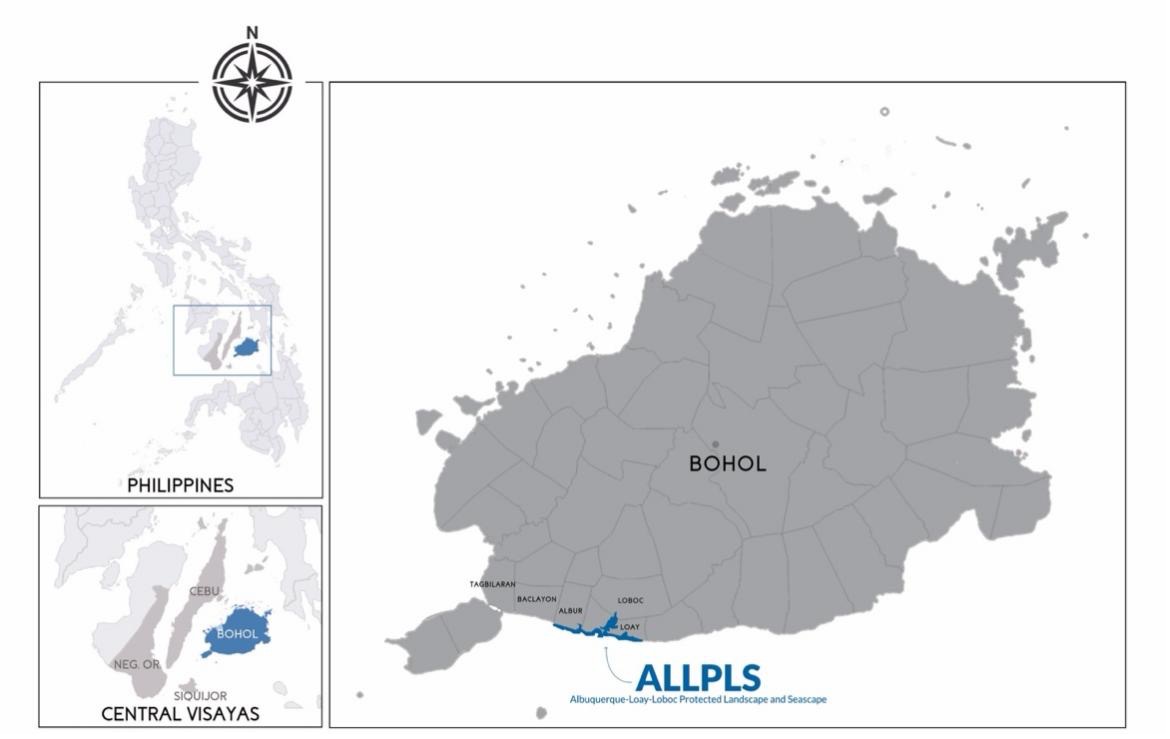
The mangrove swamp forest reserve of the towns of Alburquerque, Loay, and Loboc, and their surrounding waters, was first collectively declared a protected landscape and seascape through Proclamation No. 293, April 23, 2000, and later further institutionalized under RA 11038 or the Expanded NIPAS Act of 2018 as a national park or “public domain lands or seascapes primarily designated for the conservation of native plants and animals, their associated habitats, and cultural diversity”.
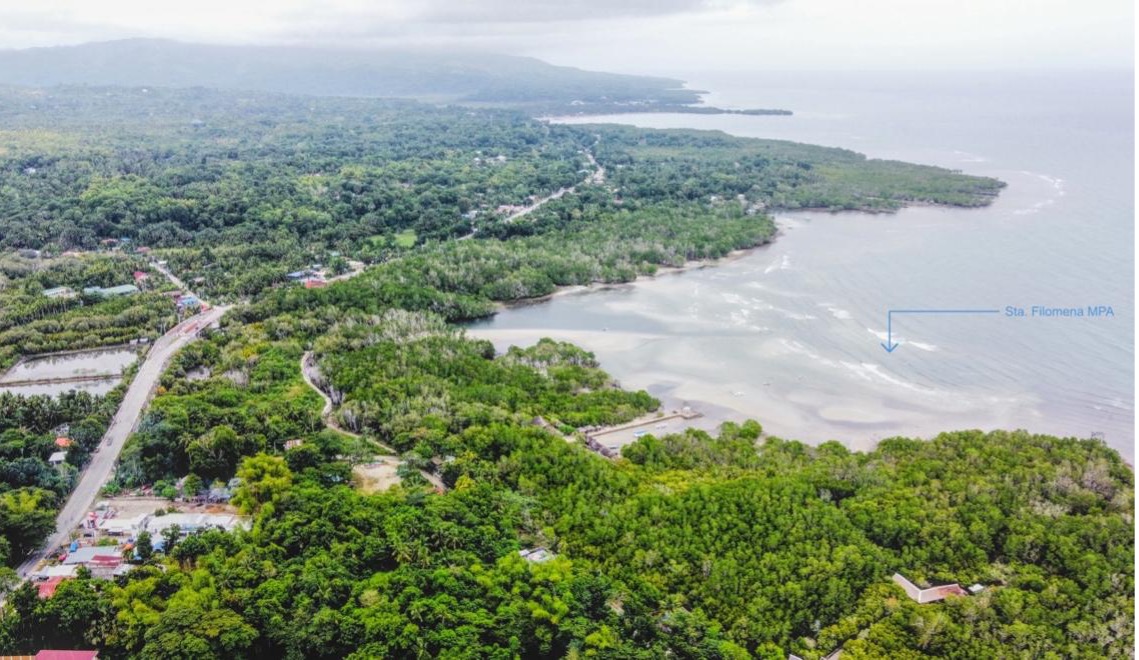
The ALLPLS, one of Bohol’s 16 protected areas, is governed by a site-specific multi-sectoral body, the Protected Area Management Board (PAMB), and managed by a dedicated Protected Area Management Office (PAMO) led by a Protected Area Superintendent. The PAMO regularly assesses and monitors the fauna, flora, and coral ecosystems using the Biodiversity Assessment and Monitoring System (BAMS) to ensure effective, science-based management of the biodiversity assets within the protected area.
“The Alburquerque-Loay-Loboc Protected Landscape and Seascape remains rich in biodiversity, supporting a diverse range of plant and animal species, including those of conservation importance,” says Forester Rosito D. Ydulzura, the Protected Area Superintendent of the ALLPLS.
It is home to 12 of the Philippines’ 47 “true mangroves” and associated species. In the most recent assessment and monitoring in September 2026, the team documented a mature gapas-gapas mangrove tree (Camptostemon philippinensis), which is classified as “endangered” under the IUCN (International Union for Conservation of Nature) Red List of Threatened Species and included in the Updated National List of Threatened Philippine Plants (DAO 2026-20).
Another important indicator species, the Philippine Hanging Parrot or kulasisi (Loriculus philippensis), identified as critically endangered in the Philippines (DAO 2019-09), has also been documented in the ALLPLS.
While the presence of these threatened wildlife in the ALLPLS indicates a healthy, functioning ecosystem, it also underscores the need for stronger conservation efforts within the protected area.
To help protect biodiversity, natural resources, and cultural heritage, a wide range of disruptive or destructive activities, such as hunting or poaching, dumping waste, squatting, construction, and operating a business, are prohibited in protected areas. Special uses may be allowed, but require clearance from the management board, tenurial instruments, and other permits, such as a Special Use Agreement in Protected Areas (SAPA) and an Environmental Compliance Certificate.
“Protecting ALLPLS means protecting not only the environment but also the livelihood, safety, and future of the communities that depend on it,” adds Ydulzura.
The ALLPLS management team includes a Park Protection Officer and Park Rangers who regularly monitor and patrol the protected landscape and seascape across the 23 barangays in the three municipalities within the ALLPLS. The team also regularly conducts public awareness campaigns in the communities.
Marine Wildlife Protection
In 2024, concerned residents of Albur filed a complaint against a private tour company operating within the ALLPLS without the necessary permits. The ecotourism activities it offered also included whale shark interaction within the Sta. Filomena Marine Sanctuary. This prompted an inquiry, which led the DENR to issue a temporary stoppage order on April 8, 2024.
“If locals were not allowed to glean seashells along the shallow shores within the marine sanctuary, why was the whale shark interaction allowed?” a local fisherfolk also asked, echoing the complainants.
Additionally, the whale shark interactions involved lure-feeding, in which large quantities of krill are thrown into the water to draw the whale sharks closer to the surface and keep them in the area, guaranteeing up-close interaction with tourists. This alters whale sharks’ natural nutrition and migratory behavior and puts them at risk of boat propeller strikes or harmful interactions with swimmers. Krill leftovers also pollute the surrounding seawater and even cause an unmistakable stench, noted by residents and tourists alike.
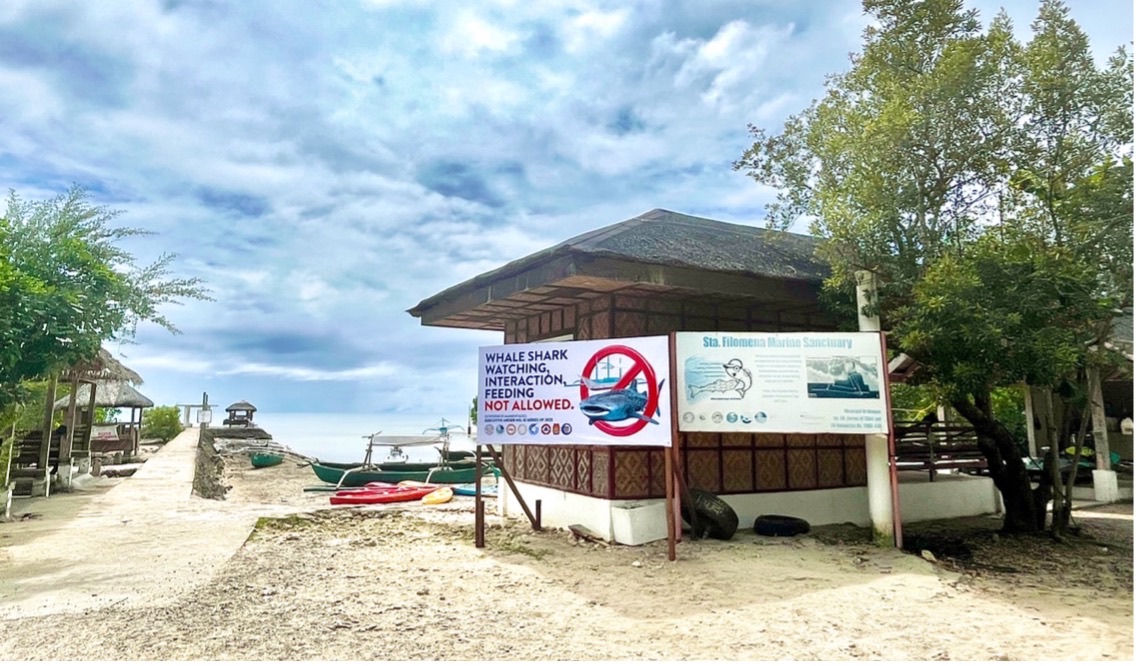
Provisioning and other harmful acts against marine wildlife are prohibited under Bohol Provincial Ordinance No. 2020-008, approved on March 31, 2020, and the Joint Memorandum Circular No. 1, Series of 2020, issued in October 2020 by the Department of Tourism, DENR, Department of Agriculture, and Department of the Interior and Local Government. Both measures set rules and regulations for sustainable marine wildlife tourism interactions in natural habitats.
In February 2025, at the urging of the local ecotourism sector and environmental groups, the provincial government of Bohol reaffirmed its commitment to environmental protection and sustainable tourism and enforced the law prohibiting the provisioning of marine wildlife, suspending all whale shark interaction activities in the province. As a result, whale shark tourism in Albur, Dauis, and Lila effectively ceased.
This November, about 20 months after the suspension, the provincial government is set to reopen whale shark watching activities – but under stricter measures as laid out in the Enhanced Sustainable Marine Wildlife Interaction Ordinance of the Province of Bohol, approved on March 19, 2026, and its corresponding Implementing Rules and Regulations (IRR) approved a month later. The update retains the previous ordinance’s and JMC’s bans on feeding, touching, or harassing of marine wildlife, while laying out clearer enforcement mechanisms and strengthening stakeholder engagement.
Under the IRR, marine wildlife interaction “seasons” have been introduced: November to May for whale sharks and manta rays; year-round for dolphins, sea turtles, and other cetaceans.
Additionally, local government units and operators must satisfy essential requirements before being authorized to operate. These requirements include maintaining up-to-date land-use, coastal resource management, and ecotourism management plans; identifying designated interaction areas; complying with local ordinances; and completing all required training, certifications, and permitting procedures.
“There’s a strict “No Permit, No Operation” policy now. The requirements must be met for the issuance of a Certificate of Compliance by the Governor, as recommended by the multisectoral Marine Wildlife Sustainable Tourism Advisory Board chaired by the DENR Regional Director,” BPEMO-CRM Division Head Maria Villa Pelindingue assures.
Further, if the previous whale shark tourism operators in Albur return to their original site in Barangay Sta. Filomena, they must also comply with the MPA and ALLPLS regulations.
The current ALLPLS Protected Area Management Board, accordingly, is now also stricter in enforcing protected area regulations, having learned lessons from recent experiences.
Although inherently fraught and nuanced, this nested environmental governance and collaborative conservation add another layer of protection to local conservation areas such as the Barangay Sta. Filomena Marine Sanctuary.
Cultural Heritage Conservation
Alburquerque is known for its heritage church, the Santa Monica Parish Church; its local pottery and calamay, and, in recent years, the revival of its artisanal practice of making asin tibuok (whole or unbroken salt in English), which was inscribed in December 2025 on the UNESCO List of Intangible Cultural Heritage in Need of Urgent Safeguarding.
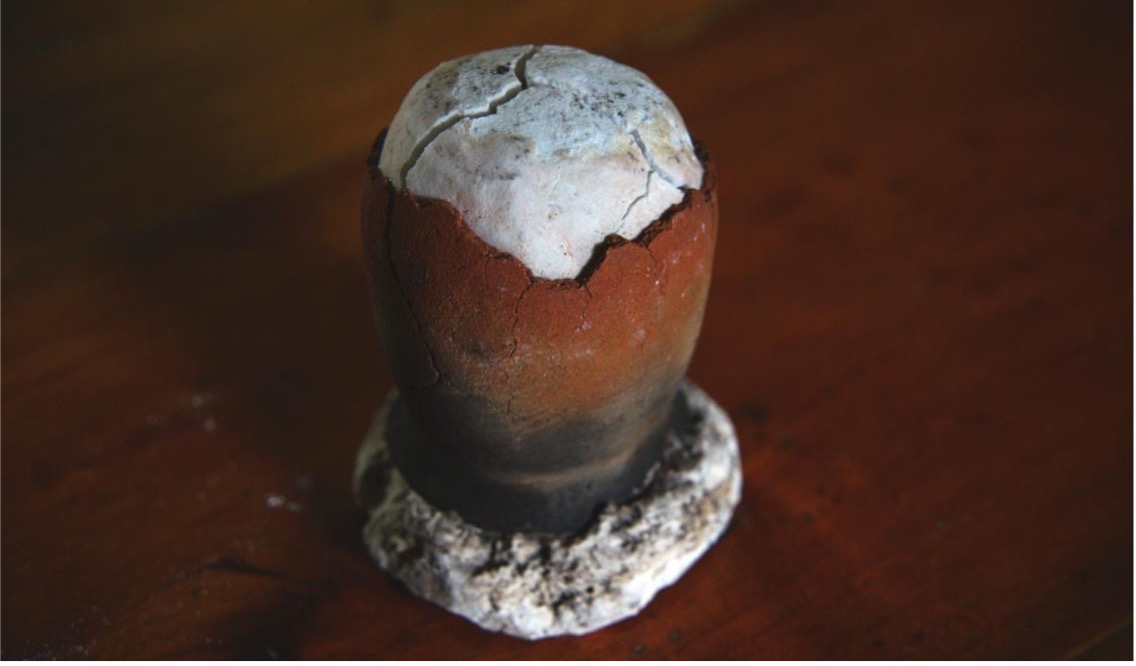
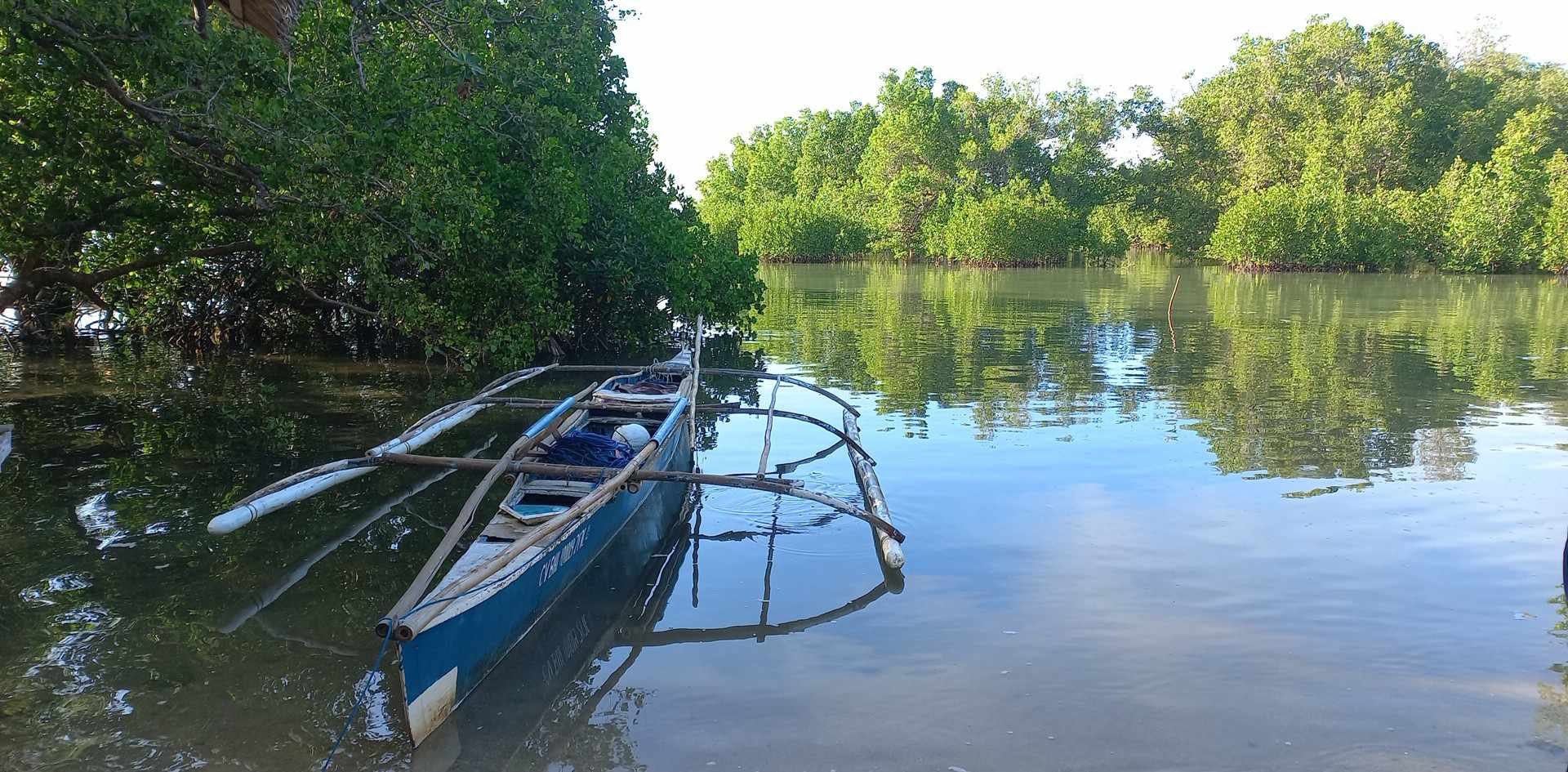
The making of Albur’s asin tibuok is deeply rooted in its mangrove ecosystem. Asin tibuok-making workshops (asinan) are traditionally situated on Albur’s coastline. Production begins by soaking coconut husks in seawater for three to six months, then burning the sea-soaked husks, filtering the resulting ash, and cooking the brine in clay pots.
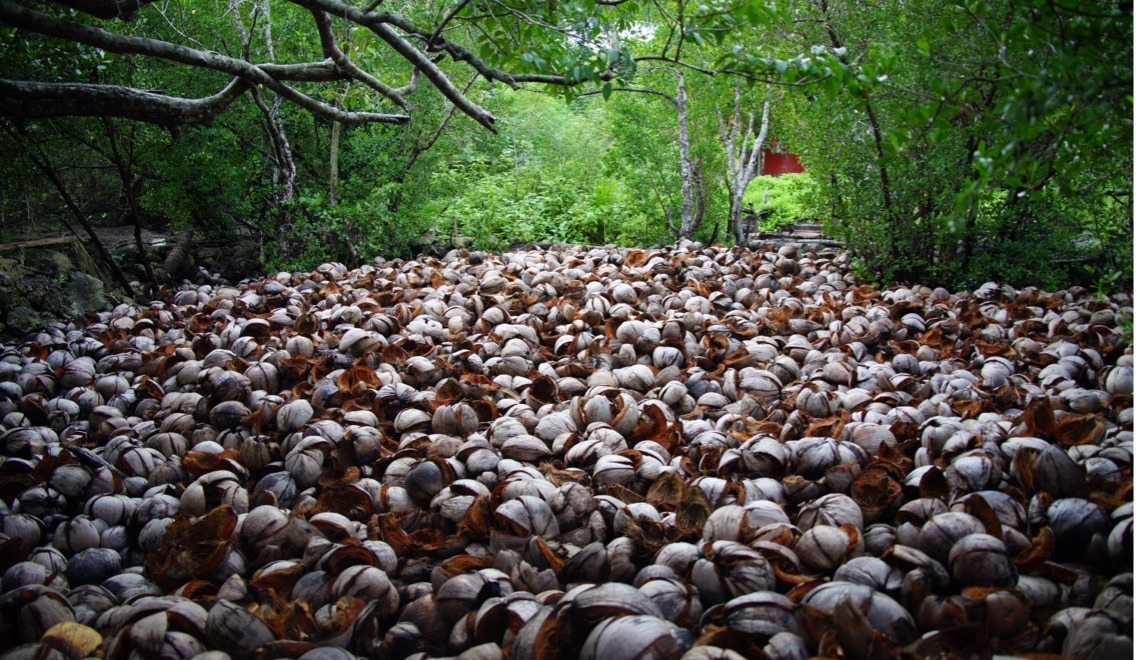
The municipal government of Albur has declared Puntod (part of the ALLPLS protected mangrove area) and all salt-making sites in the municipality’s coastal barangays as Cultural Heritage Sites via Municipal Ordinance No. 18, series of 2021, helping ensure that the existing rights of the asin tibuok tradition along Albur’s mangrove coastline and within the Alburquerque-Loay-Loboc Protected Landscape and Seascape are protected and respected.
Felix ‘Nong Non’ Pinlac, Jr., 83, founder of the asin tibuok makers (asinderos) association Kapunongan sa mga Mang-asinay sa Alburquerque (KASAMA) and is credited with initiating the revival of Albur’s asin tibuok tradition, recognizes that their mangrove and marine ecosystem is integral to the asin tibuok.
“Aside from ensuring the conservation and sustainability of our asin tibuok tradition, it is also our responsibility to protect our mangroves and our seawaters and help keep them clean and pristine, as they are integral to our asin tibuok tradition,” Nong Non shares.
KASAMA’s asinan is one of the three salt-making workshops located within the mangrove forest in Sitio Puntod, Brgy. Sta. Filomena, all of which have been given clearance by the ALLPLS PAMB.
Romano Apatay, 61, of the neighboring Asin Tibuok de Bohol workshop, concurs. “Our asin tibuok, which is processed from our seawater, is food. It is important that our natural environment and seawater are pristine and clean.”
A healthy mangrove forest supports healthy coastal waters, which in turn help sustain the cultural tradition of making asin tibuok.
Shared Responsibility
The Sta. Filomena Marine Sanctuary is one of Bohol’s 186 marine MPAs and contributes to the conservation of the province’s rich marine life. In particular, Sta. Filomena is among the local marine protected areas included in the Giant Clams Restocking Project of the Bohol Provincial Environment Management Office.
Giant clams (Tridacna gigas), known locally as taklubo (also used for other “smaller” giant clams), are classified as “critically endangered” on the IUCN Red List. Native to the Philippines, true giant clams, the world’s largest living bivalves, can grow to over a meter long, weigh 250 kilograms, and live for over 100 years. By filtering water, hosting symbiotic algae, and providing food and shelter for reef life, they support coral reefs. As indicator species, their health reflects the condition of the reef ecosystem.
In October 2022, the BPEMO-CRM team seeded 100 giant clams in the Sta. Filomena Marine Sanctuary. However, according to the team’s latest assessment, only 32 survived.
Pelindingue attributes the low survival rate to extreme weather conditions and human interventions. She is, however, hopeful of the survival and growth of the remaining giant clams in the Sta. Filomena MPA, whose average length is now about 40.80 cm.
BPEMO regularly assesses and documents the repopulated giant clams, which also allows for the regular monitoring of the condition of their host marine sanctuaries.
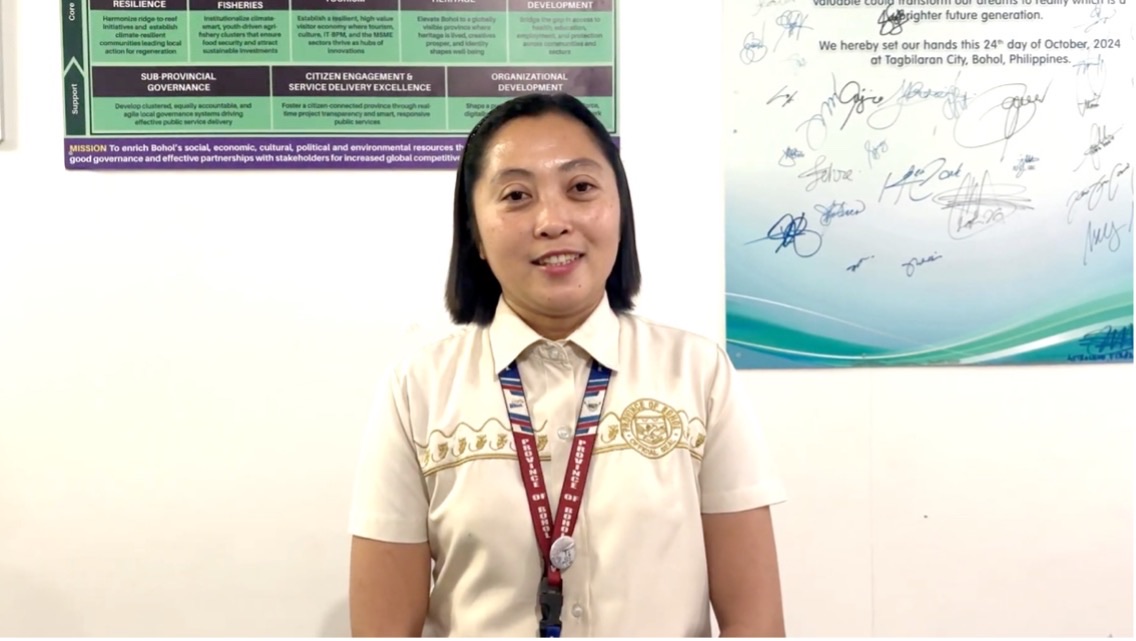
“This strengthened, science-based approach to marine resource management is central to the province’s commitment to environmental responsibility and sustainable development, a commitment reinforced by its designation as a UNESCO Global Geopark in recognition of its outstanding geological and ecological heritage.” Pelindingue adds.
In 2022, the whole province of Bohol was designated a UNESCO Global Geopark, the Philippines’ first. According to its primer, UNESCO Global Geoparks are “single, unified geographical areas where sites and landscapes of international geological significance are managed with a holistic concept of protection, education and sustainable development”.
Just this week, Bohol was unanimously granted a “Green Card” by the UNESCO Global Geoparks Council. This means Bohol continues to meet UNESCO standards for protecting its geological, biodiversity, and cultural heritage while promoting sustainable development, allowing the province to retain its UNESCO Global Geopark status for another four years.
Community Stewardship
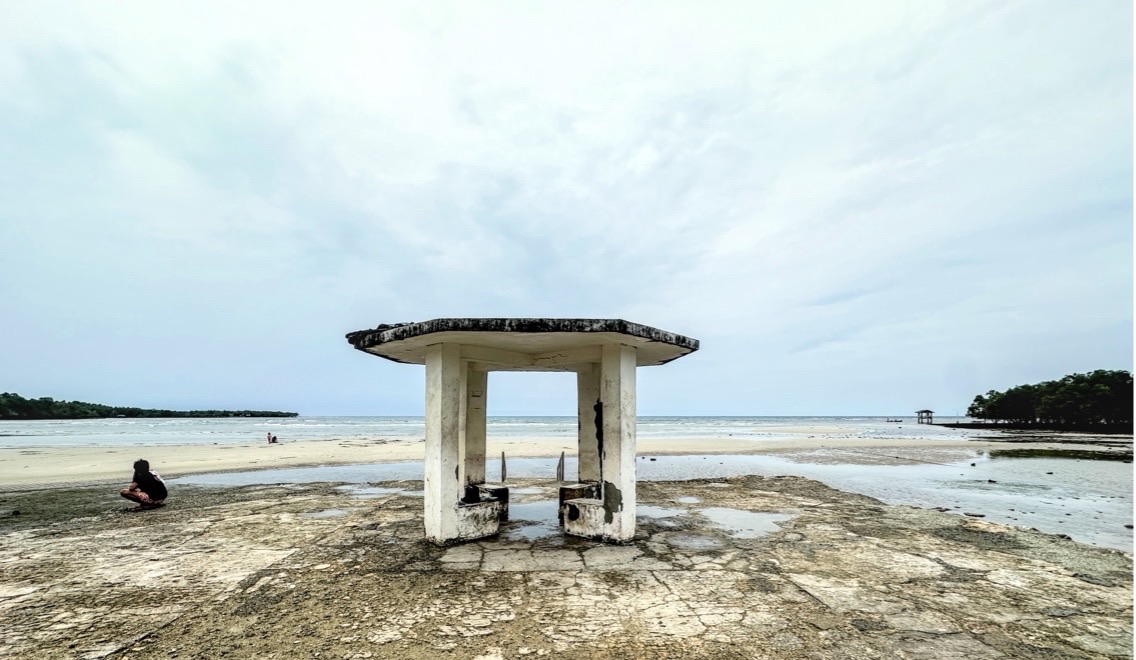
Back at Sta. Fe Beach, the barangay-managed public beach, Sta. Filomena Marine Sanctuary’s floating markers sway in the gentle early-morning seawater. By day, anyone who breaches the sanctuary is visible from the beach.
“While the municipal government of Albur is in charge of directly managing the sanctuary, our Sta. Fe Beach staff helps report MPA violators to the municipal LGU, the Coast Guard, and the police,” says Juliano M. Buates, barangay captain of Sta. Filomena.
The barangay also supports awareness campaigns on the importance of protecting the sanctuary.
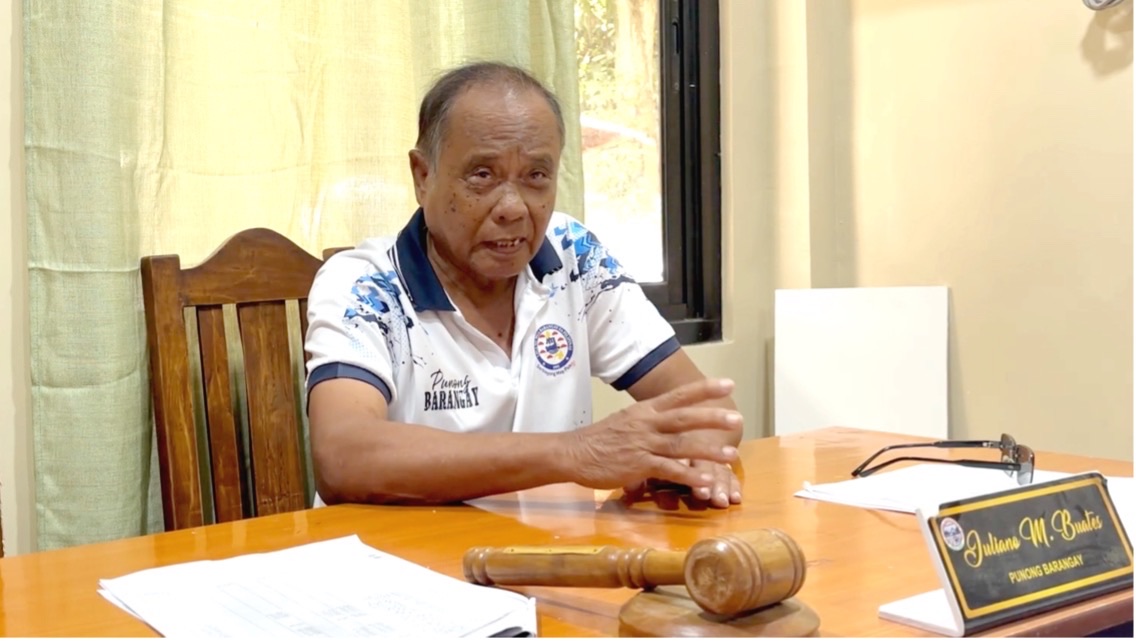
“But people still need regular reminding,” Buates laments.
Bantay Dagat Junri agrees. “We wish for people to be more aware and mindful. Our job is not easy. Sometimes, we get wounded while pursuing gleaners on the low-tide-exposed coral reefs within the MPA.”
Nearly 30 years after Sta. Filomena Marine Sanctuary was established, much has been accomplished, but more work remains. For one, the Bantay Dagat Team needs better protective gear and a faster patrol vessel. Then there are the action points laid out in the Sta. Filomena MPA Management Plan 2021-2025, such as activating the MPA management council, enhancing coordination and collaboration mechanisms, improving capacity development for MPA implementers, and strengthening the information, education, and communication program, etc.
“We are working on updating the MPA plan and integrating it as well into our coastal resource management plan and other development plans,” assures Municipal Agriculture Officer Malaran.
Though conservation and protection efforts within the local MPA and across the ALLPLS appear fragmented and will need to be resolved by the concerned duty-bearer government agencies, the Albur Bantay Dagat, the representative of the municipal and barangay LGU, and the fisherfolk (interviewed in this report) pledge to continue to look out for their natural resources.
“We are part of nature. It’s our duty to protect it.”
(This story was produced under the Global 30X30 Conservation Initiative grant from Internews’ Earth Journalism Network).