

In a country described as “the global epicenter of the live-stream sexual abuse trade,” the fight to protect Filipino children online has become more urgent than ever.
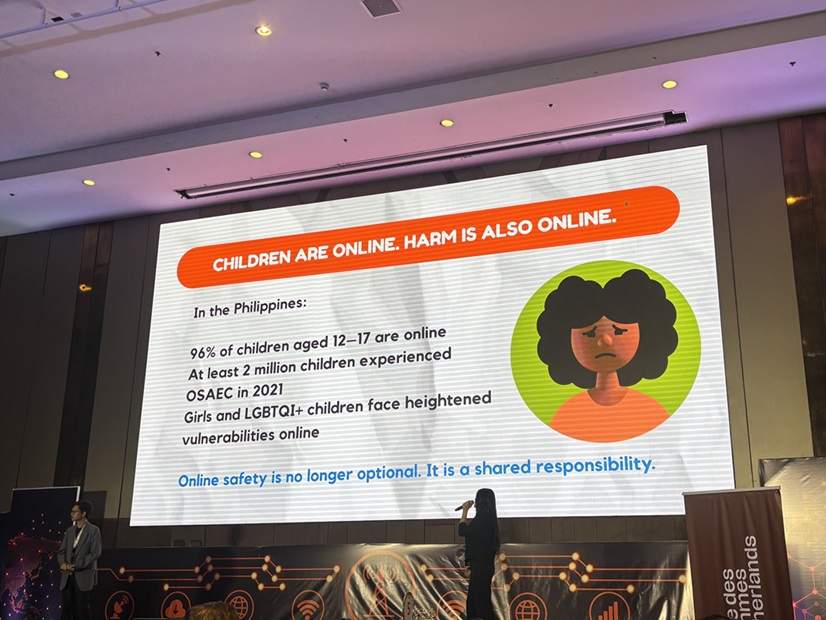
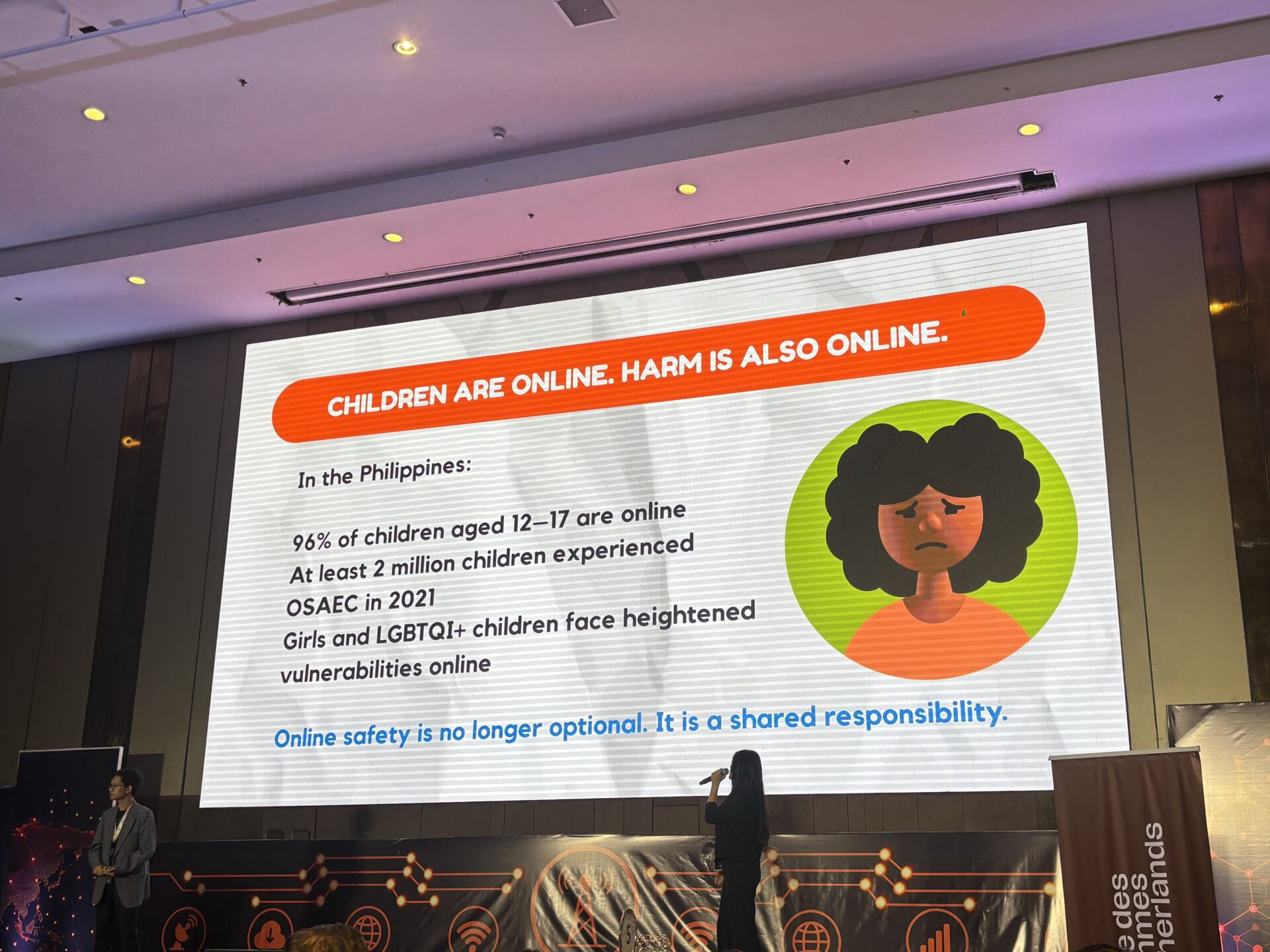
About 96% of Filipino children aged 12 to 17 are online while at least two million children experienced online sexual abuse or exploitation in 2021 alone, according to a Rainbows in the Dark study, citing international data from End Child Prostitution in Asian Tourism.
As Filipino children spend more of their lives online, the risks they face in digital spaces are evolving just as rapidly. From online sexual abuse and exploitation to AI-generated deepfakes and image manipulation, the evolving digital landscape has become an urgent call for society to rethink how children are protected online.
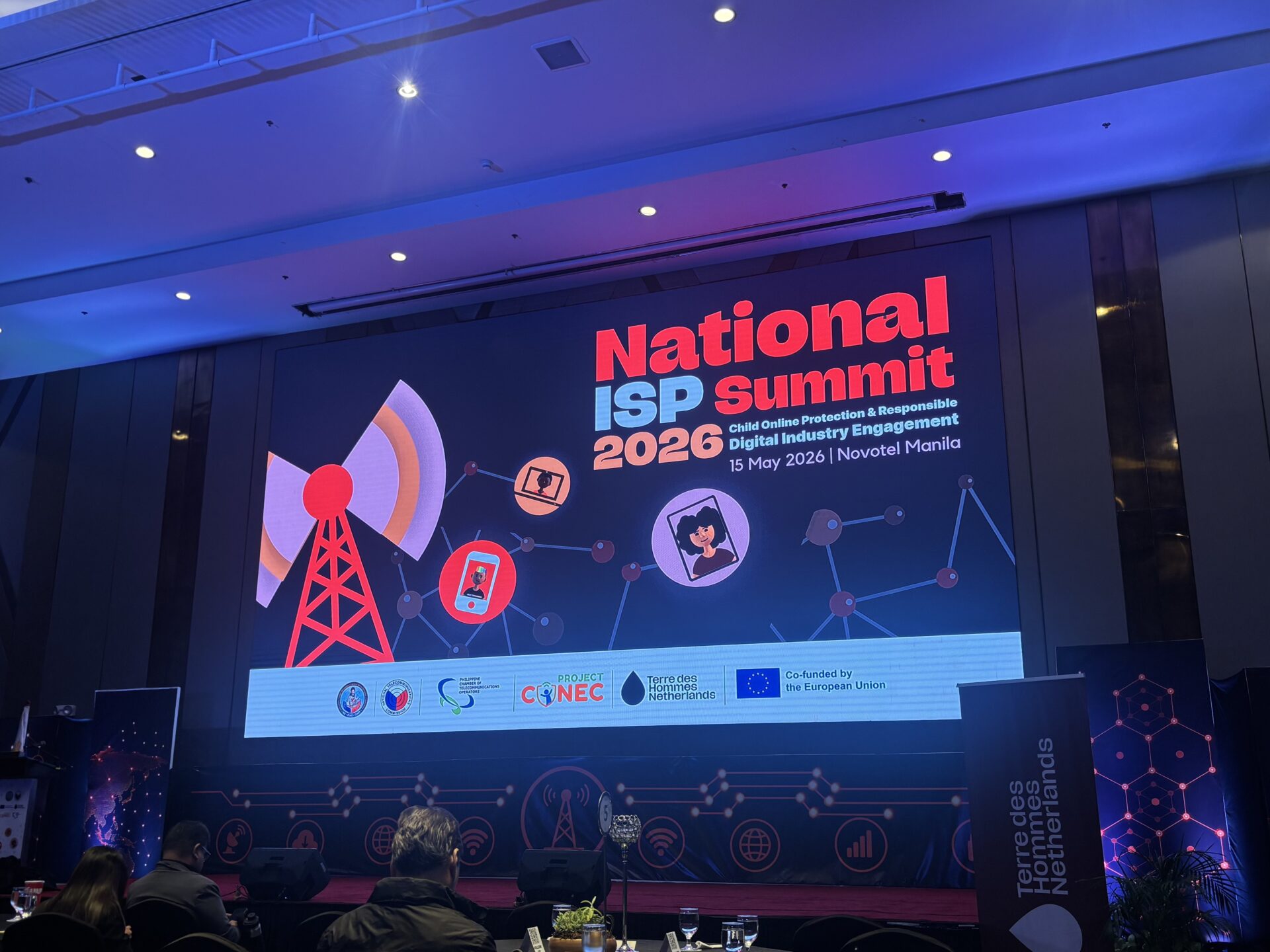
These realities took center stage during the National ISP Summit on Child Online Protection and Responsible Digital Industry Engagement held on May 15 at Novotel Hotel in Quezon City.
Organized by Terre des Hommes Netherlands (TdH NL) through Project Creating a Safer Online Environment for Every Child (CONEC), and co-presented by the National Coordination Center Against Online Sexual Abuse or Exploitation of Children and Child Sexual Abuse or Exploitation Materials (NCC-OSAEC-CSAEM) secretariat, the summit gathered government agencies, internet service providers, telecommunications companies, civil society organizations, development partners, and youth advocates to confront one of the country’s most pressing digital challenges: keeping children safe online.
A shared responsibility
Throughout the summit, speakers emphasized that child online protection cannot rest on one institution alone.
“The safety of children online is not the responsibility of one office, one agency, or one sector alone,” said NCC-OSAEC-CSAEM Executive Director Barbara Mae Pagdilao-Flores in her solidarity message.
Pagdilao-Flores stressed that while government leadership remains essential, addressing OSAEC requires coordinated action among law enforcement agencies, prosecutors, child protection groups, technology companies, telecommunications providers, civil society organizations, and local communities. More than an awareness campaign, the summit served as a platform for policy dialogue and public-private collaboration.
Findings from the Rainbows in the Dark study underscored the scale of the challenge. The study found that only one in three children seek help after experiencing online harm, with many citing stigma, fear of judgment, and lack of trust in reporting systems as barriers. Girls and LGBTQIA+ children were also identified as particularly vulnerable to online harassment, grooming, and exploitation.
Building a “safe house” online
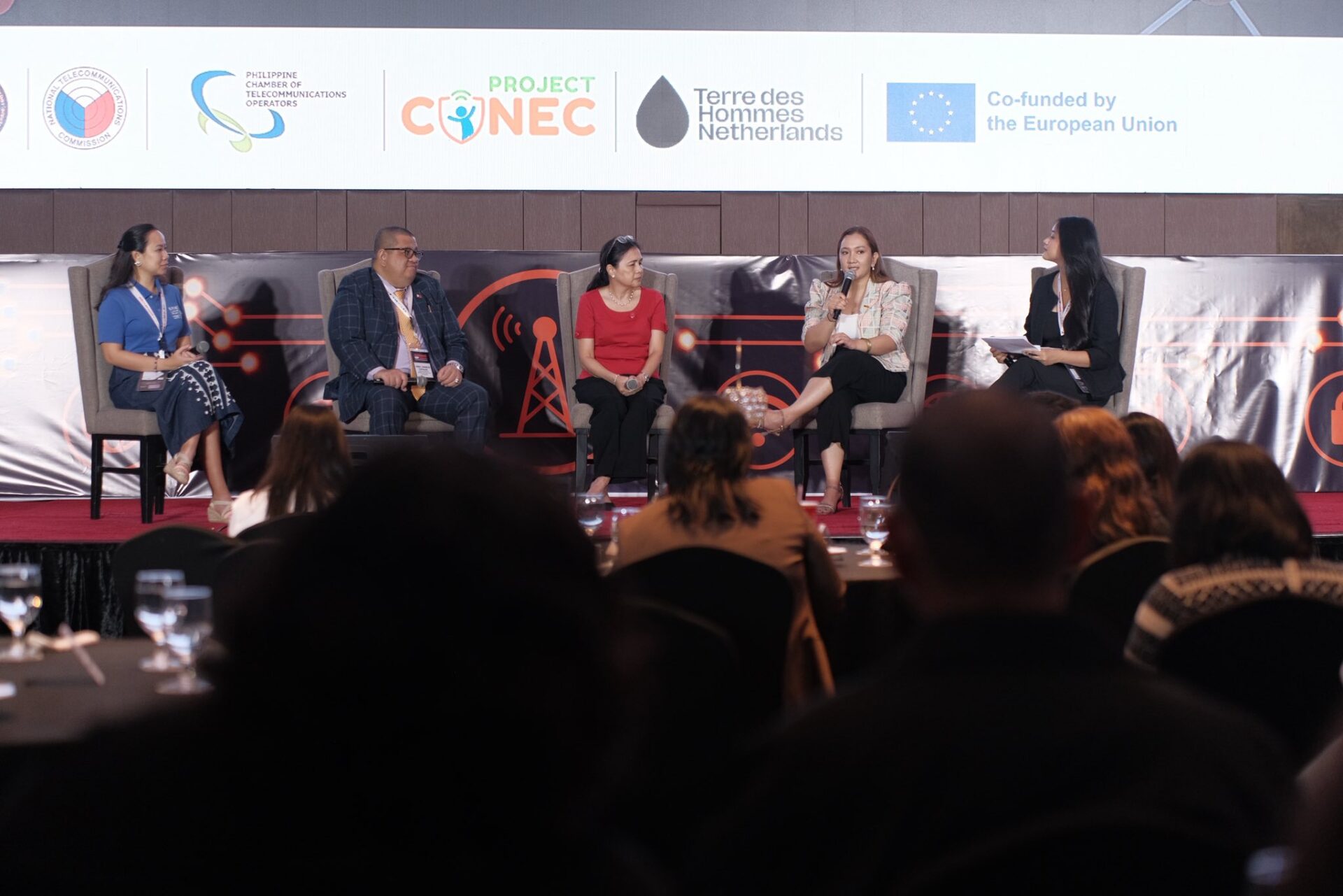
One of the summit’s most memorable moments came during the panel discussion on Digital Infrastructure and Child Protection, when Justice Assistant Secretary Michelle Ann Lapuz used the metaphor of building a house to explain collective responsibility in child online protection.
She compared internet service providers and telecommunications companies to architects and builders responsible for constructing safe digital environments for children. Regulators, she said, serve as inspectors enforcing standards, while communities and civil society organizations act as neighborhood watch groups.
“The internet ecosystem should be safe by design,” Lapuz emphasized.
The phrase “safe by design” became a recurring theme throughout the summit, reflecting calls for child protection safeguards to be embedded directly into digital infrastructure, applications, and online platforms instead of being introduced only after harm occurs.
Lapuz also stressed that digital protection systems must go beyond prosecution.
“It’s not just about making perpetrators accountable,” she said during the panel discussion. “It’s about prevention, protection, building partnerships, and ensuring that systems work together.”
Telecom, ISP industry step up
Representing the telecommunications industry, Melissa Vergel De Dios, chief sustainability officer of PLDT-Smart, discussed how telecom companies are increasingly recognizing their role in child online protection.
She explained that digital infrastructure providers are implementing content-blocking systems, cybersecurity solutions, and parental control mechanisms aimed at preventing access to harmful online material.
Beyond technical safeguards, De Dios highlighted the importance of digital literacy and awareness campaigns that help children, parents, and communities better understand online risks.
“We need to make sure that safety is embedded into how we design products and services,” she said.
She also emphasized the importance of consulting children directly when designing digital safety measures.
Instead of assuming what young users need, De Dios said companies are beginning to involve children and youth in discussions about cybersecurity and online protection — an approach that aligns with the summit’s broader emphasis on child participation in shaping safer digital spaces.
Strengthening reporting systems
Undersecretary Angelo Tapales of the Council for the Welfare of Children discussed the role of MAKABATA Helpline 1383 as a centralized reporting mechanism for child protection concerns.
Tapales noted that while reporting systems have improved significantly over the years, many incidents still go unreported because of fear, shame, lack of awareness, and concerns about family disruption.
“Many children do not report because they are afraid they will not be believed,” Tapales explained.
He added that abuse often occurs within families or familiar environments, making disclosure even more difficult for children.
Despite these challenges, Tapales said reporting systems are becoming more interconnected through partnerships among government agencies, local governments, law enforcement units, and civil society organizations.
From handling only a few reports in its early years, MAKABATA Helpline 1383 has since evolved into a national referral mechanism managing thousands of cases annually.
Prevention beyond reaction
For civil society organizations, the challenge goes beyond responding to abuse after it happens.
Glenna Paraan, programme manager of Terre des Hommes Netherlands Philippines (TdH NL), emphasized the need for prevention-focused and trauma-informed approaches.
“We need to move beyond reactive interventions,” she said.
Paraan stressed the importance of digital literacy, inclusive child protection systems, and survivor-centered services that recognize the diverse experiences of children online.
She also underscored the need for gender-sensitive and trauma-informed support, particularly for LGBTQIA+ youth and other vulnerable groups who may face additional barriers in seeking help.
“If systems are not inclusive or trauma-informed, children may not feel safe enough to report,” she said.
Children and youth at the center
A defining feature of the summit was its recognition that children should not only be treated as beneficiaries of protection, but also as active participants in shaping digital safety policies.
The Youth Advisory Group introduced the “Zero Harm Tracker,” a youth-informed assessment tool designed to help internet service providers evaluate how safe, accessible, responsive, and inclusive their digital systems are for children.
They emphasized that children experience digital spaces differently from adults, making youth participation essential in designing reporting systems and online safety measures that are trusted, trauma-informed, child-centered, and child-friendly.
Strengthening community responses
Interviewed by VERA Files, Joe-Anna Marie Abelinde, country director of TdH NL, emphasized that child online protection efforts must extend beyond national agencies and involve stronger engagement at the barangay and community levels, where cases are often first detected and reported.
Abelinde explained that many civil society organizations, including TdH NL, work closely with Barangay Councils for the Protection of Children, schools, social workers, and other “trusted adults” who often serve as first responders for children experiencing abuse or online harm.
“The first contact is very important,” she said, stressing the importance of trauma-informed responses.
Abelinde noted that children are less likely to continue reporting abuse if they feel unsupported during their initial interaction with authorities or service providers. Peer support groups, she added, also play a critical role because children are often more comfortable disclosing experiences to people their own age.
Beyond community-level interventions, she said TdH NL and its partners are also training municipal social welfare officers, strengthening case management systems, and linking local child protection mechanisms with national-level responses.
“Our role is really connecting the dots,” she said.
From dialogue to commitments
Following a speech from a youth representative of Project CONEC, who described ISPs as “gatekeepers of digital spaces,” telecommunications representatives acknowledged the growing responsibility of the digital industry in protecting children online.
Representatives from Globe Telecom and PLDT-Smart delivered commitment statements outlining ongoing and future initiatives to strengthen child online protection.
Globe highlighted efforts to block harmful websites and CSAEM-related URLs, conduct online safety awareness campaigns, and collaborate with government agencies and child protection organizations through initiatives such as Safer Internet Day.
The company also emphasized the importance of teaching children that “it is safe to report child abuse” and that “you will not be blamed.”
Meanwhile, PLDT-Smart reiterated its commitment to cybersecurity and child protection solutions aimed at preventing online sexual abuse and exploitation of children.
The company pledged to integrate child safety more deeply into its products and services, expand educational resources for families, strengthen reporting and response systems, and continue collaborating with government agencies and civil society organizations.
“Listening to our youth partners today, we are encouraged to carry on with our efforts,” PLDT-Smart said, adding that “children’s participation will continue to be at the heart of our efforts.”
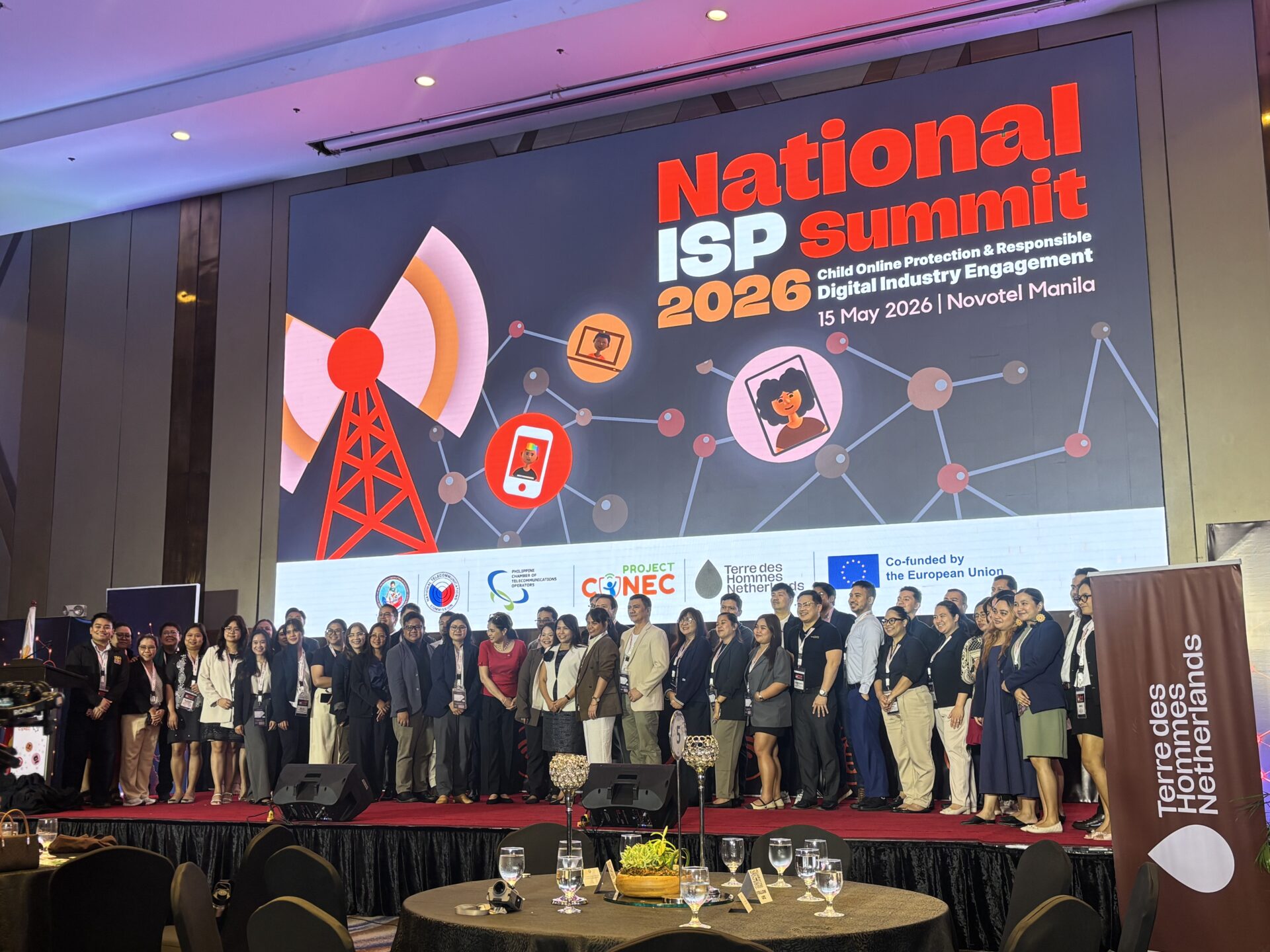
A shared moral responsibility
As the summit concluded, participants emphasized that awareness alone is no longer enough.
With digital risks becoming more sophisticated and artificial intelligence rapidly reshaping online interactions, speakers stressed the urgency of building systems that can evolve just as quickly as the technologies they aim to regulate.
The summit also reinforced a broader goal: strengthening the implementation of Republic Act 11930 through deeper collaboration among government agencies, telecommunications companies, internet service providers, technology industries, and policymakers in protecting children from online sexual abuse and exploitation.
Ultimately, the National ISP Summit 2026 highlighted a growing national consensus: protecting children online requires more than stronger laws. It demands preventive systems, accountable digital platforms, empowered communities, and institutions willing to listen directly to children about the realities they face online every day.
As repeatedly emphasized throughout the summit, child online protection is not only a legal obligation — it is a shared moral responsibility.
Borrowing from the familiar saying, “It takes a village to raise a child,” the summit underscored that protecting children online demands the same collective responsibility — one shared by government, industry, communities, families, civil society, and young people themselves.