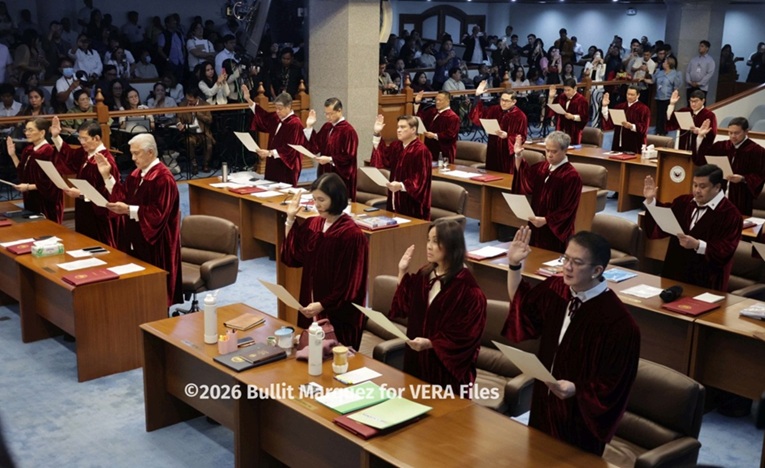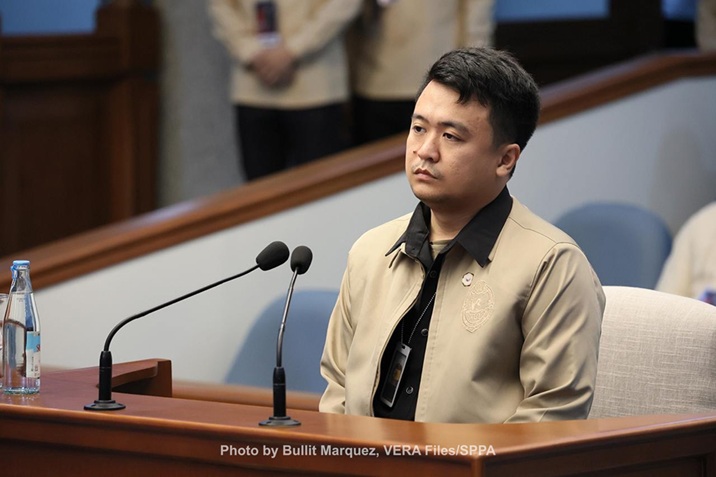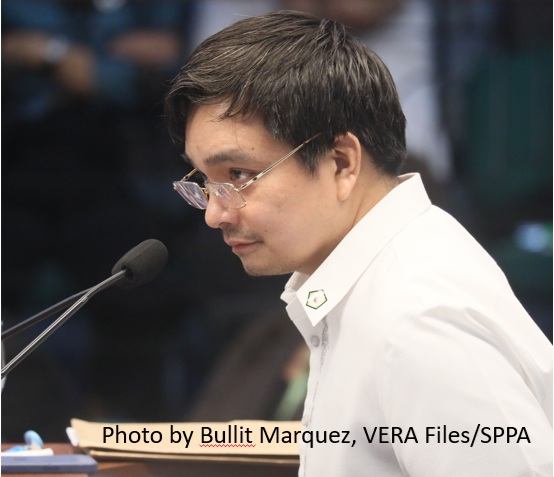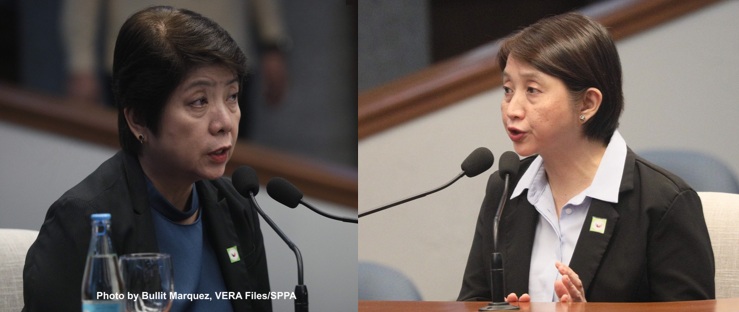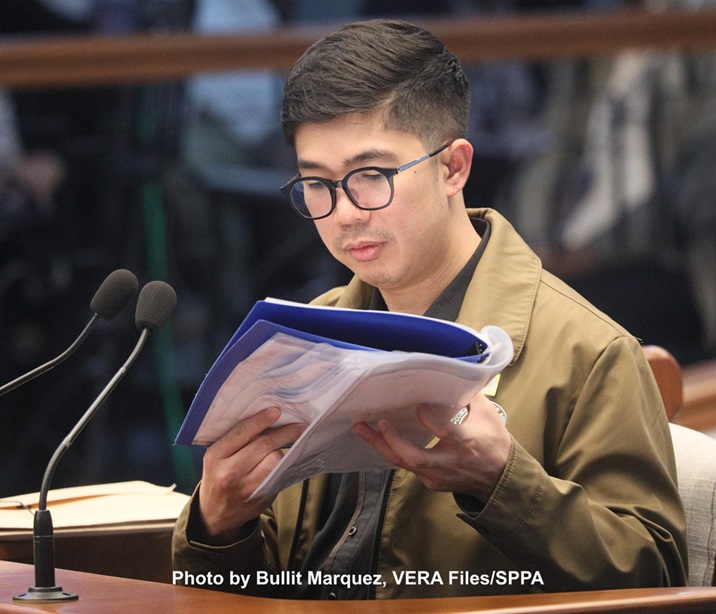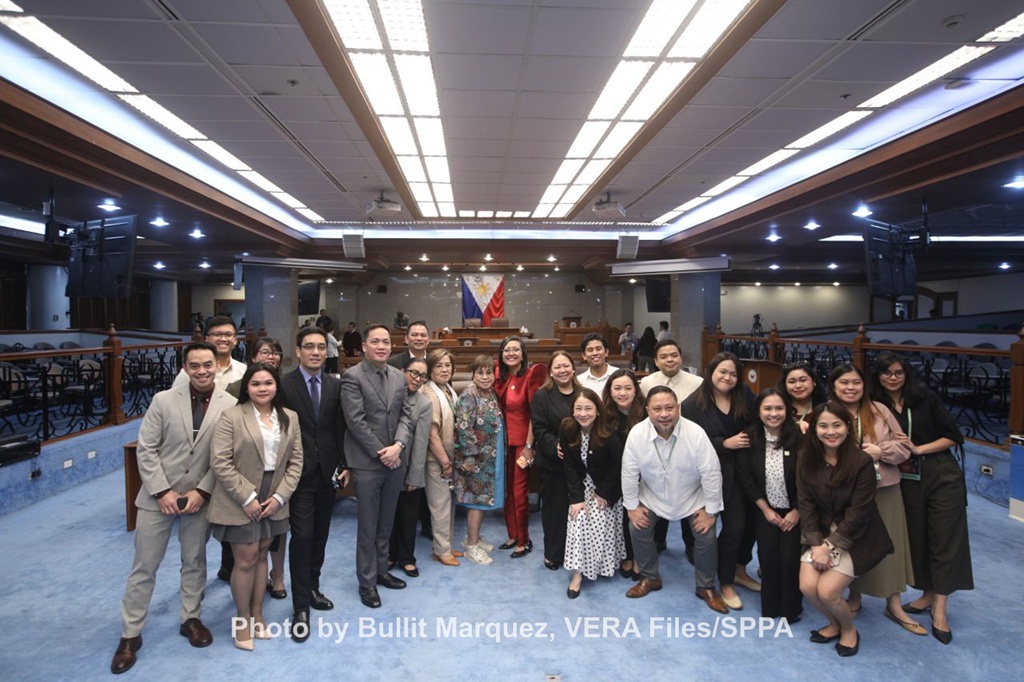


The House prosecution panel abruptly dropped three of the four impeachment charges against Vice President Sara Duterte after 38 days of trial, triggering a courtroom clash over due process, public accountability and the government resources spent pursuing allegations that the Senate will no longer adjudicate.
The Oct. 13 withdrawal left the Senate impeachment court to decide only whether Duterte amassed unexplained wealth, inaccurately declared her assets and failed to divest herself of business interests. The defense warned that abandoning the charges after presenting evidence could deny the vice president a meaningful opportunity to rebut accusations already aired publicly.
The decision came a day after forensic financial analyst Alexander Cabrera completed his testimony, putting the prosecution’s financial evidence at the center of the remaining case.

House lead prosecutor Gerville Luistro said the panel believed its evidence under Article II was sufficient to warrant Duterte’s removal for culpable violation of the Constitution and betrayal of public trust.
“We believe that evidence is substantial and compelling and warrants the respondent’s removal from office,” Luistro told the court. “All in po tayo dito.”
The move was a sharp departure from the panel’s pretrial brief, which had requested 62 trial days. After presenting evidence on confidential funds and grave threats, the prosecution opted to concentrate on unexplained wealth. The bribery article had been withdrawn before evidence was presented.
Lead defense counsel Sheila Sison questioned the timing, saying the prosecution could not abandon accusations after presenting them publicly while denying the defense a meaningful chance to challenge them.
“The prosecution cannot be allowed to have the benefit of its accusations without bearing the burden of having those accusations tested,” she said.

Sison warned that if the withdrawal was intended to shorten the proceedings and allow the court to proceed directly to judgment, the resulting process would bear the “unmistakable characteristics of a mistrial.”
Senator-judge Alan Peter Cayetano likewise questioned the fairness of the move, comparing it to a fistfight in which one side strikes first and then tells the other not to retaliate.
“Kumbaga sa suntukan, sinuntok niyo na ‘yung defense, then sasabihin n’yo, ‘To save time, huwag na kayong gumanti,’” he said.
Two charges barred from revival
Presiding Officer Francis “Chiz” Escudero accepted the withdrawal but imposed different conditions on the three articles.

Article I, involving the alleged misuse of P612.5 million in confidential funds from the Office of the Vice President and the Department of Education, and Article IV, concerning alleged grave threats and an assassination plot against President Ferdinand Marcos Jr., First Lady Liza Araneta-Marcos and former House speaker Martin Romualdez, were withdrawn with prejudice. They cannot be revived or refiled against Duterte during the 20th Congress, which ends on June 30, 2028.
Article III, which accused Duterte of bribery and related violations involving DepEd officials, was withdrawn without prejudice because evidence had not been presented. However, it cannot be revived in the ongoing trial before its conclusion.
The court will render no verdict on the three withdrawn articles. Duterte is no longer required to present an evidentiary defense against them, while evidence already submitted under Articles I and IV will remain in Senate custody under safeguards governing access and disclosure.
The withdrawal did not amount to an acquittal or a finding that the allegations were false. It removed the three articles from adjudication, leaving Article II as the sole basis for the Senate’s eventual verdict.
Escudero also lifted the sub judice restriction on public discussion of the withdrawn articles, allowing both parties to address the allegations publicly without authorizing the unrestricted release of protected evidence. The restriction remains in force for Article II.


Senator-judge Pia Cayetano questioned the relaxation of the gag rule, warning that it could lead to a free-for-all of public accusations. Escudero defended the ruling, saying he did not want Duterte to be prevented from answering allegations both inside and outside the courtroom.
Senator-judge Francis “Kiko” Pangilinan sought reconsideration. Escudero took the motion under advisement pending clarification of the defense’s position.
Tensions also flared when Luistro objected to Sison’s repeated use of “persecution,” saying it unfairly characterized the work of volunteer prosecutors. Escudero denied the motion to strike the term, ruling that it reflected the respondent’s characterization of the complaint.


Unexplained wealth could reach P1.5B
The confrontation followed Cabrera’s second day of testimony on Oct. 12, when the prosecution’s final witness defended his computation of Duterte’s alleged unexplained wealth.
Cabrera estimated the amount at P817.87 million based on bank accounts, insurance policies, declared assets and business-related transactions involving Duterte and her husband, Manases Carpio, from 2022 to 2025.
He said the figure could reach P1.5 billion under a less conservative approach that would include P475 million in confidential funds and additional questioned transactions involving the Anti-Money Laundering Council and GenCorp Industries Inc.
“Almost double … P1.5 billion. That will be unexplained wealth,” Cabrera said in response to Escudero’s question about the possible upper estimate. He stressed that P1.5 billion was not a replacement for his original computation.
Cabrera identified P207.70 million in undeclared cash across four years: P60.21 million in 2022, P80.70 million in 2023, P23.17 million in 2024 and P43.61 million in 2025.
He also flagged a P41-million cash withdrawal from Carpio’s accounts on Aug. 6, 2024, describing the closely spaced transactions as unusual. The testimony did not establish a connection between the withdrawal and other events cited by a senator-judge.
Cabrera said repeated money movements through Cale88 Food Corp. despite continuing losses warranted scrutiny for possible money laundering, describing the pattern as a “revolving door.” However, he did not establish that money laundering had occurred.
The prosecution also cited P4.4 billion in transactions flagged by the AMLC. Defense lawyer Kristine Ferrer questioned Cabrera’s handling of records subject to banking, tax and anti-money laundering confidentiality provisions.
Responding to Senator-judge Lito Lapid on the message of the financial evidence, House prosecutor Chel Diokno said bank statements, tax records, corporate filings and SALNs offered a way to test public officials’ declarations against their actual finances.
“The numbers do not lie,” Diokno said.


Duterte hits back
In a chance interview during the Office of the Vice President’s anniversary celebration on Tuesday, Duterte rejected the prosecution’s evidence, accusing the panel of fabricating documents and saying its arguments were falling apart.
The allegations remain contested, and the Senate has yet to determine whether the evidence establishes grounds for impeachment.
In a public statement on Wednesday, Duterte alleged that the Marcos administration could use the proposed 2027 national budget to pressure senator-judges into voting for her conviction and reward lawmakers who supported her impeachment. She warned against using public funds for the “political survival of the corrupt.”
She also challenged the prosecution to produce compelling evidence, accusing it of failing to substantiate its allegations despite the House’s subpoena powers.
The allegation added another political dimension to an already contentious trial, but it remains Duterte’s claim, not an established finding.
The defense is scheduled to begin presenting its evidence on Nov. 9, with 25 trial days allotted. Escudero said the court was 20 trial days ahead of schedule but would lose eight days in November because of the congressional recess, budget hearings, the ASEAN Summit and holidays.
The next phase will test the prosecution’s remaining financial case and the defense’s ability to challenge it. With three articles withdrawn and no verdict possible on those charges, the Senate’s eventual judgment will turn solely on Article II.