
The Department of Justice says it has not received any affidavit from Henry Alcantara, former chief of the Bulacan first district engineering office, retracting his earlier claims that he paid kickbacks to lawmakers linked to anomalous flood control projects. That assertion may be accurate as a matter of record. It does not, however, settle questions raised by reports that such a recantation exists.
Whether formally submitted as part of the preliminary investigation or circulating outside official channels, the reported affidavit, if it exists, adds uncertainty to an already complex inquiry into alleged multibillion-peso corruption in flood control projects. Instead of clarifying matters, it underscores the need for greater transparency and procedural clarity in how the investigation is being conducted and communicated.
“For the record, the DOJ has not received or reviewed any affidavit from Henry Alcantara retracting his previous statements,” said the department’s spokesperson, Undersecretary Polo Martinez, responding to media reports that such a document was submitted on Jan. 5. Martinez added that there has been “no official recantation, written or verbal,” of Alcantara’s testimony regarding anomalous, substandard and ghost flood control projects in Bulacan.
Yet reports describe a Jan. 5 affidavit in which Alcantara allegedly denies authorizing, participating in, or benefiting from ghost projects, claiming there is no evidence or witness directly linking him to irregular payouts, falsified reports or procurement violations. If authentic, that account stands in clear tension with his earlier sworn statements.
In his Sept. 23 testimony before the Senate Blue Ribbon Committee, Alcantara identified legislators who he said benefited from kickbacks drawn from flood control funds. He testified that P150 million was delivered to an aide of Sen. Joel Villanueva, while also saying the senator was unaware that the money allegedly came from a flood control project. The distinction may matter legally, but the contradiction between the testimony and the reported recantation is material and cannot be brushed aside.
The context in which the supposed retraction surfaced further complicates matters. The report originated from the senator’s legal camp after they submitted on the same date a counter-affidavit filed with the DOJ in response to a graft complaint. Villanueva’s lawyer has also said they have three witnesses who will contest Alcantara’s allegations. This does not invalidate the claim of a retraction. It does, however, highlight how legal strategy, media narratives and investigative processes can intersect in ways that blur, rather than sharpen, the search for facts.
Such complications are not new in high-profile corruption cases. Delayed filings, conflicting affidavits and uncertainty over what has been officially received often become part of the landscape. Over time, these dynamics risk shifting attention away from the substance of the allegations and toward procedural disputes that benefit no one except those hoping public interest will dissipate.
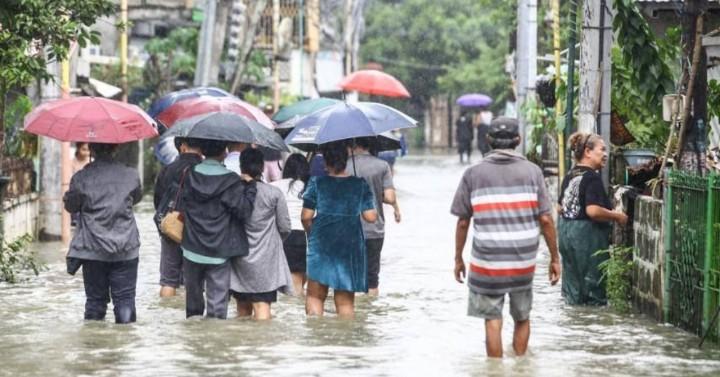
Beyond the specifics of this case, the episode points to longstanding vulnerabilities in the country’s flood control program. For decades, certain types of projects, such as dredging, desilting and underground drainage, have been particularly susceptible to abuse because they are difficult to inspect once completed. Even more visible structures, including river walls, pumping stations and floodgates, have faced allegations of substandard work, non-completion, or non-implementation.
The scale of the problem is no longer in doubt. The Department of Public Works and Highways, with assistance from the Armed Forces of the Philippines and the Philippine National Police, has identified at least 421 ghost projects nationwide involving vast sums of public money. These findings underscore the magnitude of the challenge facing investigators, and the stakes involved in getting the process right.
In cases of this scale, attempts to muddy the record are not incidental. They are a predictable response by those with the most to lose. Confusion over affidavits, timelines and sworn statements can slow investigations, weaken cases and erode public confidence long before any issue reaches a courtroom.
At this stage, the priority should be straightforward. All claims, counterclaims and alleged retractions must be fully disclosed, properly documented and tested through established legal processes. If a recantation exists, it should be authenticated and evaluated. If it does not, that, too, should be made clear, decisively and transparently.
Accountability depends not only on uncovering wrongdoing but also on conducting investigations that are coherent, credible and insulated from manipulation. Leaving critical questions in a gray zone risks undermining both the pursuit of justice and public trust in institutions tasked with upholding it.
The views in this column are those of the author and do not necessarily reflect the views of VERA Files.
This column also appeared in The Manila Times