
Vice President Sara Duterte’s response to the impeachment complaints filed against her has been consistent from the beginning: The charges are baseless, politically motivated and undeserving of serious engagement.
With the filing of new impeachment complaints on Feb. 2, after the one-year constitutional bar expired, that position has been restated without variation. What has not changed, however, is the absence of clear answers to the allegations themselves.
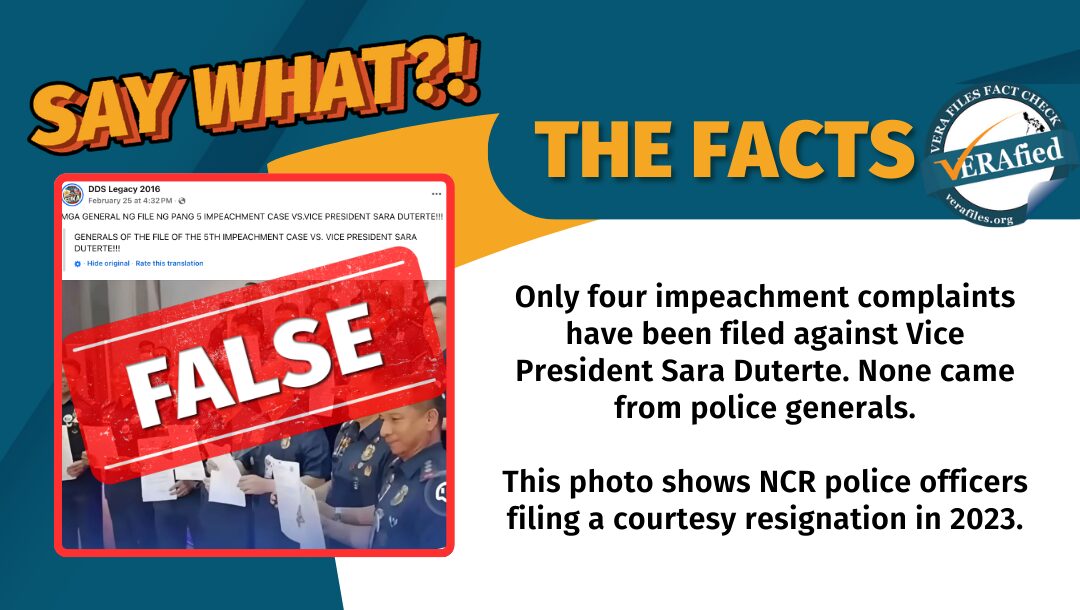
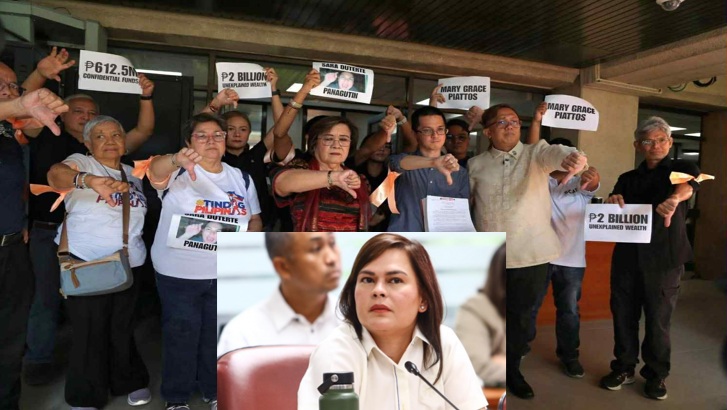
So far, two impeachment complaints have been filed against the vice president. The first came from the Makabayan bloc, and the second from a group led by Tindig Pilipinas, Akbayan and Mamamayang Liberal. Both complaints were verified and transmitted to House Speaker Faustino “Bojie” Dy III on Feb. 5.
The charges are serious and well-documented. While they have evolved in detail, their substance remains the same. They include questions surrounding the use of confidential funds, compliance with audit rules, refusal to fully cooperate with congressional inquiries and public statements that raised concerns about judgment and responsibility. These allegations are drawn from official audit reports, House investigations and the vice president’s own public remarks. They are neither speculative nor anonymous.
Her dismissal of the latest complaints mirrors her response to the 2025 attempt. Calling the charges “baseless” does not make them disappear. Declaring them “political” does not answer them. In a democracy governed by law, accusations against a high official are resolved not through press statements but through evidence and testimony. What troubles many observers is not only the denial but also the apparent refusal to engage with the facts at all.
Her allies have echoed the same line, describing the process as harassment and a prelude to the 2028 elections. Yet beneath the political noise, one fact stands out. Despite two impeachment attempts, multiple congressional inquiries and months of public debate, the vice president has still not provided clear answers to the allegations against her — old or new.
The language has been firm, but the explanations have been few. As a result, what should be a constitutional inquiry has been reduced to a prolonged argument over motive, while the underlying issues remain unresolved.
Labeling the accusations as “political” may resonate with supporters, but it does not constitute a defense. Impeachment is, by nature, a political process, but it is also a constitutional one. Its purpose is not to settle rivalries, but to determine whether an official has violated the Constitution or betrayed public trust. That determination depends on evidence and response, not rhetoric.
The new impeachment complaints exist precisely because the Supreme Court’s 2025 ruling left the substantive questions untouched. The court voided the earlier complaint on procedural grounds, enforcing the Constitution’s one-year bar on multiple impeachment proceedings. It did not rule on the truth or falsity of the accusations, nor did it clear the vice president of wrongdoing.
This time, the complaints attempt to address both substance and process. They follow the proper committee route in the House and include additional material from recent investigations, including issues related to audit compliance and legislative oversight. More importantly, they raise the question of whether repeated refusal to cooperate with Congress constitutes a failure to uphold constitutional obligations.
Yet the vice president’s response has remained unchanged. Instead of explaining how confidential funds were spent or responding to audit findings, she has attacked the credibility of the process. Instead of addressing concerns raised by her own public statements, she has dismissed critics as political enemies. The emphasis has remained on discrediting the complaints rather than answering them.
This approach may offer short-term political protection, but it comes at a cost to public trust. When a senior official consistently avoids engagement by dismissing allegations outright, institutional norms are weakened. When every investigation is framed as persecution, accountability becomes difficult to sustain. Over time, this erodes confidence not only in the individual but also in the system meant to regulate power.
The vice president’s allies argue that impeachment is being used as a political tool ahead of the 2028 elections. That claim may reflect the political climate, but it does not remove the obligation to respond. Allegations involving public funds and constitutional conduct do not disappear because the timing is inconvenient, nor are they invalidated by the possibility of political advantage.
The argument that impeachment is politically motivated is not, by itself, a defense. Most impeachment cases arise in political contexts. What matters is whether the charges are supported by evidence and whether the accused is willing to respond under oath. To date, the vice president has done neither in a meaningful way.
Her continued refusal to address both old and new charges raises a simple question: If the allegations are truly without basis, why not confront them directly? Why not provide a full accounting of public funds? Why not submit to questioning and allow the facts to speak for themselves?
The Senate trial, should it proceed, will be the proper venue for these answers. Conviction requires a two-thirds vote, a deliberately high threshold. While current numbers suggest that removal may be difficult, impeachment is not only about removal. It is also about establishing a public record and clarifying the standards expected of those who hold the nation’s highest offices.
Public office carries authority, but it also carries obligation. One of those obligations is to submit to lawful scrutiny. Another is to explain the use of public resources. These duties are not optional, nor are they dependent on political convenience.
In the end, this is not about dynasties, elections or rival camps. It is about whether a public official can repeatedly refuse to explain serious allegations and still claim the public’s trust. Democracy does not demand perfection from its leaders, but it does demand accountability.
Repeating that the charges are “baseless” does not resolve them, and questioning motives does not erase the facts that have yet to be answered. Public trust is sustained by clarity, not defiance. Until the vice president confronts the allegations directly and fully, the issue will not fade into politics. It will remain a matter of responsibility left unresolved.
The views in this column are those of the author and do not necessarily reflect the views of VERA Files.
This column also appeared in The Manila Times.