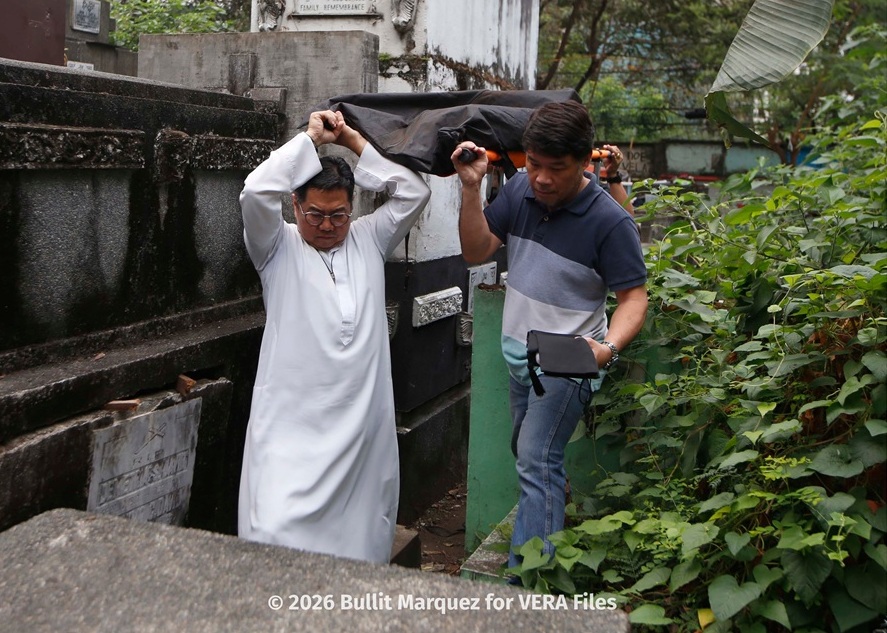
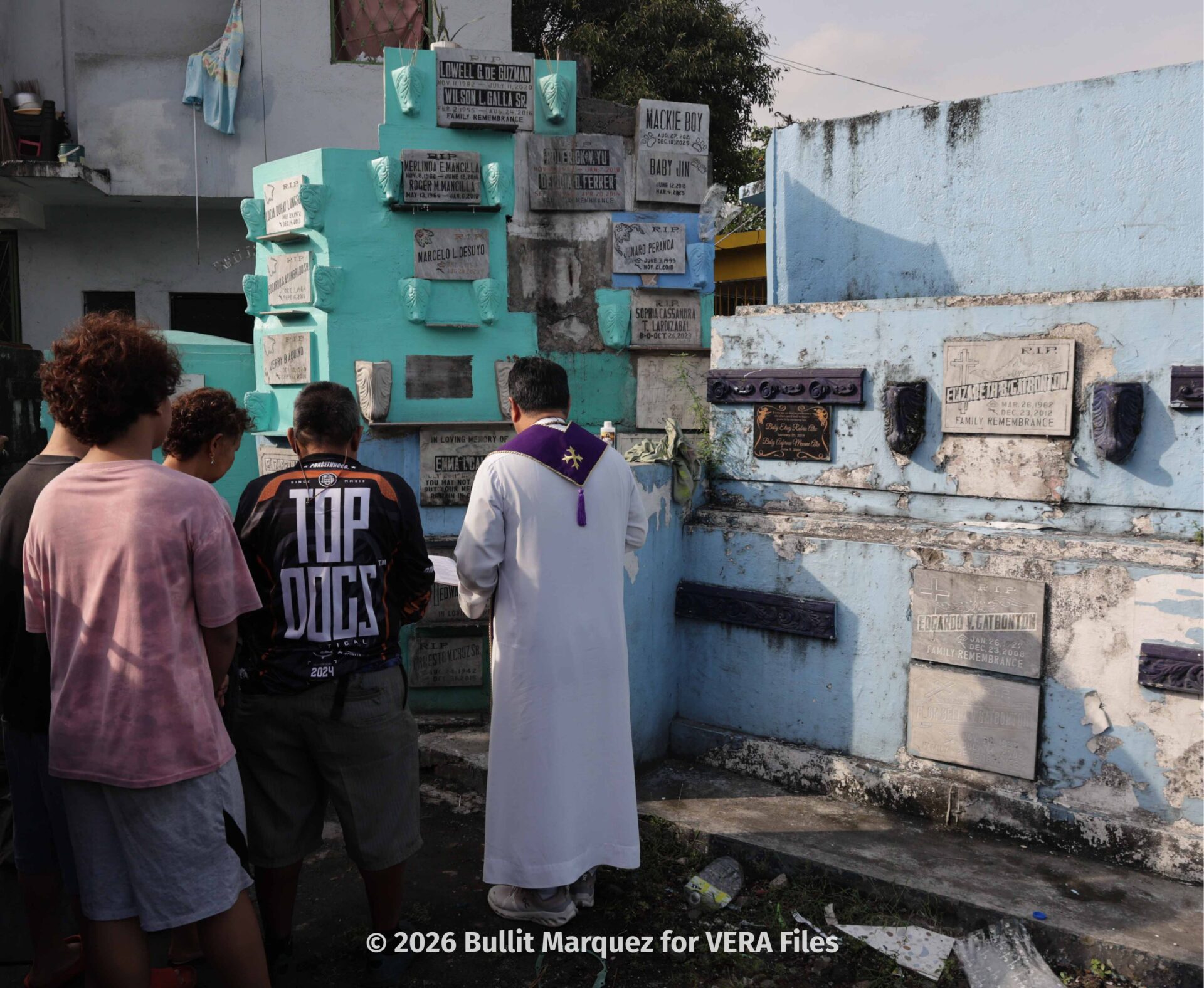
Ramon Magsaysay awardee Fr. Flavie Villanueva supervised the exhumation of the remains of Edward Sentorias at Manila North Cemetery and Jaeworski Pajo at Manila South cemetery Feb. 16 after the lease on their graves expired. The remains will be cremated and the ashes will be placed at the Dambana ng Paghilom in La Loma cemetery in Caloocan City, a memorial for the drug war victims.
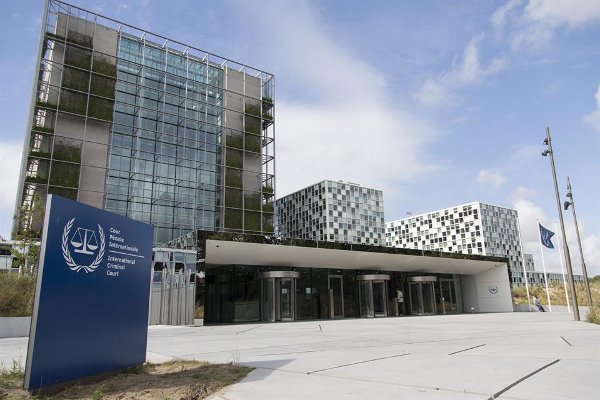
The exhumation, part of the process of healing for the relatives of the victims of extra-judicial killings during the war on drugs waged by the government of former president Rodrigo Duterte, was doubly significant at it transpired a week before the confirmation of hearings of Duterte and his co-perpetrators at the International Criminal Court in The Hague, Netherlands on Feb. 23.
Duterte is currently in detention at the Scheveningen prison in The Hague.
Like many of the estimated 30,000 killed during Duterte’s merciless drug war, Sentorias and Pajo were buried in apartment graves that were being rented out for five years. The rent has long expired and they had to be removed from the structure.
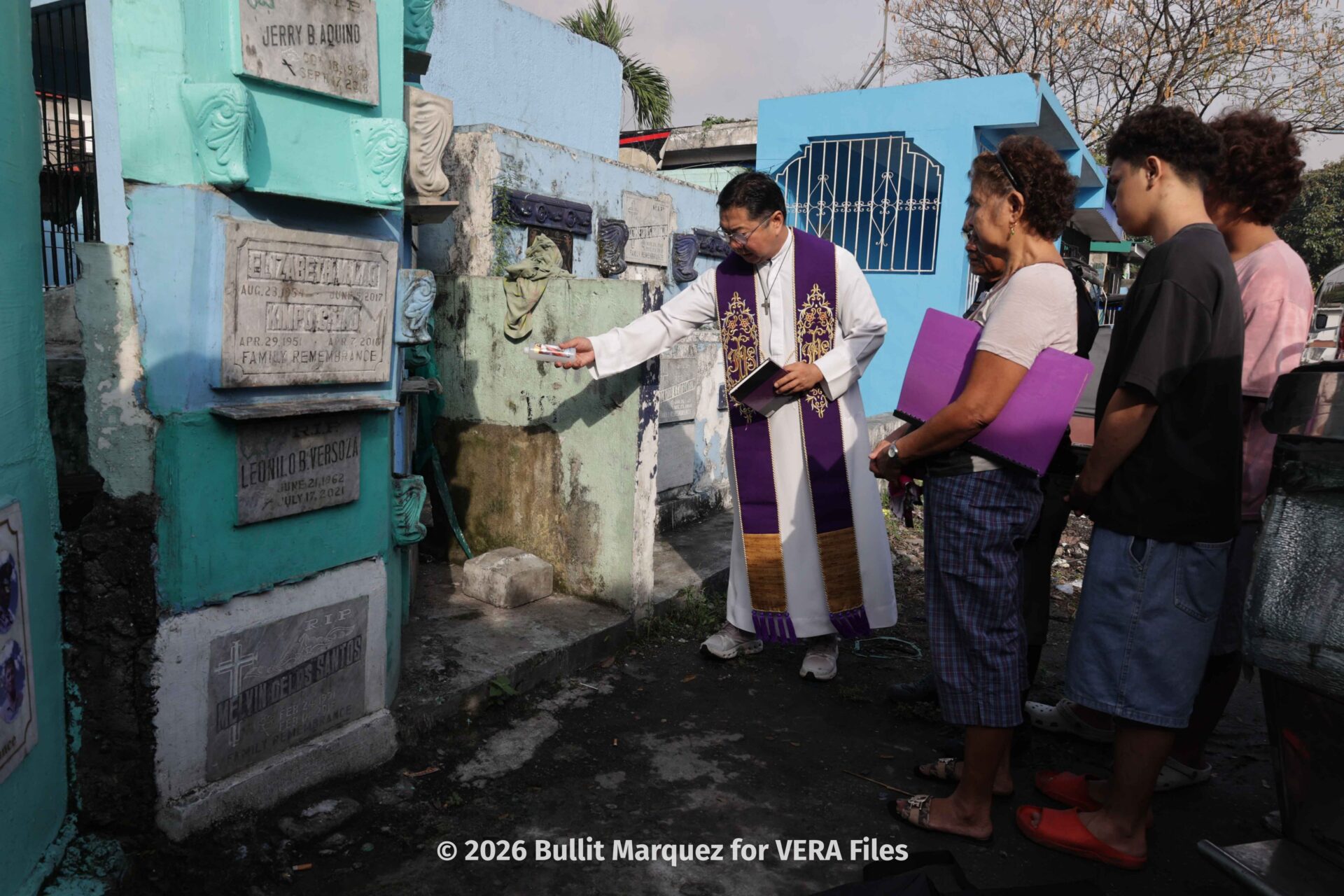
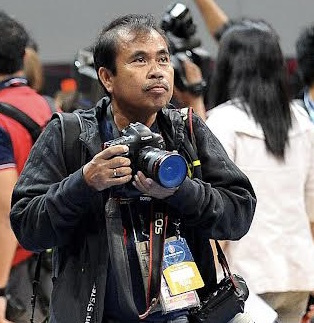
In an interview with a German non-government organization in 2022, Fr. Flavie said it is important to document exhumations because “it is history in the making.”
“First of all, why cannot a person be given a permanent burial, to begin with? Why do they have to rent so-called apartment graves? This is about poverty as a social sin, which becomes paramount in the issue of extrajudicial killings. Second would be the stigma, so we have difficulties letting people know that it is the body of a former victim of the ‘war on drugs.’ Another issue would be sometimes the lack of understanding towards cremations of the families themselves. For some, it is better to put their loved ones into a sack when the lease on the grave expires than to have them cremated and buried in a dignified place. There is also a lack of interest from people who do not want to participate in this endeavor, due to safety concerns and pandemic guidelines. The final issue is the cost of cremation, which costs PhP35,000. This includes the permits, documents, and transportation. The urn accounts for another PhP10,000, to which the fee for transferring the ashes is added in the meantime.”
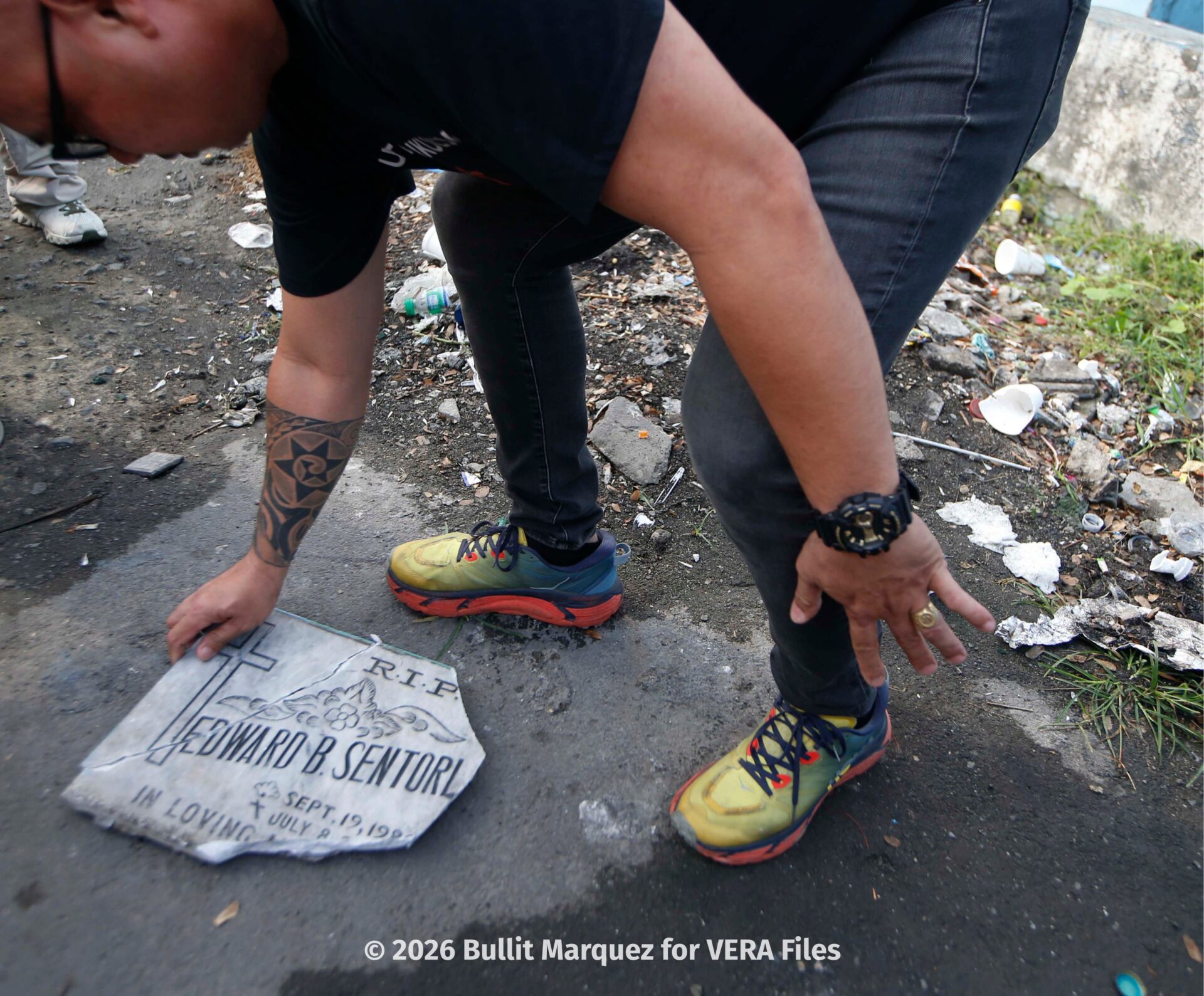
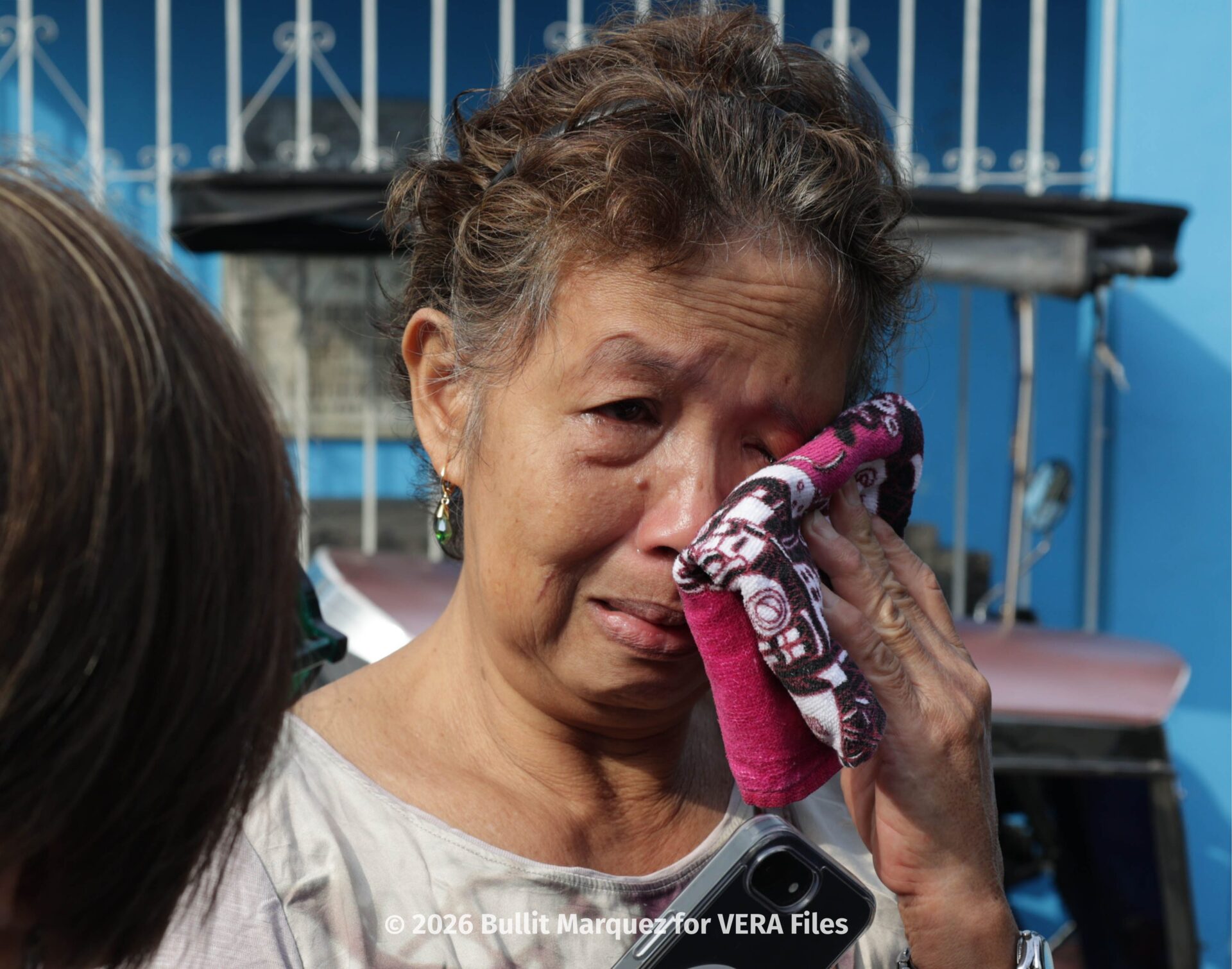
Fr. Flavie said exhumations are painful but a necessary process towards healing: “ It’s like reliving the memory of the dead, which continues to be painful for the bereaved and leaves even deeper wounds. From the grave, however, there could also be some forms of liberation of the truth, as well as coming to terms with the traumas, healing, and hope for an end to this. What happens to them is, as I say, an experience of liberating truth in the midst of pain.”.
Photos and videos by Bullit Marquez for VERA Files.