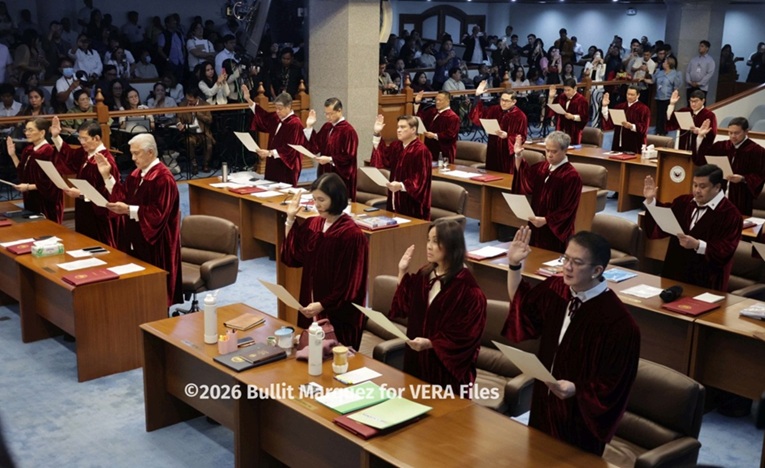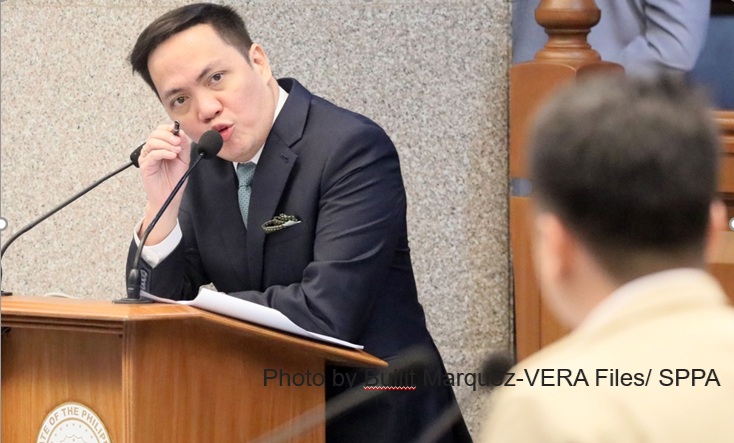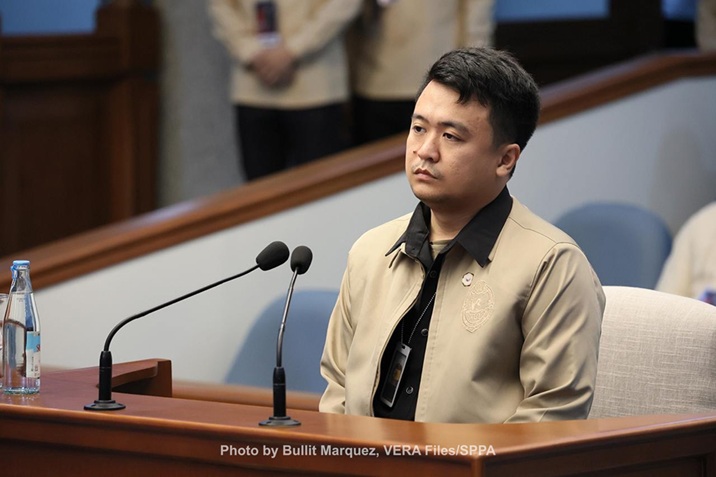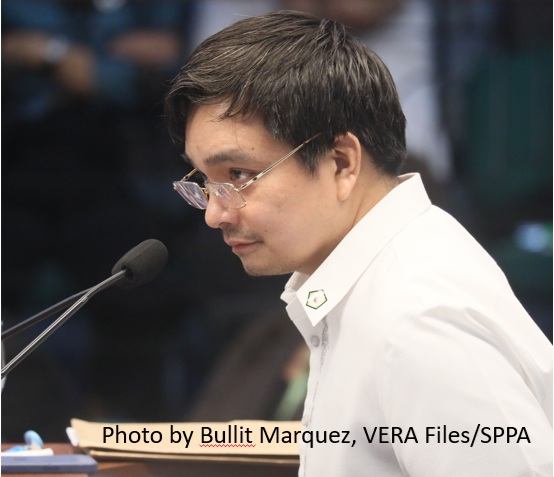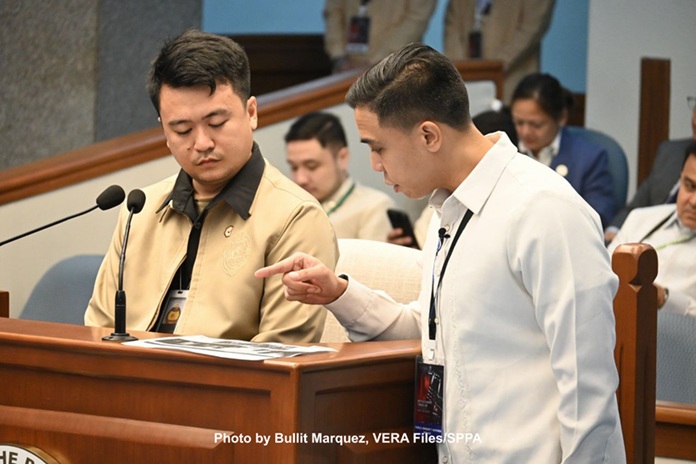

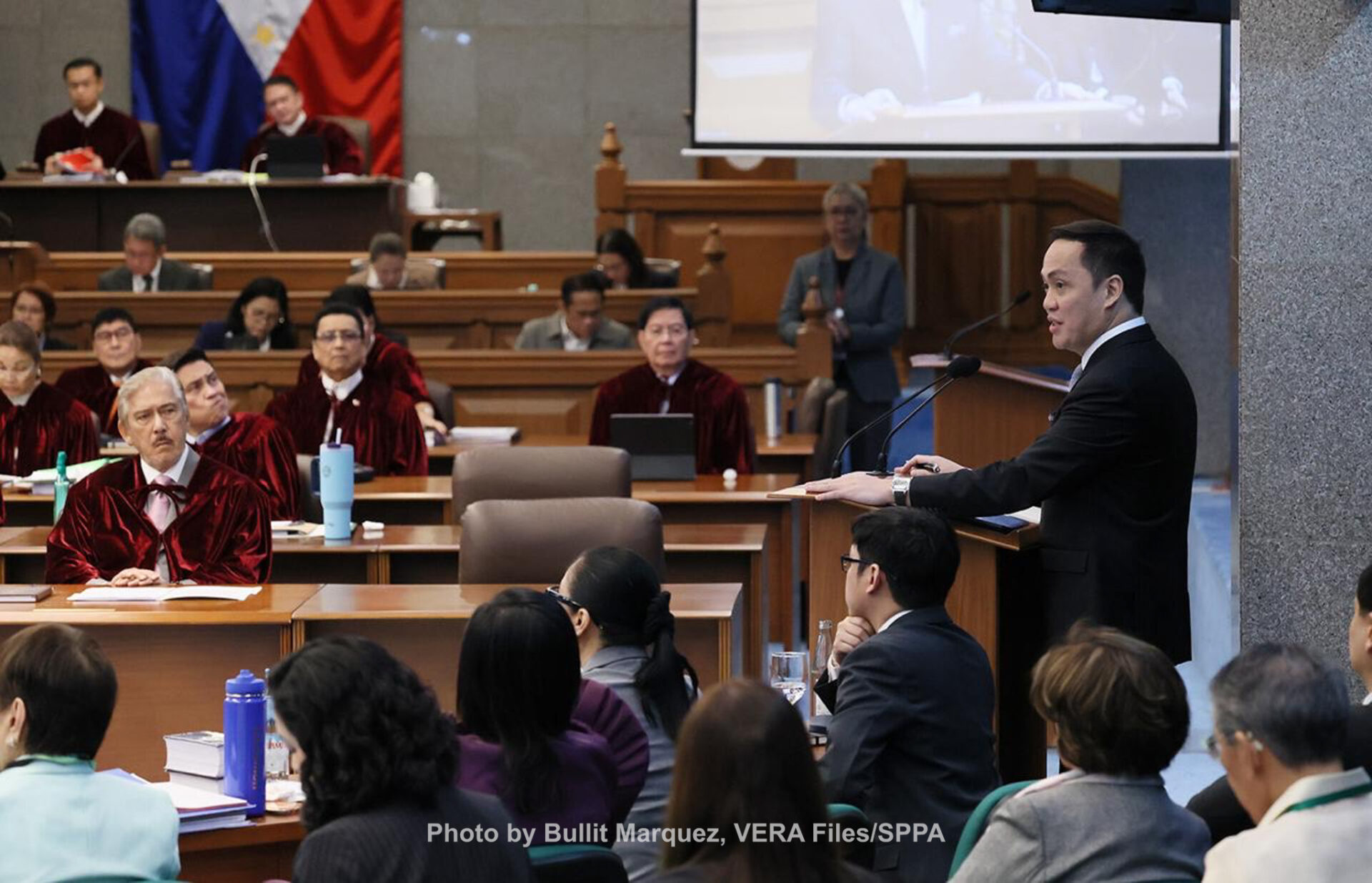
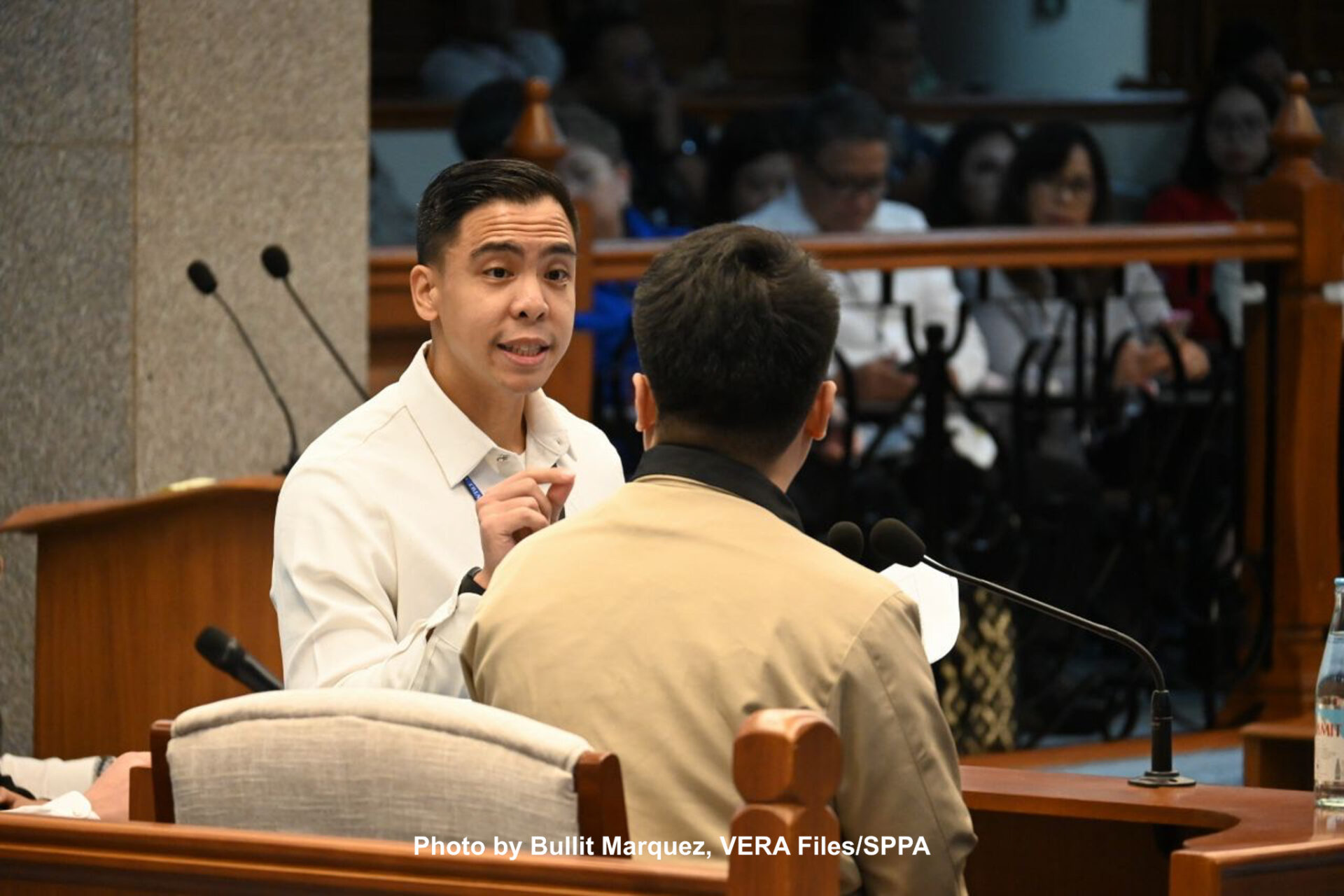
Day 3: Private prosecutor Amando Ligutan continues with the questioning of NBI senior agent John Mark Calilung.Vice President Sara Duterte’s lawyers on Wednesday claimed House prosecutors had weakened their own case under Article IV of the impeachment complaint after acknowledging that her controversial Nov. 23, 2024 statements did not prove she had actually hired an assassin to kill President Ferdinand Marcos Jr.
The prosecution, on the other hand, maintained that the remarks themselves constituted betrayal of public trust and a culpable violation of the Constitution.
The exchange highlighted the central legal issue emerging from the third day of Duterte’s impeachment trial: whether the House prosecution must prove the existence of an actual assassination plot or whether the vice president’s public statements, viewed as part of a pattern of conduct, are sufficient to justify her removal from office.
Article IV of the verified impeachment complaint charges Duterte with culpable violation of the Constitution, betrayal of public trust and other high crimes over remarks she made during an online press conference on Nov. 23, 2024, when she declared that she had instructed someone to kill Marcos, First Lady Liza Araneta-Marcos and then-House speaker Martin Romualdez if she herself were assassinated.
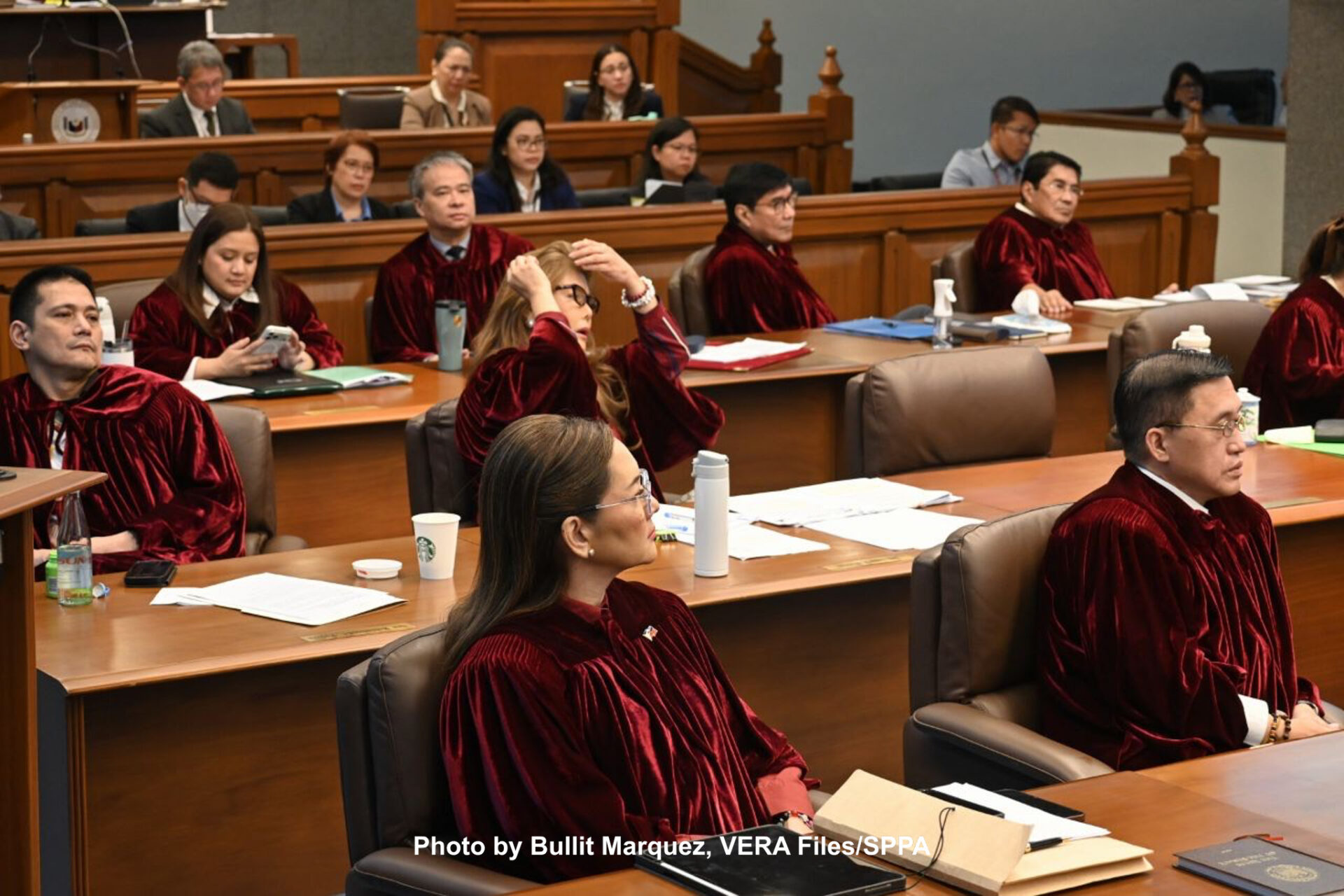
The issue surfaced on Tuesday during the testimony of National Bureau of Investigation Senior Agent John Mark Calilung, the prosecution’s first witness, after Senator-judge Risa Hontiveros asked both the witness and the prosecution why the alleged acts should be considered impeachable.
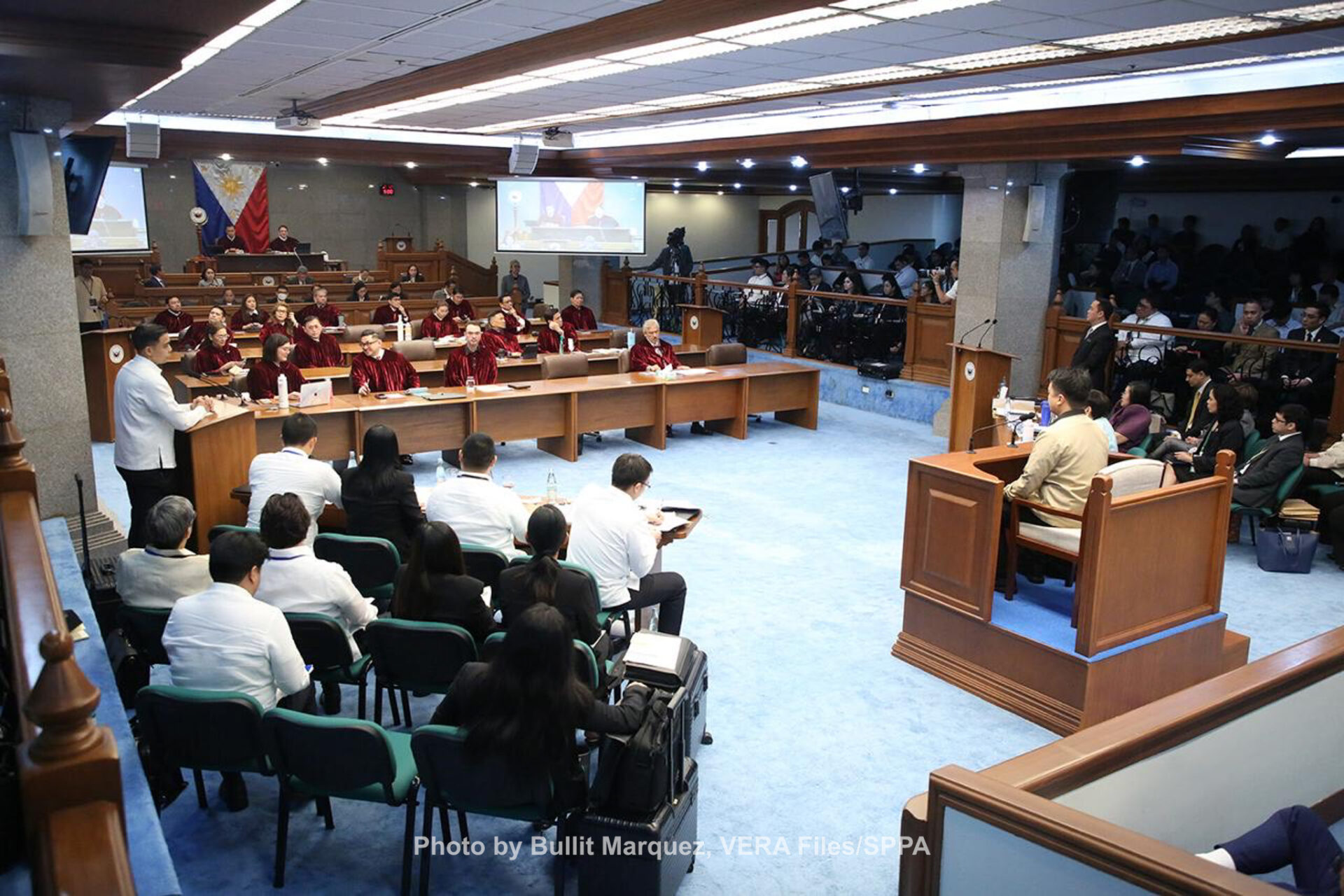
Calilung testified that after authenticating the Nov. 23 video, he conducted open-source intelligence gathering and recovered footage of Duterte’s Oct. 18, 2024 press conference.
Asked what similarities he found between the two videos, Calilung said both were directed at President Marcos and reflected the worsening relationship between Duterte and the president even before the Nov. 23 press conference.
“They were already not in good terms as early as Oct. 18, and the person being addressed by the vice president was the president,” Calilung told the impeachment court.
Hontiveros then asked private prosecutor Amando Virgil Ligutan whether Duterte’s statements, standing alone, proved that she had actually contracted an assassin. Ligutan answered in the negative.
“Inasmuch as we understand that these statements may not actually 100 percent prove that she in fact contracted an assassin to kill the president,” he said.
But Ligutan argued that the prosecution was not relying solely on the Nov. 23 remarks.
Invoking Rule 130, Section 35 of the Rules of Court, he said Duterte’s statements were admissible to establish intent, knowledge, identity, plan and a pattern of conduct.
He said the Oct. 18 and Nov. 23 statements formed part of a series that culminated in what prosecutors described as Duterte’s public admission that she had ordered the killing of the president, the first lady and Romualdez.
Whether or not the statements ultimately established criminal liability, Ligutan argued, they demonstrated betrayal of public trust and a culpable violation of the Constitution, which are constitutional grounds for impeachment.
He also cited the criminal complaint filed by the NBI against Duterte over the same statements.
Addressing the impeachment court, Ligutan asked: “When in the history of the Republic has the vice president publicly declared that she had contracted an assassin to kill the president, the first lady and the former speaker?”
“Even without deciding whether that is a criminal act, that act 110% betrayed the public trust,” he added.
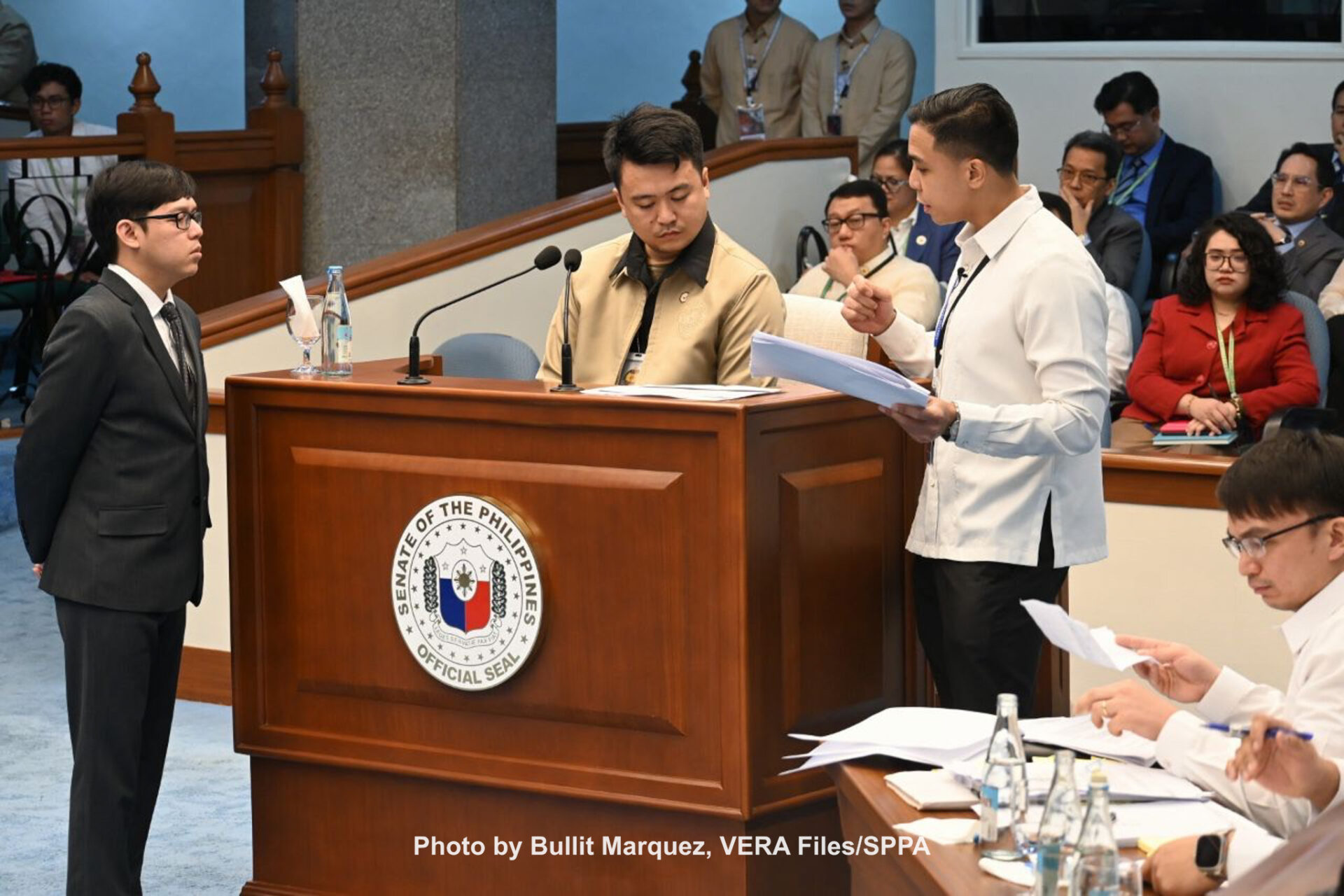
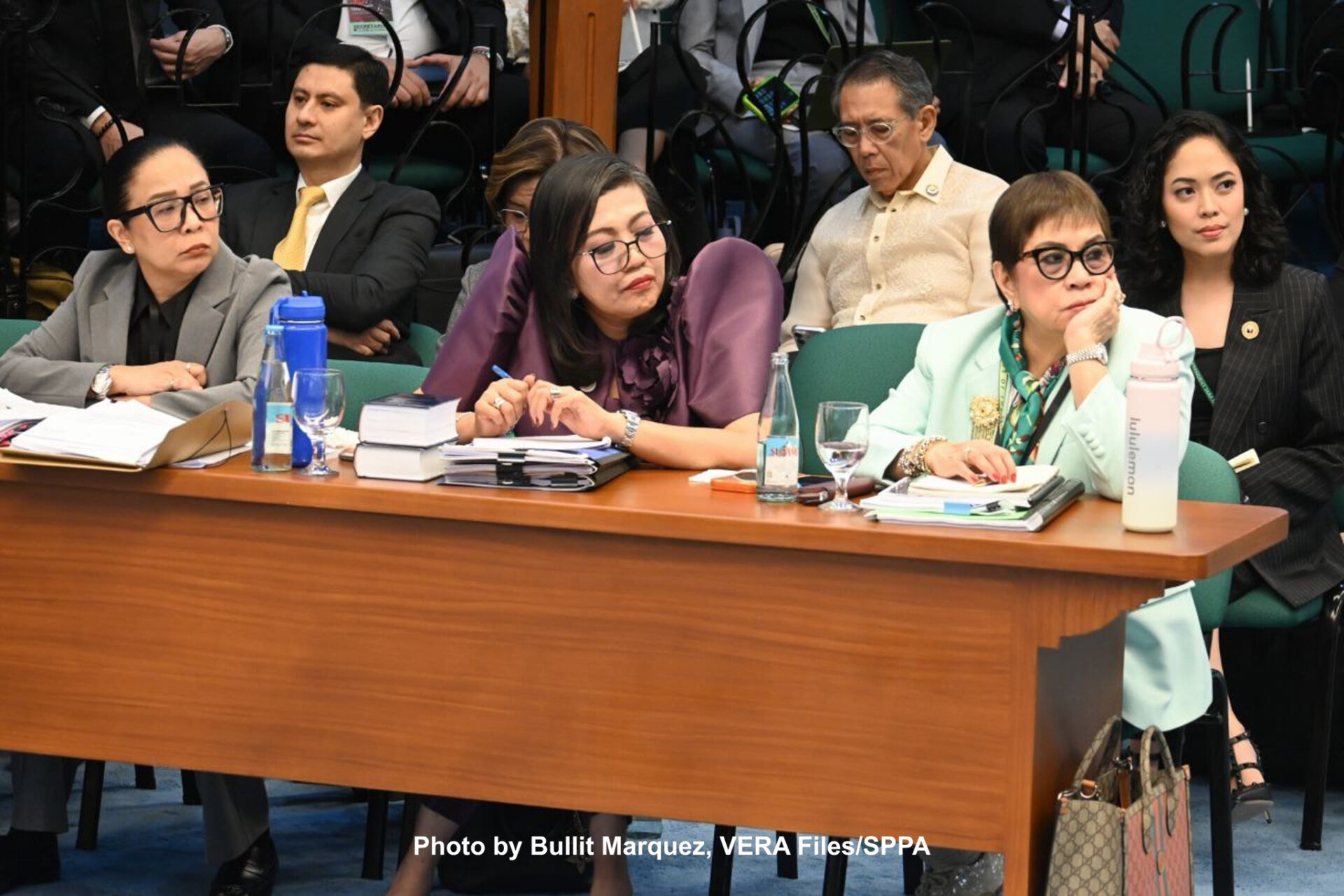
Defense counsel Carlo Narvasa immediately objected, arguing that the prosecutor had gone beyond answering a clarificatory question and had effectively delivered a closing argument.
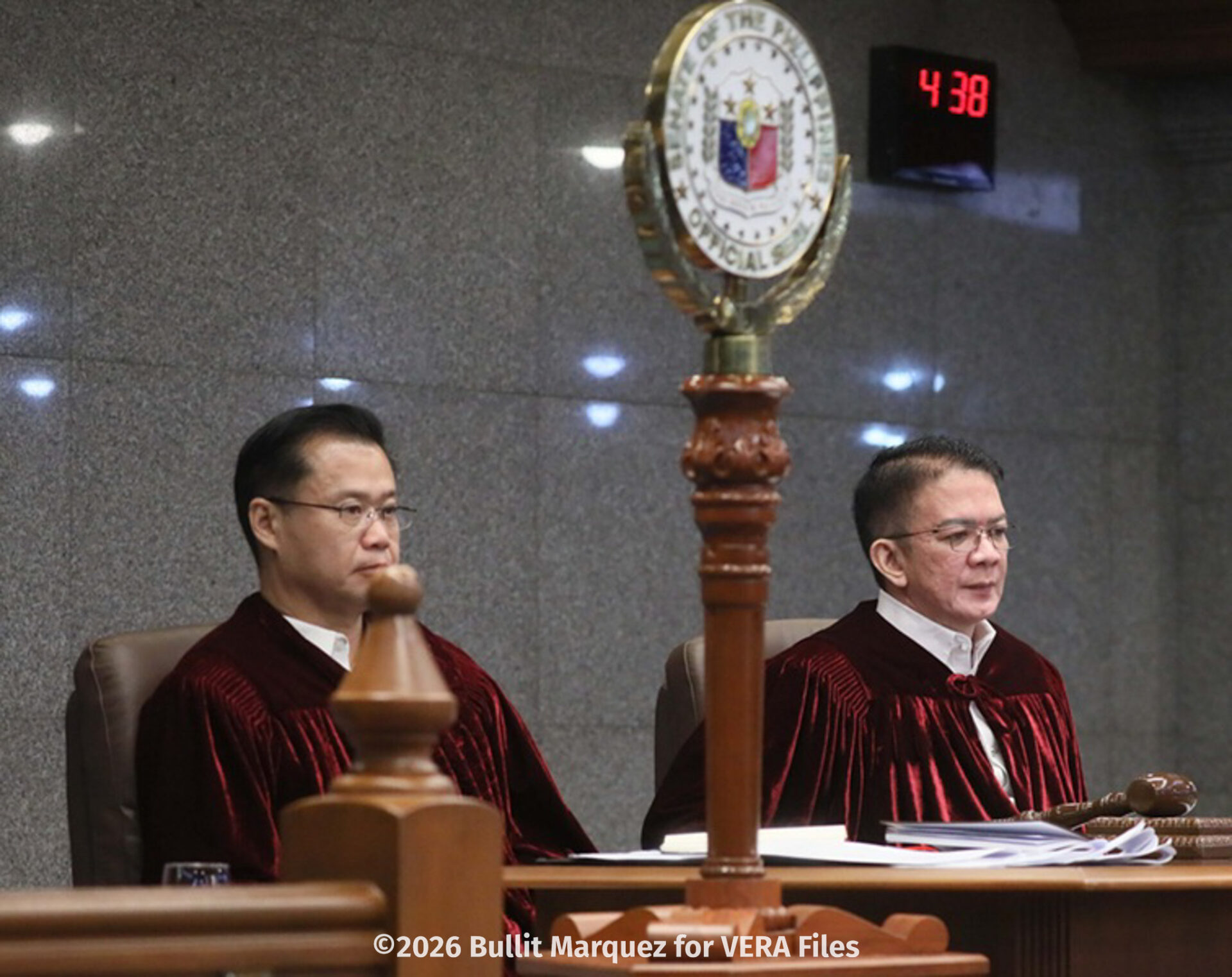
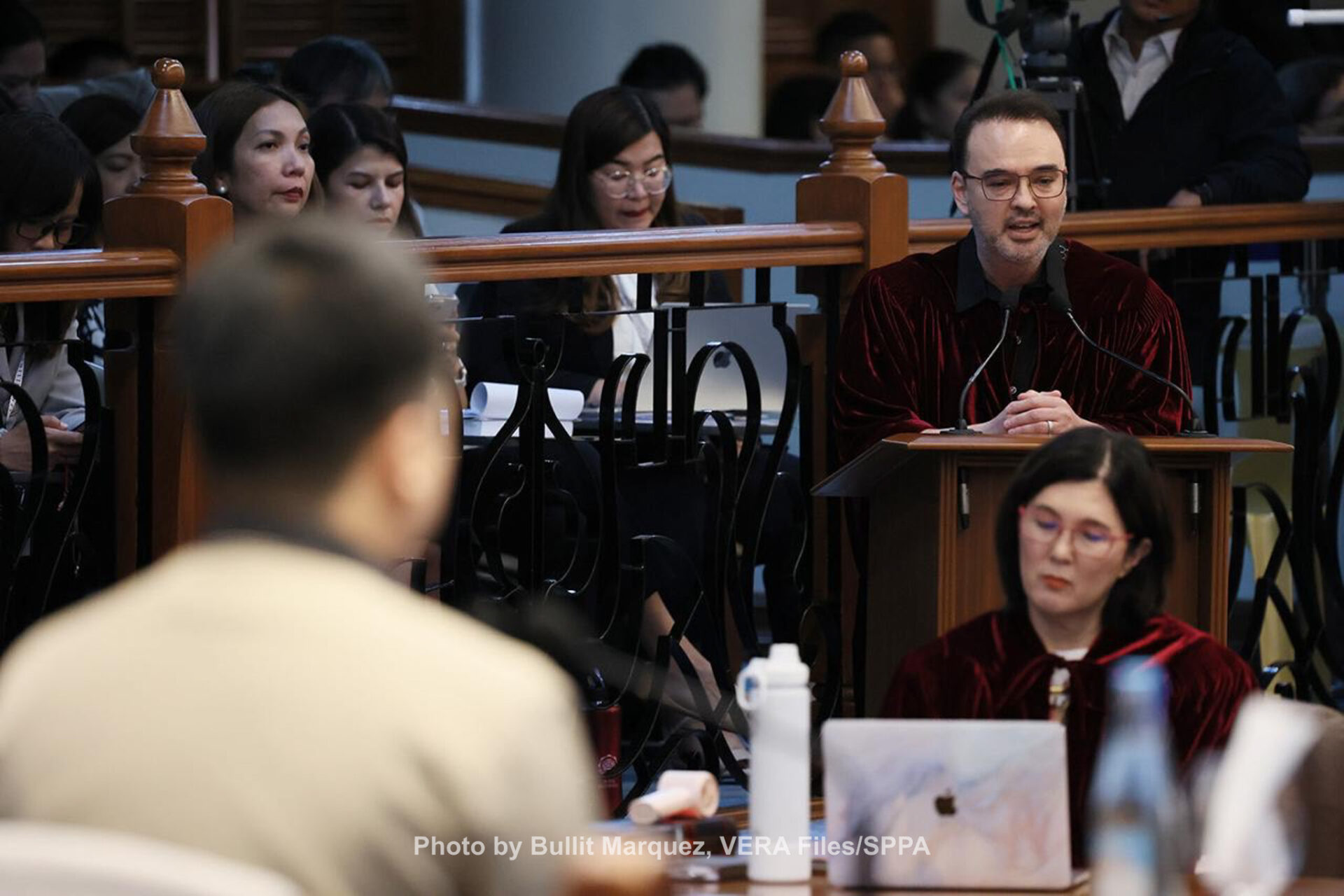
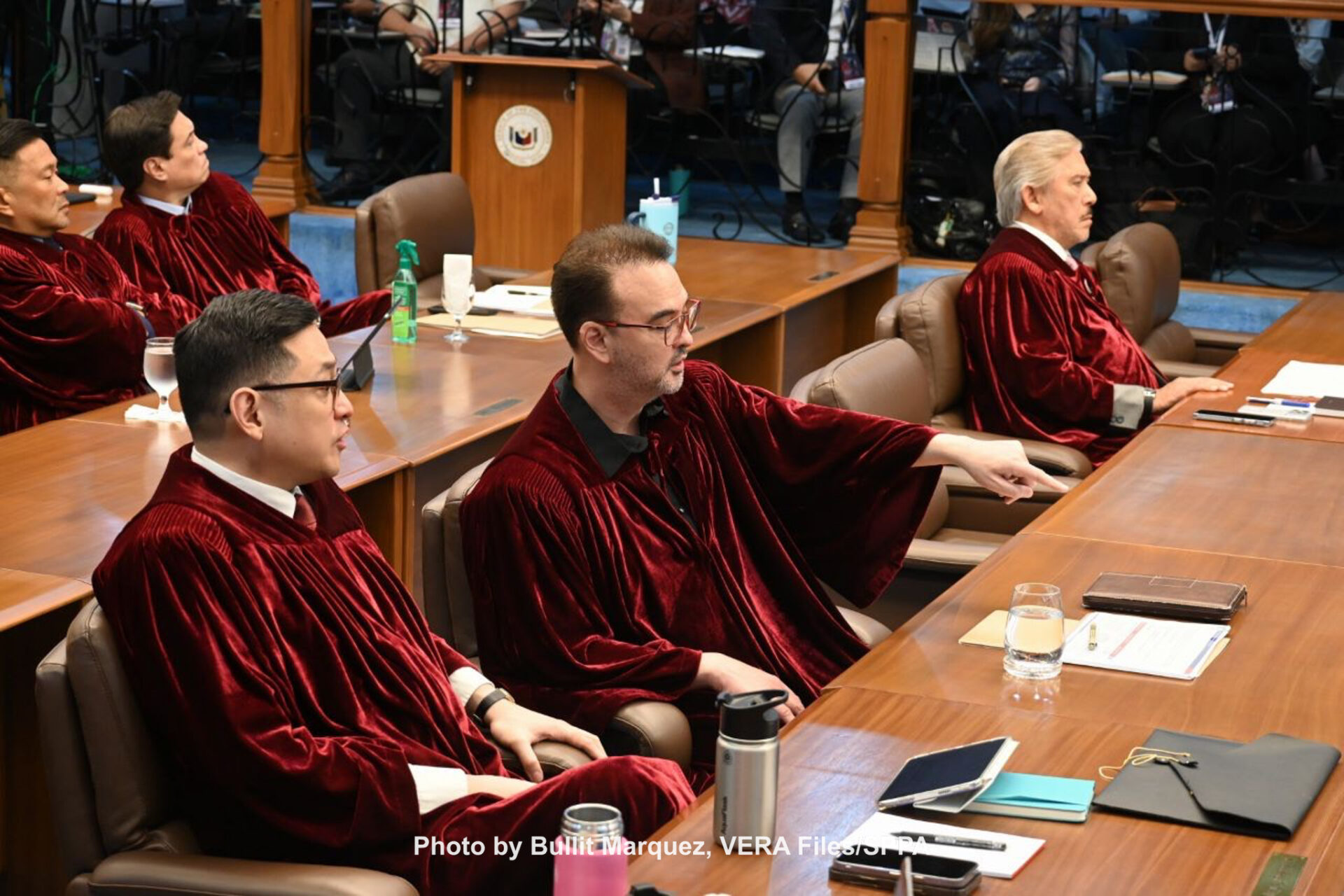
Presiding officer Sen. Francis Escudero noted that Hontiveros’ question touched on the very issue the impeachment court would ultimately decide but allowed Ligutan to finish before assuring the defense that it would be given equal time to respond after cross-examination.
Sen. Pia Cayetano later rebuked both the line of questioning and the prosecution’s response, saying the proceedings should not be turned into premature closing arguments.
She moved to strike Ligutan’s statements from the record, saying the impeachment court should first receive all evidence before entertaining arguments on whether the alleged acts constituted impeachable offenses.
Narvasa joined the motion, although Escudero deferred action on it.
Defense: No proof of contracting an assassin
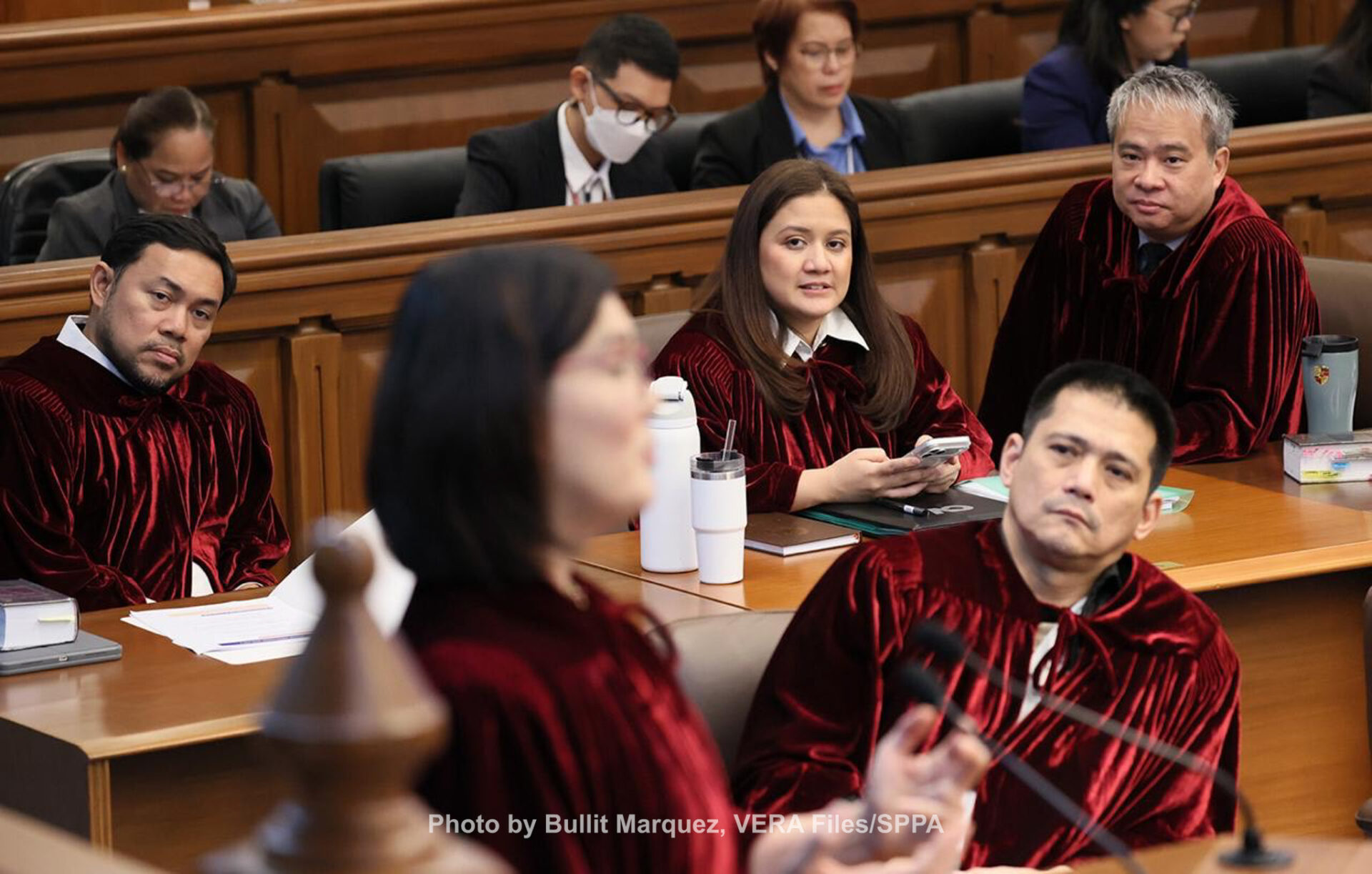
Given equal time by the court on Wednesday, defense counsel Mark Vinluan built his argument around what he described as the prosecution’s own admission.
“The prosecution admitted that the video does not prove any fact other than its existence,” Vinluan said.
“In simple words, there is no proof of any contracting of an assassin.”
He argued that prosecutors had failed to present competent evidence proving the allegation under Article IV and were instead attempting to establish what he called a “threat narrative” using a “hodgepodge of materials.”
Vinluan also disputed the prosecution’s repeated references to an “assassin,” saying Duterte herself never used the term.
“VP Sara herself said that she did not talk about an assassin. This term only came from people who took her statements out of their proper context and exaggerated what they really meant,” he said.
According to the defense, Duterte’s remarks should not be viewed in isolation but in the context of what it described as months of threats and harassment against Duterte and her family after she broke with the Marcos administration.
Operation Romanov
Vinluan said Duterte was responding to discussions during the Nov. 23 press conference about an alleged “Operation Romanov,” which the defense described as a supposed plot to eliminate Duterte and members of her family, drawing symbolic parallels to the tragic mass murder of Russia’s last ruling family—Tsar Nicholas II Romanov, his wife Alexandra, and their five children—in July 1918 by the Bolshevik revolutionaries.
Vinluan cited NBI records of witness interviews and statements made during the online press conference to argue that Duterte genuinely believed her family was under threat.
“When VP Sara uttered those words, she was not responding as Sara Duterte, the Vice President,” Vinluan said. “She was responding as Sara Duterte the wife, mother, daughter and sister who only sought to protect her own and her family members’ lives.”
Not ‘other high crimes’
The defense further argued that even assuming Duterte’s statements amounted to grave threats or inciting to sedition, those offenses are punishable under the Revised Penal Code and fall under the jurisdiction of first-level trial courts.
“They are not ‘other high crimes’ contemplated by the Constitution as grounds for impeachment,” Vinluan said.
“There was no betrayal of public trust. She actually upheld the people’s trust.”
The term “other high crimes” appears in Article XI, Section of the 1987 Constitution as one of the six constitutionally defined grounds for impeachment, alongside culpable violation of the Constitution, treason, bribery, graft and corruption, and betrayal of public trust, for high-ranking officials such as the president, vice president, Supreme Court justices, constitutional commissioners, and the Ombudsman.
Triggered by Lopez’s detention
Defense lawyers also argued that Duterte’s emotional remarks on Nov. 23 were triggered by the detention of her chief of staff, Zuleika Lopez, during the House investigation into the Office of the Vice President’s confidential funds.
During cross-examination, they replayed portions of Duterte’s online press conference showing Lopez protesting her planned transfer to the Correctional Institution for Women in Mandaluyong City after being cited in contempt by the House committee on good government and public accountability.
When asked by Hontiveros whether the defense was attributing Duterte’s statements to Lopez’s detention and the events surrounding it, Narvasa replied in the affirmative but clarified that the defense was not arguing that alleged grave threats are legally justified simply because of surrounding circumstances.
Neither shaken nor broken
In a press briefing on Thursday, House prosecutors insisted their case remained intact.
San Juan Rep. Bel Zamora said Calilung’s testimony had survived extensive cross-examination and stressed that the prosecution had yet to complete the presentation of its evidence under Article IV.
“You saw our first witness. His testimony was neither shaken nor broken,” Zamora told reporters.
Legal spokesman Benjamin Tolosa Jr. dismissed the defense’s “Operation Romanov” theory as unsupported by any evidence presented before the impeachment court.
“So far, we have heard this only from the defense. There has been absolutely no evidence presented during this trial proving that such a plot existed,” he said.
Not just conditional threats
Tolosa said prosecutors expect to present NBI Regional Director Jeremy Lotoc, House Legislative Security Bureau Executive Director Capt. Belinda Bello and NBI Director Melvin Matibag next week. He added that Zuleika Lopez may also be called as a prosecution witness.
Deputy Speaker Paolo Ortega V, another member of the prosecution panel, said Duterte’s “kill” remarks could not simply be dismissed as conditional threats.
“That is a threat against the highest official of the land,” Ortega said.
“It is the first time that a sitting vice president threatened the president and members of the first family.”
The impeachment court is set to resume hearings on July 13 as prosecutors continue presenting evidence under Article IV, with additional NBI officials expected to testify on the government’s case that Duterte’s public statements amounted to an impeachable betrayal of public trust.