
The simultaneous impeachment threats hanging over President Ferdinand Marcos Jr. and Vice President Sara Duterte may dominate headlines, but for most Filipino households, the legal arguments and political maneuvers barely register. People are far more concerned with rising food prices, weak public services and incomes that no longer stretch to the end of the month. While leaders battle for power, ordinary Filipinos struggle to survive.
The complaints against Marcos cite alleged constitutional violations, abuse of power and governance failures, including his alleged involvement in the flood control corruption scandal and questionable budget insertions. Those against Duterte focus on the misuse of billions in public funds and accountability and claims of unexplained wealth. Some observers perceive her camp as pursuing destabilization efforts against Marcos, with her as the constitutional successor. Each set of allegations merits scrutiny, but together they portray a political system preoccupied with internal conflict at a time when governance is urgently needed.
In Marcos’ case, impeachment has been shaped as much by procedure as by substance. The first complaint filed was widely seen as triggering the Constitution’s one-year bar rule, which prohibits more than one impeachment proceeding against the same official within 12 months. It has been forwarded to the Office of the Speaker, while two subsequent complaints were not accepted by the House secretary general. The one-year bar begins when the impeachment process is deemed initiated upon referral of a complaint to the House justice committee.
A similar framework governs impeachment moves against Duterte. Complaints would be filed only after the one-year bar lapses on Feb. 6, making them constitutionally permissible. The timing highlights how filing deadlines and procedural rules shape when impeachment can proceed, illustrating that impeachment is both a political and technical constitutional mechanism.
Public skepticism is reinforced by the profile of some complainants, several of whom are partisan or face unresolved corruption issues. While this does not invalidate the allegations, it affects public confidence.
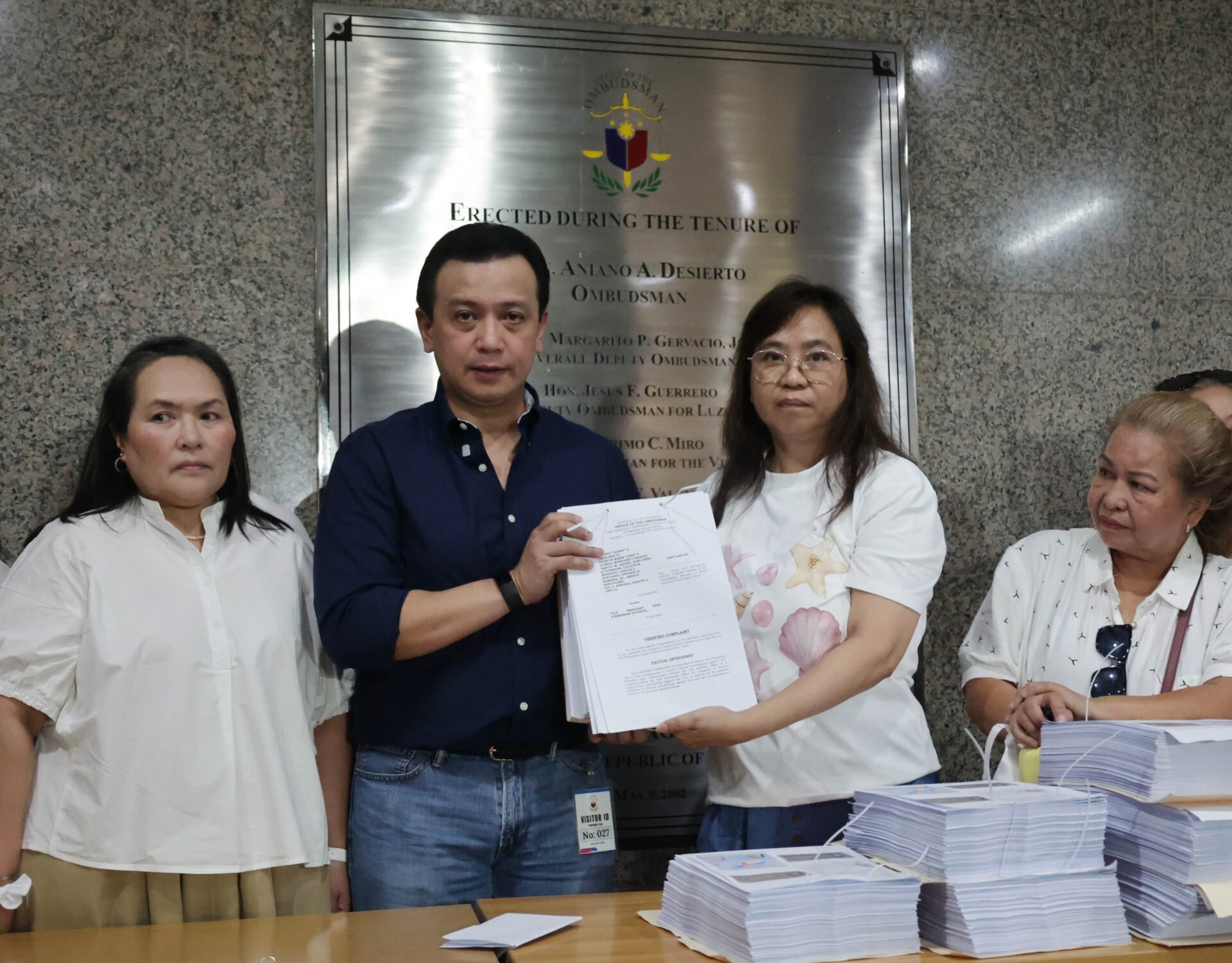
Notably, impeachment is not the only avenue for accountability. Former senator Antonio Trillanes IV is pursuing an alternative path, filing a formal complaint against Duterte with the Office of the Ombudsman over essentially the same allegations, including additional evidence such as her alleged links with illegal drug personalities and POGO operators.
On Jan. 21, Trillanes, alongside the civil society group The Silent Majority, filed a 41-page verified complaint alleging 23 counts of various anomalies spanning Duterte’s tenure as mayor of Davao City, education secretary and vice president. They urged the Ombudsman to initiate criminal prosecution and formally recommend impeachment proceedings to the House. The approach shows that administrative and judicial mechanisms can address wrongdoing without triggering a full-blown political crisis.
History offers a cautionary perspective. The impeachment of then-president Joseph Estrada in 2000 paralyzed the government and destabilized the economy. When the trial collapsed, street protests erupted. Political elites endured, but ordinary Filipinos bore the costs as investor confidence faltered and economic momentum slowed. Later attempts against his successor, Gloria Macapagal-Arroyo, were more contained. Institutions held, preventing mass unrest, but legislative attention was absorbed and public cynicism deepened, demonstrating that even “managed” crises carry real costs.
Today’s situation echoes both periods, with a key difference: The president and vice president face impeachment pressures simultaneously. Governance risks are slowing as lawmakers focus on political survival rather than urgent economic and social reforms. Sen. JV Ejercito has warned that such simultaneous efforts could signal instability, unsettling investors and weakening economic confidence.
The economic strain on households is already severe. Inflation continues to erode purchasing power, with food taking the biggest hit. Rice remains expensive, fuel drives up transport and food costs and wages lag behind rising prices. Many families are cutting meals, delaying medical care or struggling with education expenses. These pressures are felt daily, not as abstract statistics.
Anti-corruption measures are meant to protect the public, but when they appear selective or politically timed, trust erodes. Allegations surface as alliances fracture, reinforcing the perception that corruption is weaponized rather than addressed systematically. Over time, repeated unresolved scandals deepen cynicism, creating “corruption fatigue.”
Accountability remains essential. Allegations of abuse of power or misuse of public funds must be investigated, regardless of who is involved. But when political conflict overshadows governance, the public interest suffers.
Surveys consistently show that Filipinos prioritize the cost of living, jobs, health care and education. Impeachment debates, while constitutionally significant, rank far below these immediate needs. When politics turns inward, it reinforces the image of an elite detached from ordinary hardship.
What the country needs is a sustained, credible anti-corruption drive—consistent, insulated from partisan conflict and capable of delivering tangible improvements in public welfare. Corruption is not only a legal or moral issue; it has direct economic consequences, from inflation to distorted markets to diverted funds meant for essential services.
Two impeachments may dominate the political stage, but there is only one consistent loser: the Filipino public. History shows that when political conflict displaces governance, the costs fall quietly and unevenly on ordinary citizens. And once again, the plates remain empty.
The views in this column are those of the author and do not necessarily reflect the views of VERA Files.
This column also appeared in The Manila Times.