
Photos by the Truth Commission
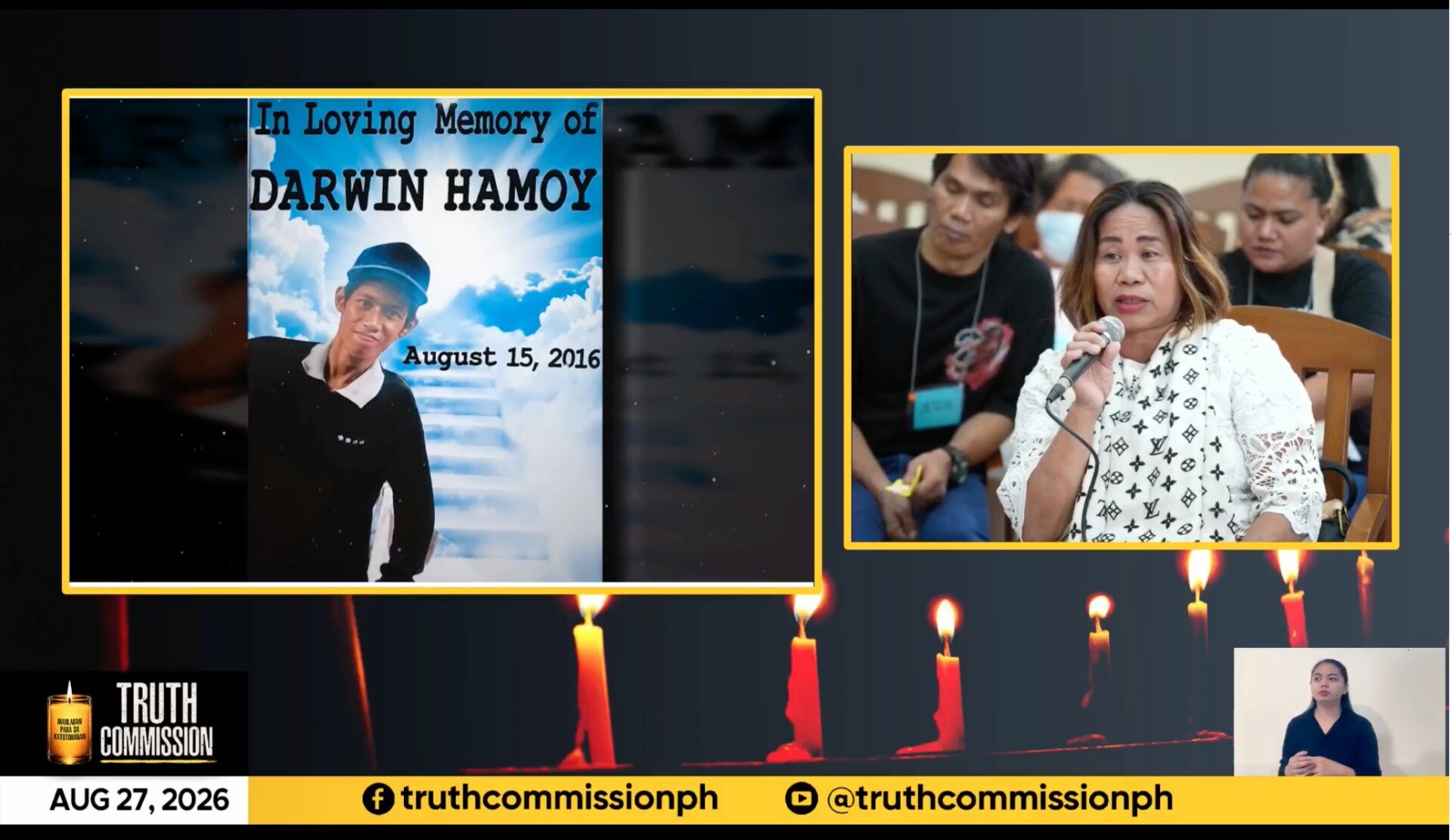
Ten years have passed since her 17-year-old son was killed in a manner so brutal and unjust but the pain remains raw and deep to Mariza Hamoy, a street sweeper from Payatas, Quezon City.
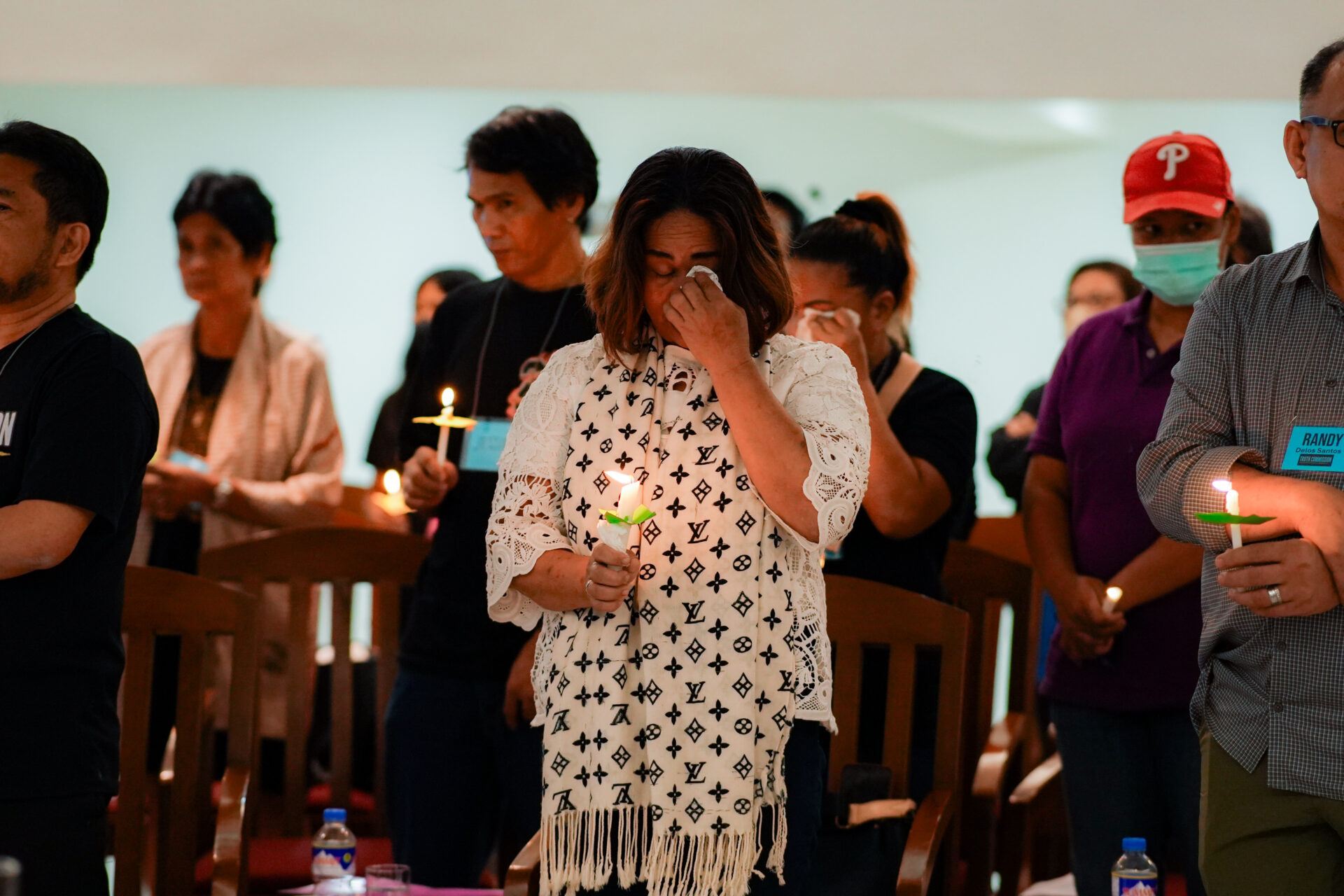
This was evident at the second public hearing of the Philippine Truth Commission where Mariza recounted the circumstances surrounding the death of her son, Darwin, a home-schooled Grade 8 student, on Aug. 15, 2016, a little more than a month after Rodrigo Duterte assumed the presidency and launched his bloody war on drugs.
Darwin took care of his five-year-old sibling while Mariza was sweeping the streets for a living. On the sides, Darwin also worked in the market as laborer to augment the family’s income.
Mariza narrated that the evening of Aug. 15, Darwin was at a birthday celebration in a neighbor’s house, while she and her husband were in a wake nearby. A neighbor told her that someone asked Darwin to buy cigarettes when a group of armed policemen arrived and began shooting people at the celebration.
“Walang katanong-tanong, niratrat diretso ang mga tao sa loob, tsaka siya [Darwin],” she said.
(Without asking any questions, they immediately opened fire on the people inside, including him).
She was told that Darwin cursed at the cops after he was shot in the leg. One of the policemen was heard saying, “Tuluyan natin ito para malinis.” (The police said, ‘Let’s finish this so it’s clean.)
“ Pinasok daw sa loob, doon siya tinuluyan sa loob,” she related.
( They allegedly brought him inside, where they killed him).
On the same day, Mariza searched for her son’s body at a hospital along East Avenue, but they had no record of him. She then went to another hospital in Muñoz, where a security guard told her that a gunshot victim had been brought in but was not admitted because he was already dead.
A new barong for Darwin
It took eight days before Mariza found that Darwin’s corpse had been brought to a funeral parlor in Kamuning. Before she could take him home, she was asked to pay a P15,000 down payment. Despite the financial burden, Mariza was able to negotiate for a P2,000 initial pay. She also managed to buy a new barong for Darwin before he was placed in a casket.
“Sabi ko hindi ko pasuotin ‘yung anak ko ng luma ‘kay last chance ko nang mabilihan siya ng damit,” she said.
(I said, I will never let him wear old clothing because this is the last chance that I can buy him one).
In a police spot report, which misdeclared the age of Darwin, the Batasan Police Station 6 described the shooting as part of a buy-bust operation describing Darwin merely as an unidentified male clad in camouflage shorts and falsely attributing sachets of shabu and a firearm to the scene.
Mariza vehemently contested the police narrative that her son resisted arrest or “nanlaban.”
“Mawalang galang na po… sinundan ko lang po yung spot report niyo na kayo nandoon. Masakit po na lagyan niyo ng shabu saka baril, pagkatapos noon ay sinako niyo yung anak ko. Magbaliktad tayo ngayon: yung anak niyo ang patayin ko, lagyan ko ng baril at shabu, isako ko—anong maramdaman niyo?” Hamoy asserted. (Pardon me, I just followed your spot report that you were there. It hurts so much that you planted shabu and a gun, then you put my son’s body in a sack. What if we exchange places, I will kill your child and plant a gun and shabu and put him in a sack- how would you feel?)
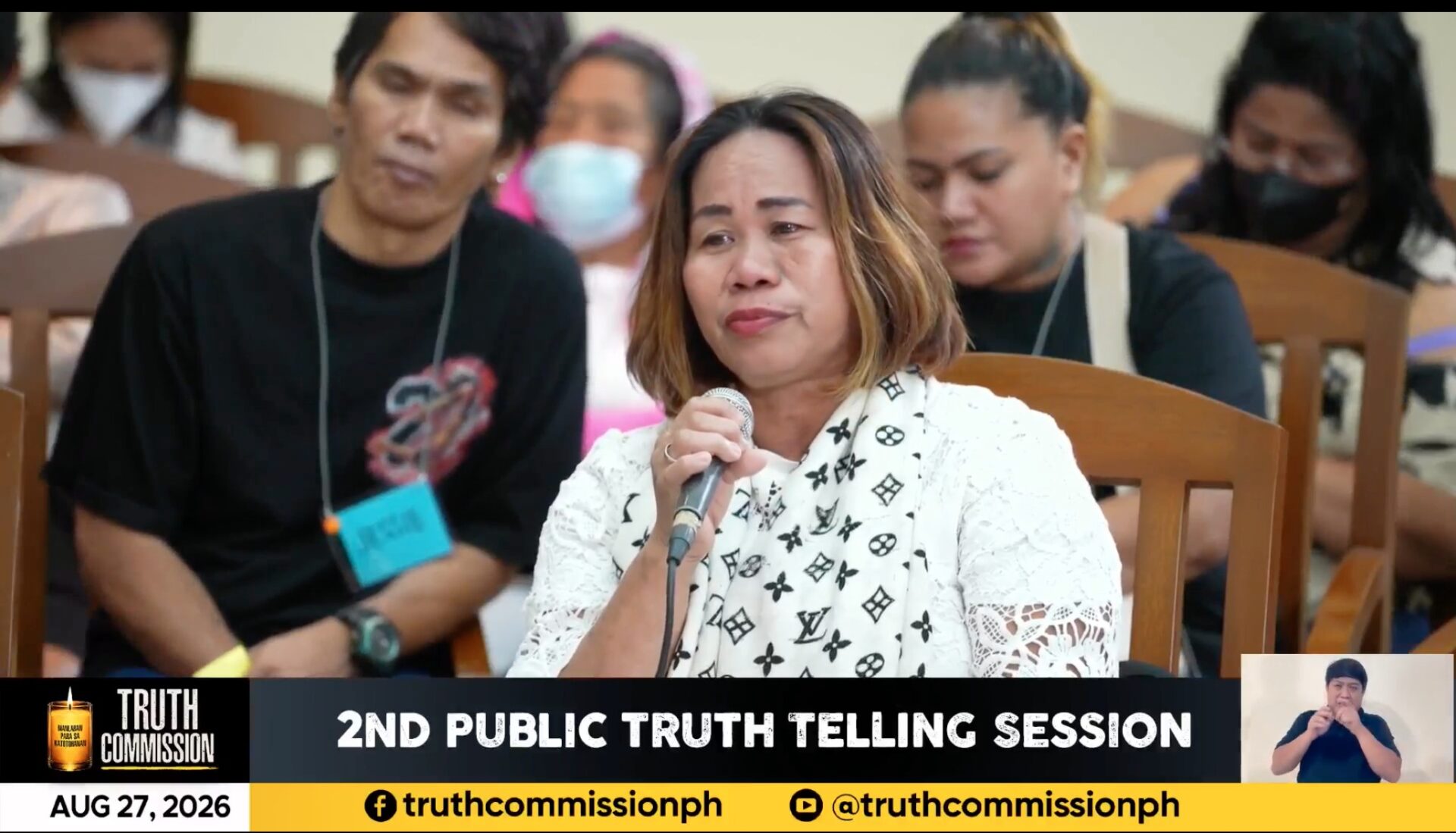
Mariza said she inspected a nearby house whose wall was adjoining to the house where the shooting took place. She found no bullet marks there, which she said contradicted the police account.
“Kung kunyari nanlaban sila, dapat may tamang bala. As in wala. Doon lang mismo, sa bahay, sa birthday [shooting] case,” she stated.
Decade-long fight for justice
Hamoy, along with two relatives of other victims, went to city hall to file a complaint against the 16 policemen allegedly involved in the killing. They were referred to the Commission on Human Rights, which later filed the case with the Office of the Ombudsman.
In 2018, however, the Ombudsman ruled that the testimonies of the complainants were lacking since they were not present during the killings, ultimately dismissing the charges.
Hamoy previously tried to convince a survivor who witnessed the shooting, but the person was afraid to testify.
“Ayaw nila pong madamay. May mga pamilya pa sila. Baka daw balikan,” she explained.
(They didn’t want to get involved. They have families to think about. They were afraid they might be targeted in retaliation).
They also filed a separate case to the Philippine National Police’s Internal Affairs Service which led to the filing of grave misconduct and grave irregularity cases against the police officers.
However, as the investigation progressed, the two other complainants eventually withdrew, leaving Mariza as the only one pursuing the case. It eventually reached the Office of the President, but Mariza said it was also dismissed this year.
Her husband was subjected to targeted police retaliation—arrested and jailed five separate times between 2017 and 2022 on trumped-up illegal gambling (kara y cruz) and drug charges, despite negative drug tests. The family was eventually forced to sell their home to pay bail, endure the stigma of false rumors, and separate their children across provinces for safety.
Unclear findings
Forensic pathologist Dr. Raquel Fortun was present at the hearing to explain her findings after Darwin’s body was exhumed in 2021.
She said that in the medico-legal report, the fields for cause of death and death by natural disease were left blank. The trajectory of the bullets was also unclear.
“Tinamaan daw ang right lung. Tapos, tinamaan din yung left lung. Kasi talagang imagine-in mo, paano nangyari yun anatomically?” she said.
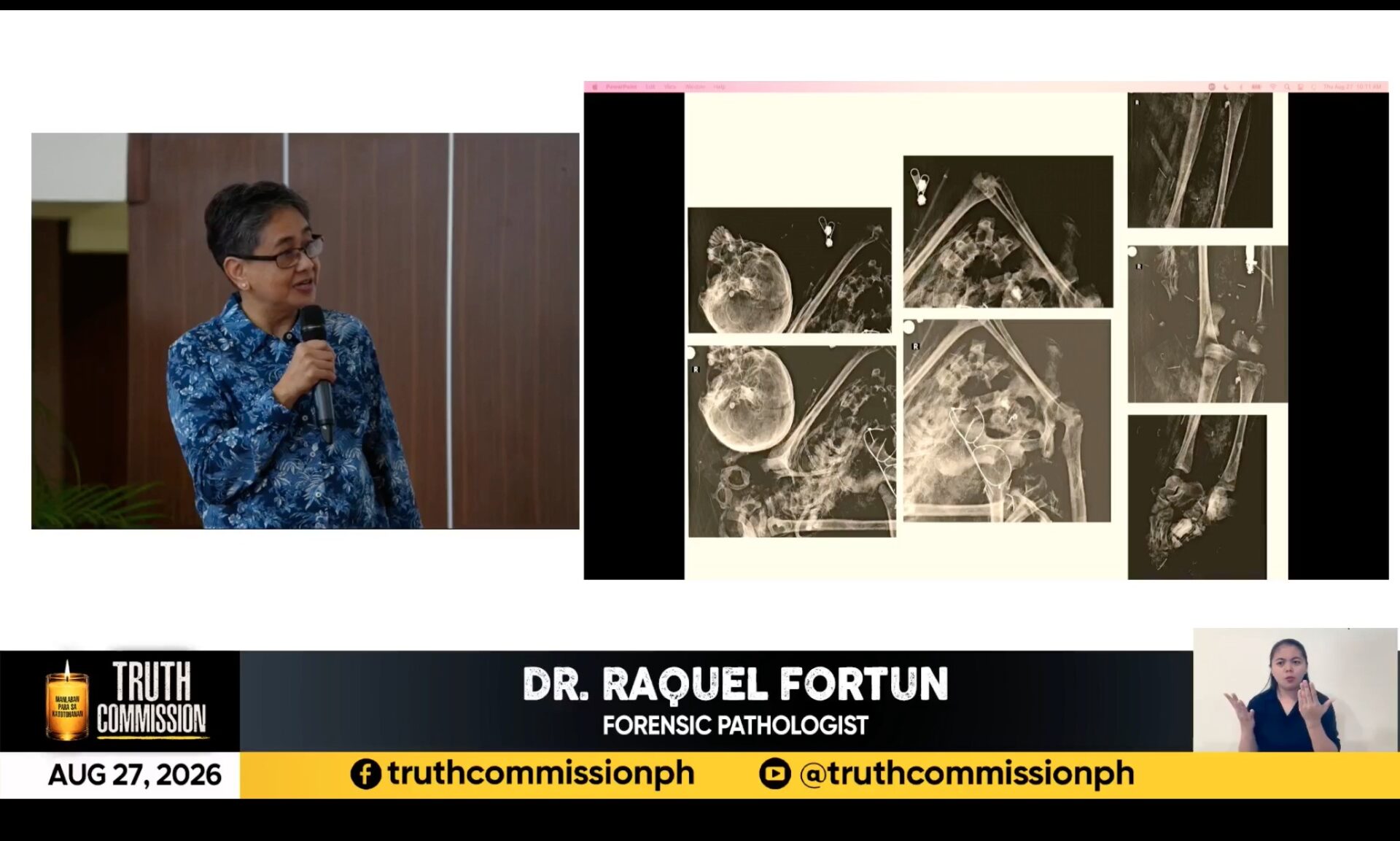
Fortun suspected that Darwin was shot two times in the chest. His gunshot wounds also show that the suspect intentionally aimed for his vital organs. She classified the case as homicide.
Fortun said she hoped for more documentation that could properly explain the nature of the teenager’s death.
“Pwede bang patingin ng documentation? That’s the reason why you document. I am expecting to be questioned. Pag ako tinanong nyo, pakitaan tayo ng documentation. But so far, it doesn’t make sense,” she said.
(Can I see the documentation? That’s the reason why you document. I am expecting to be questioned. If you ask me, show me the documentation. But so far, it doesn’t make sense).
She also lamented how it is difficult to find justice for drug war victims as shown by Mariza’s experience.
“Yung mga nagsasabing, eh ba’t hindi kayo magsampa ng kaso? (To those who ask, “Why don’t you file a case?,” she said. “You heard her. She tried and tried and tried.”
Truth Commission as safe place for truth-telling
Darwin’s case is just one of many that will be taken up in the hearings of the Philippine Truth Commission, an independent, civilian-led body that aims to document stories of alleged extrajudicial killings during the previous administration’s anti-illegal drugs campaign.
Chaired by Dean Raul Pangalangan, former judge at the International Criminal Court alongside facilitator Bayan Quiñones, Commissioner Raquel Fortun, Executive Director Christopher N. Magno, and other commissioners Al Fuertes and Carlos Conde, the hearings serve as a safe space for vulnerable families to tell their stories without fear of retribution.
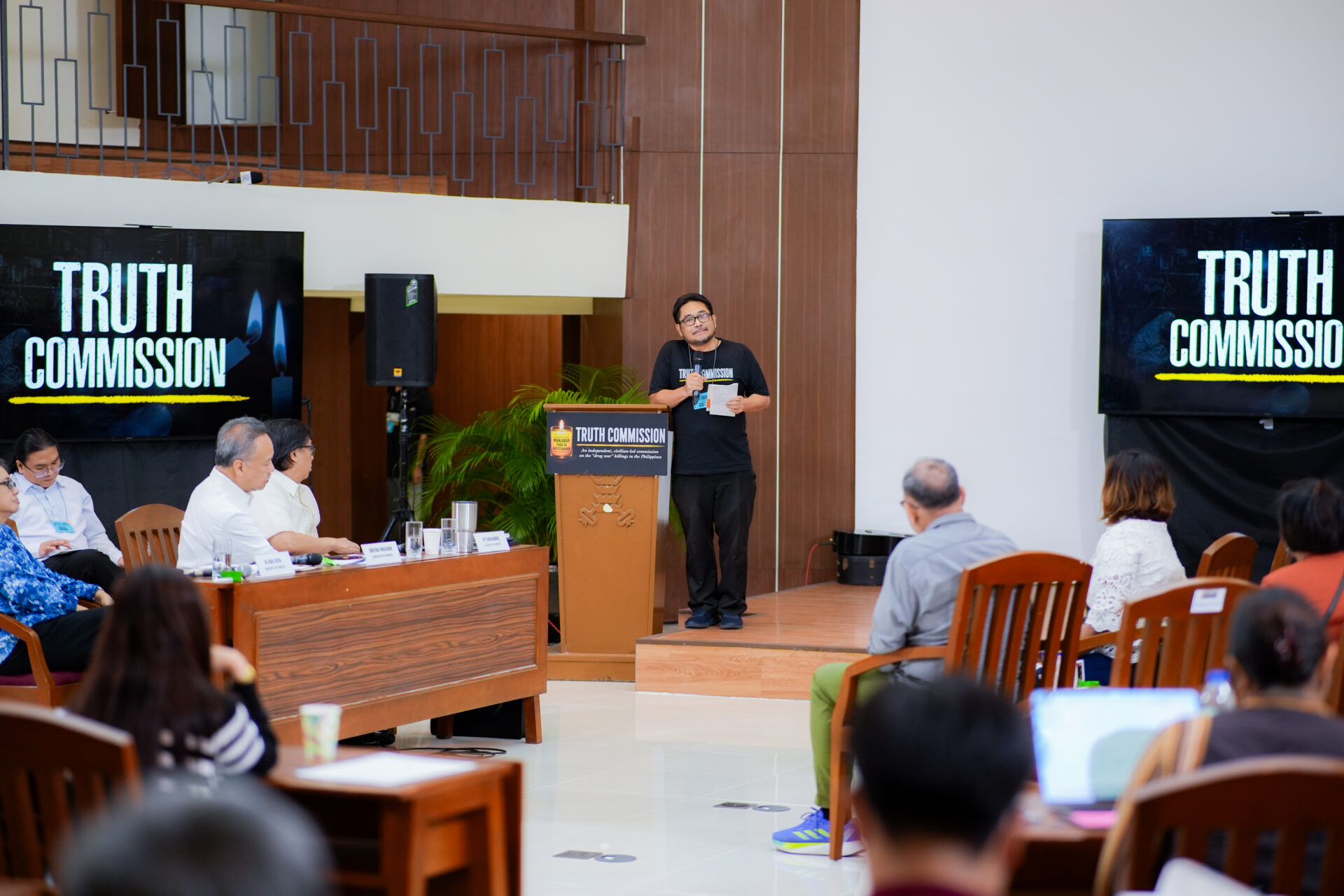
In his closing reflection, Father Albert Alejo, SJ emphasized the moral courage needed to confront documented atrocities:
“Ang ginagawa po natin dito sa Truth Commission ay paghanap at pagharap sa totoo. Hinahanap natin ang totoo, pero yung iba, kapag lumilitaw na, ayaw nang harapin. Ang Truth Commission ay may tapang at katapatan na totoong hanapin ang talagang totoo at harapin ang paggawa ng tama.”
(What we are doing here at the Truth Commission is to search for and confront the truth. We are looking for truth, but others, when they find the truth, they don’t want to confront it. The Truth Commission has the courage and honesty to face the truth and do what is right.)
The next public hearing, which will feature another testimony, is scheduled for Sept. 11.