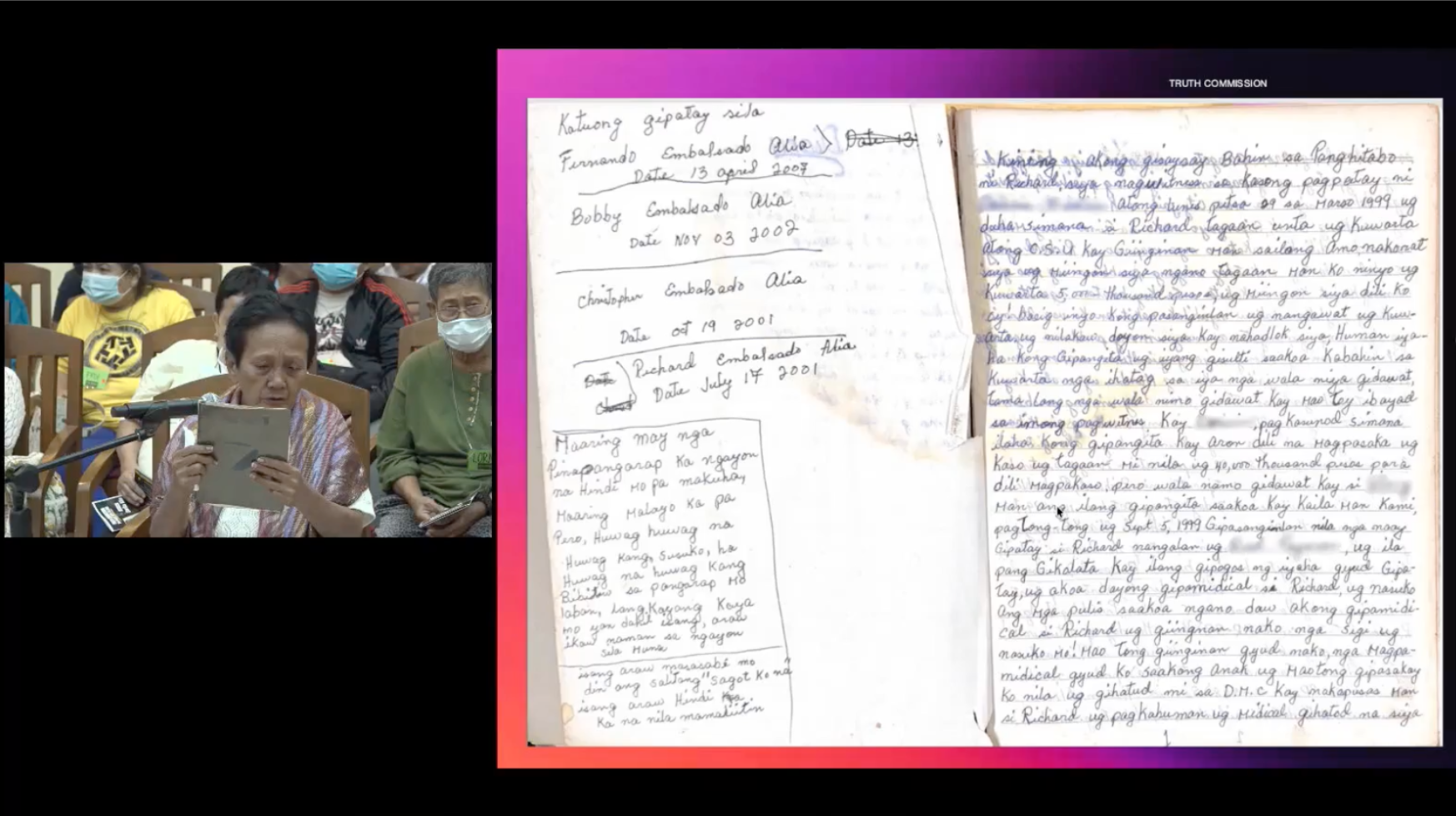

One can try to imagine the grief of a mother retrieving the body of a son brutally killed.
For Clarita Alia, a vegetable vendor in Bankerohan market in Davao City, she had to experience that harrowing ordeal four times.
With a diary in her hand, 72-year-old Alia, told the Philippine Truth Commission that four of her sons were killed by members of the Davao Death Squad.
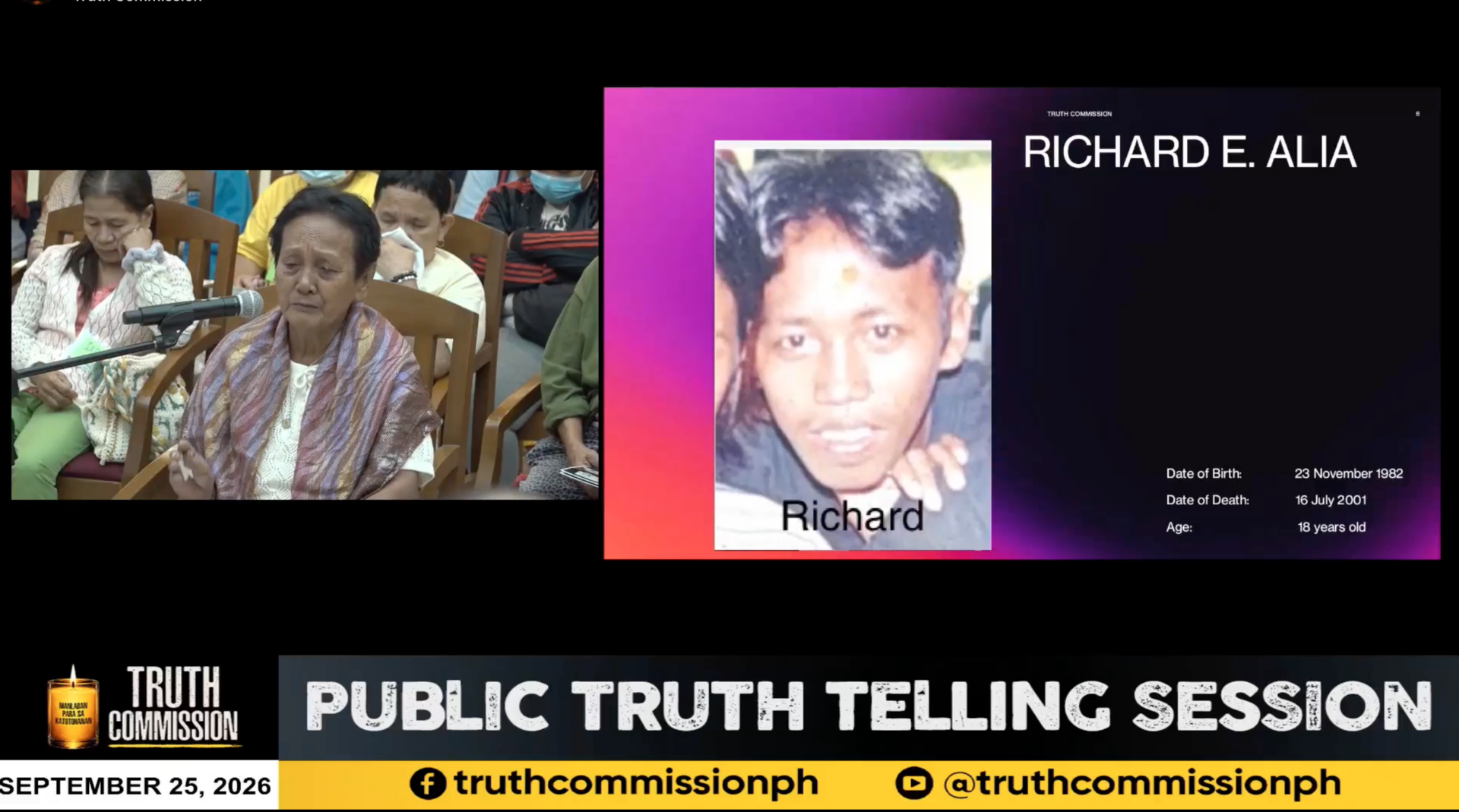
She said her family’s ordeal began with the killing of her eldest son, Richard, in 2001.
Alia recalled what a police officer told her before the killing of Richard: “Mag-ingat ka kasi iisa-isahin ko ang mga anak mo. Iisa-isahin ko silang lahat (Watch out, because I’m going to go after your children one by one. I’m going to target every single one of them).”
“One by one”
Prior to his death, the police attempted to detain Richard without a warrant of arrest. When Alia resisted, the police threatened her that he would kill her sons one by one.
On July 17, 2001, she was asleep after the day’s work when a neighbor told her that Richard had been found dead. He had facial wounds and a stab injury on the side of his body. Witnesses saw him being dragged into a police mobile, according to Alia.
“Bakit nila ginawa ’yun? Ang sakit-sakit. Parang baboy lang ang anak ko (Why did they do that? It was so painful. My son was treated like a pig),” she said.
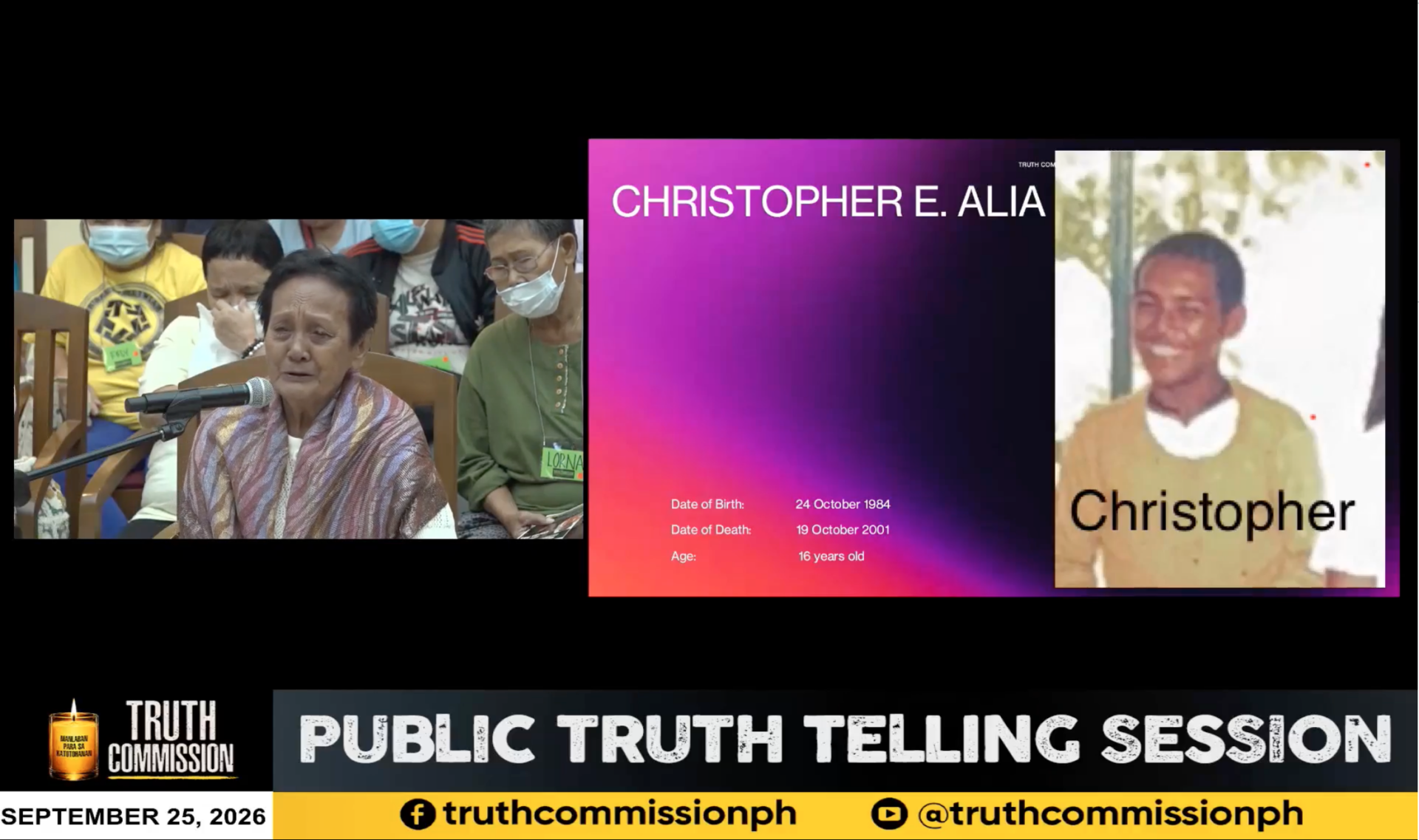
Three months later, on the midnight of Oct. 19, 2001, her 18-year-old son, Christopher, was killed. He had been accused of belonging to a group of thieves.
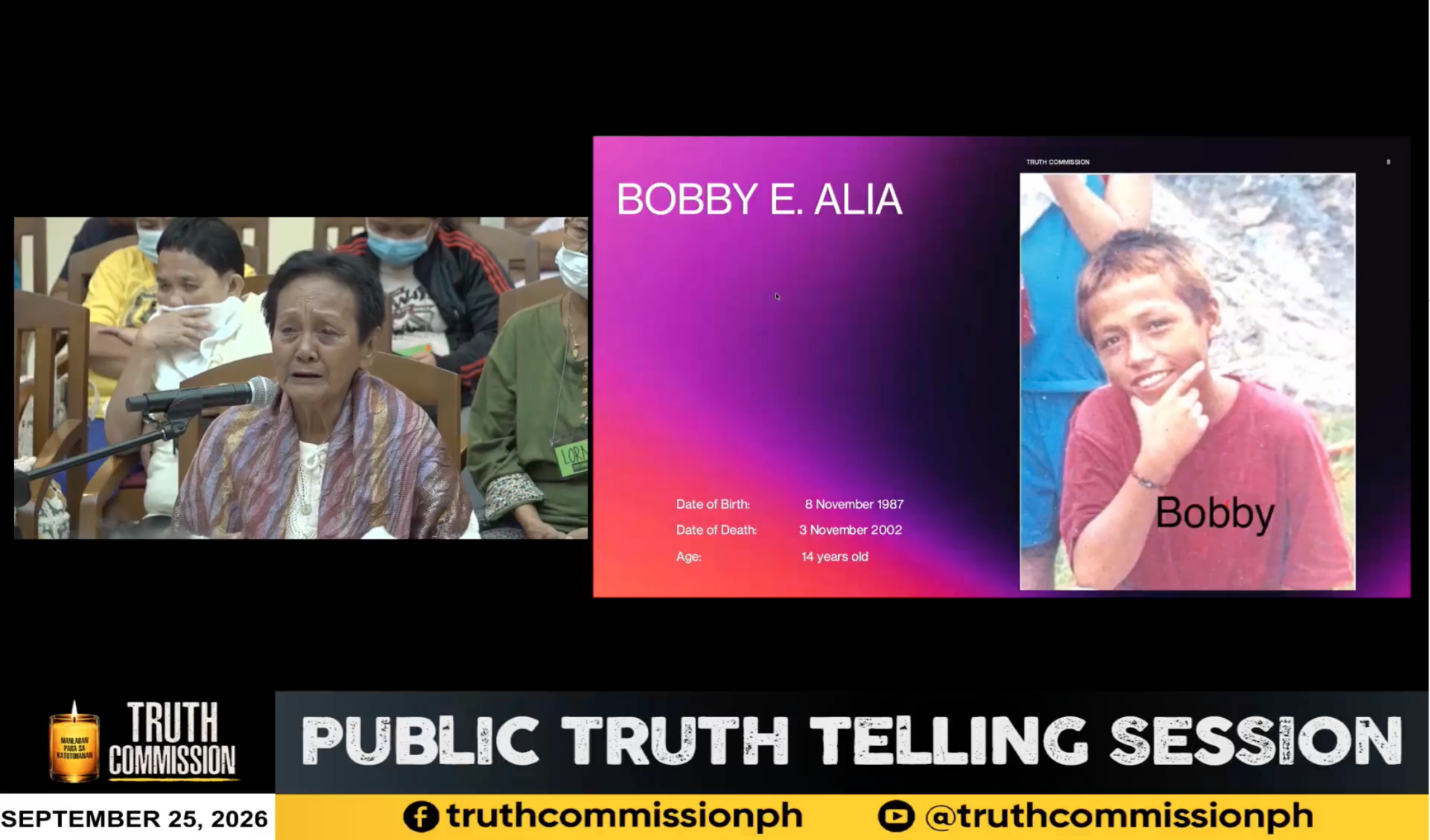
Alia’s tragedy continued a year later after her youngest son, Bobby, was arrested and taken to a police mobile. He was brought to Sta. Ana in Davao, where, according to Alia, he was beaten and placed inside a drum of water. He was killed on Nov. 3, 2002.
After losing three sons, Alia told Fernando to leave their hometown for his safety. But Fernando returned to Davao when he was 15. He was later killed on April 13, 2007 after being stabbed during a riot, Alia said.
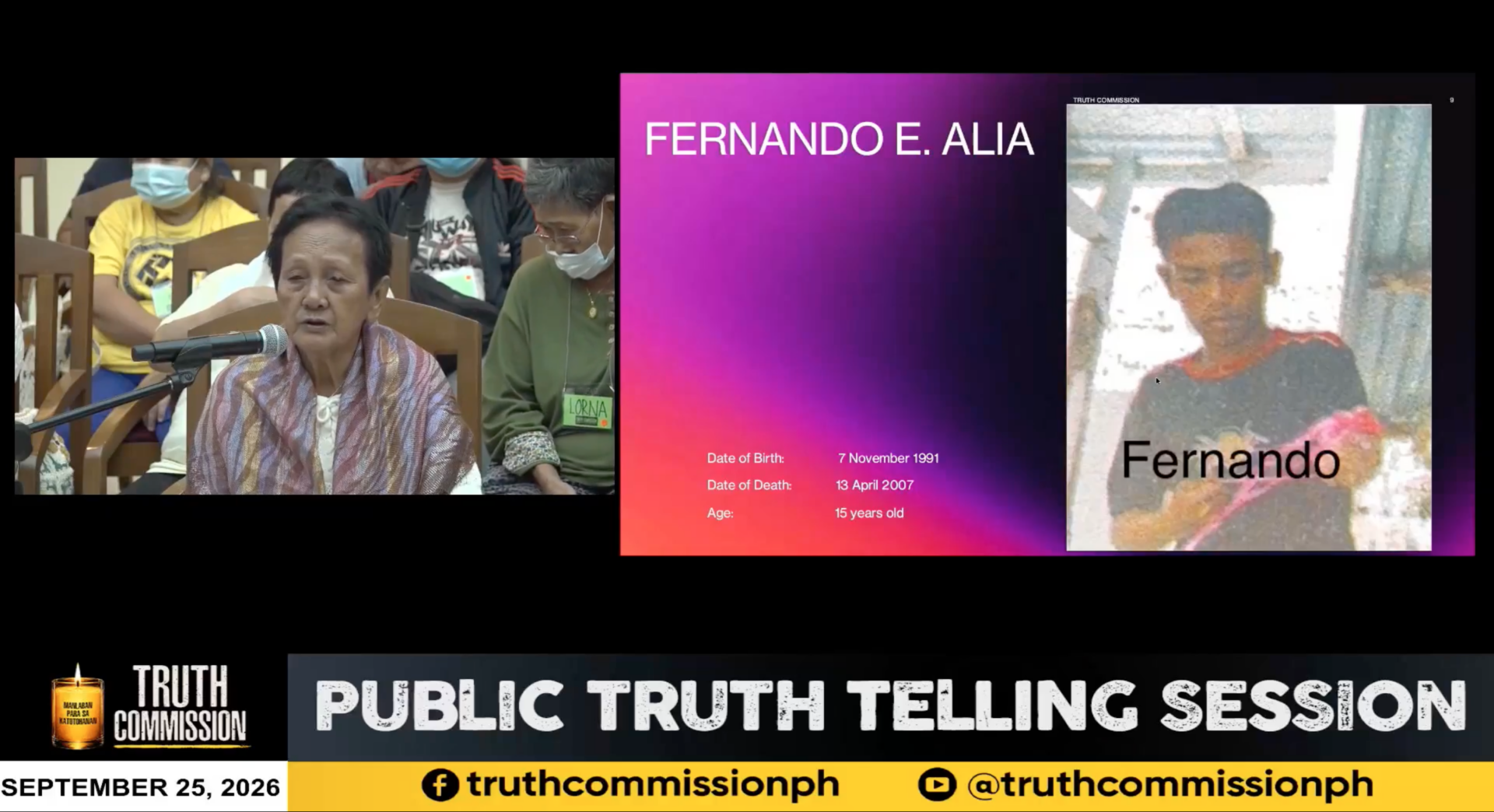
Search for justice continues
The deaths of her sons left Alia questioning the role of the police, whom she said should have been protecting her family.
“Bakit ganun? Ang pulis dapat ang nagbabantay sa mga tao. Dapat sila ang nagbabantay kasi tayo ang nagbibigay ng sweldo sa kanila,” she lamented.
(Why is it like that? The police are supposed to be the ones looking out for the people. They should be the ones keeping watch because we are the ones paying their salaries.)
According to the Truth Commission Legal Team, Alia previously filed an administrative case that resulted in the demotion of one police officer who threatened Richard. However, the case was ultimately dismissed due to lack of supporting evidence.
More than two decades after the death of her four sons, Alia continues to seek accountability.
“Ngayon, nakatindig ako, nandito ako sa harap para sabihin ko sa mga anak ko, kahit mawala kayo, patuloy ako maghahanap ng hustisya hangga’t buhay ako,” she said.
(Today, I stand here before you to tell my children: even though you are gone, I will continue to seek justice as long as I am alive.)
“Tutuloy tuloy pa rin ako para lang mabuwag itong sistema na ito (I will continue to just so this system is dismantled),” she added.
Alia was the fourth witness to testify at a public hearing before the Philippine Truth Commission, a civilian-led body that documents alleged extrajudicial killings tied to the regime of former president Rodrigo Duterte, who is currently detained at the Scheveningen prison in The Hague, Netherlands while awaiting his trial for crimes against humanity at the International Criminal Court.