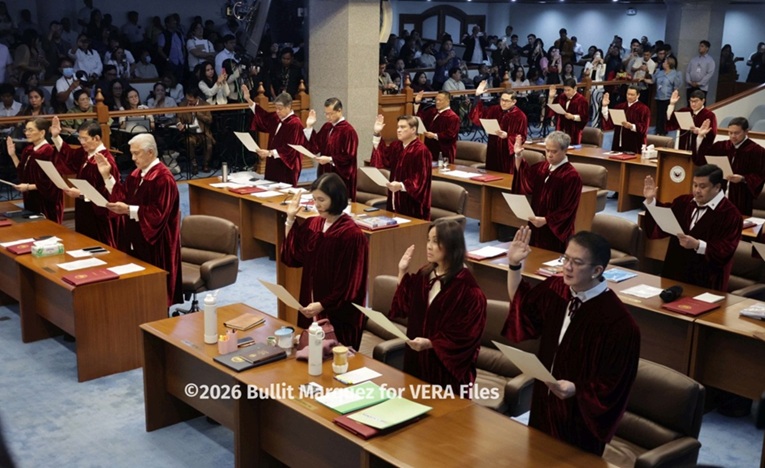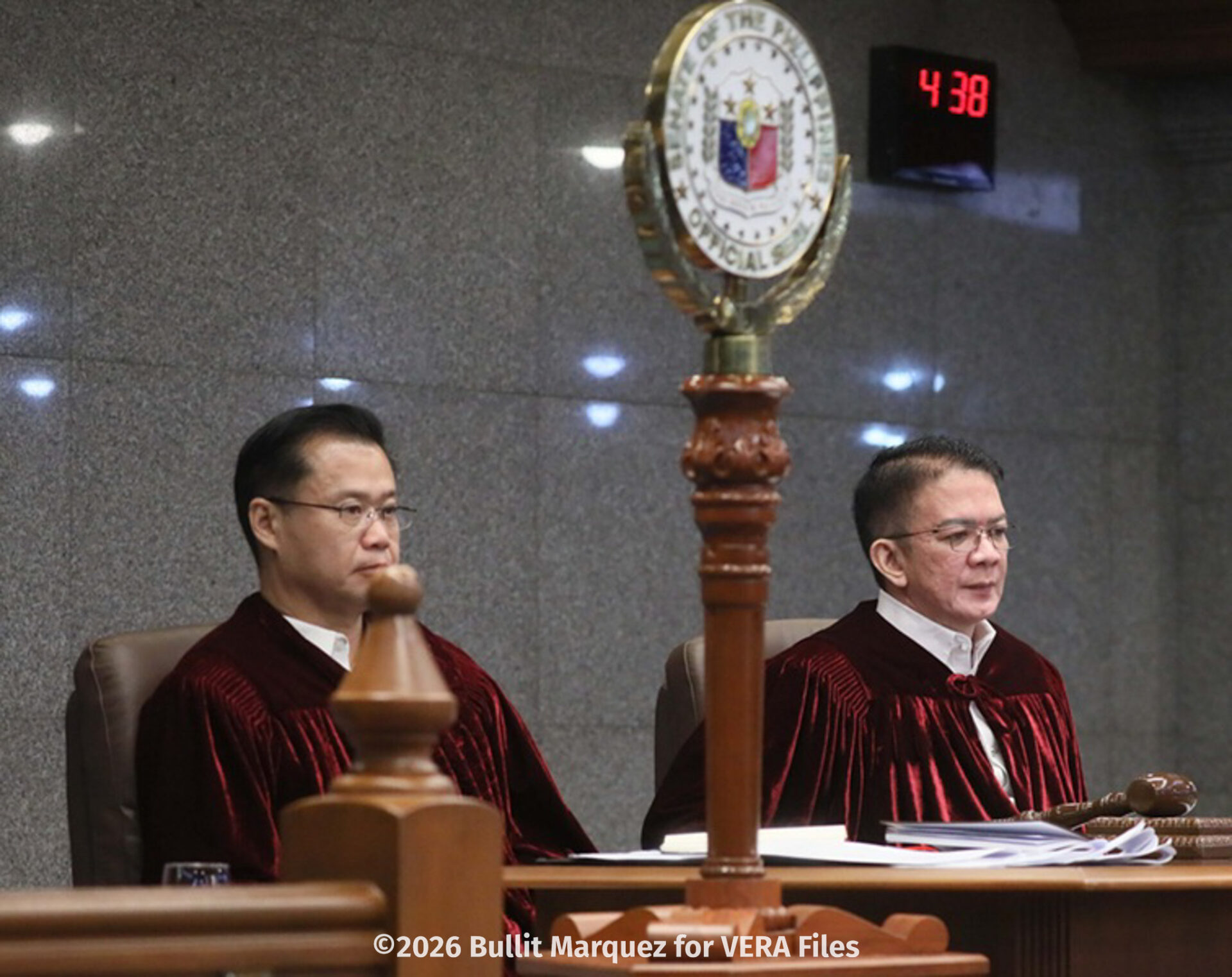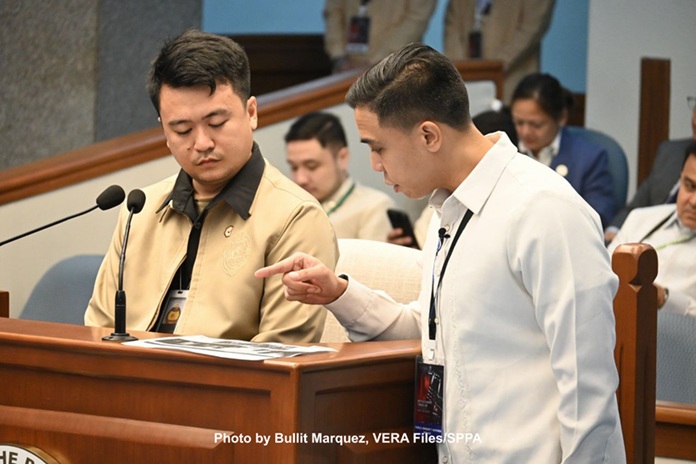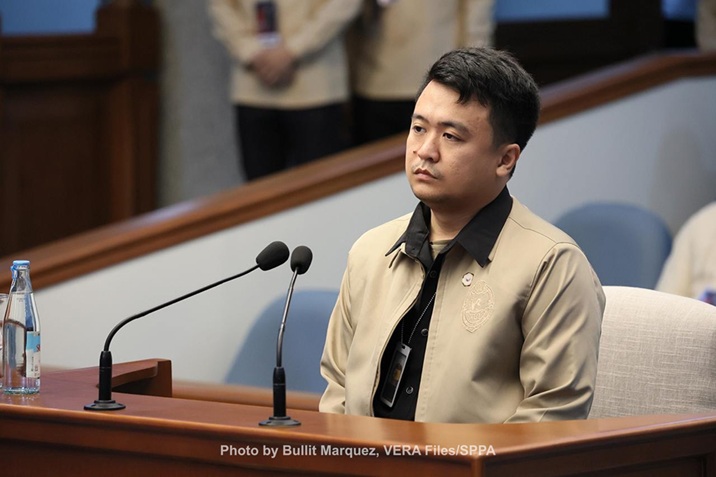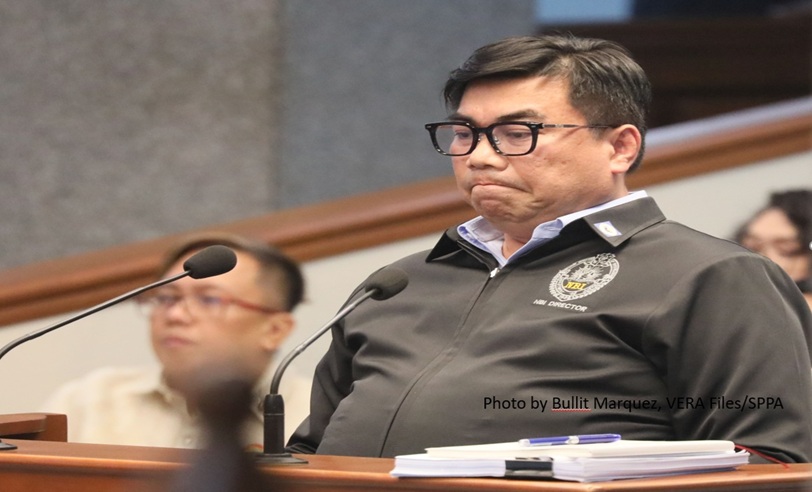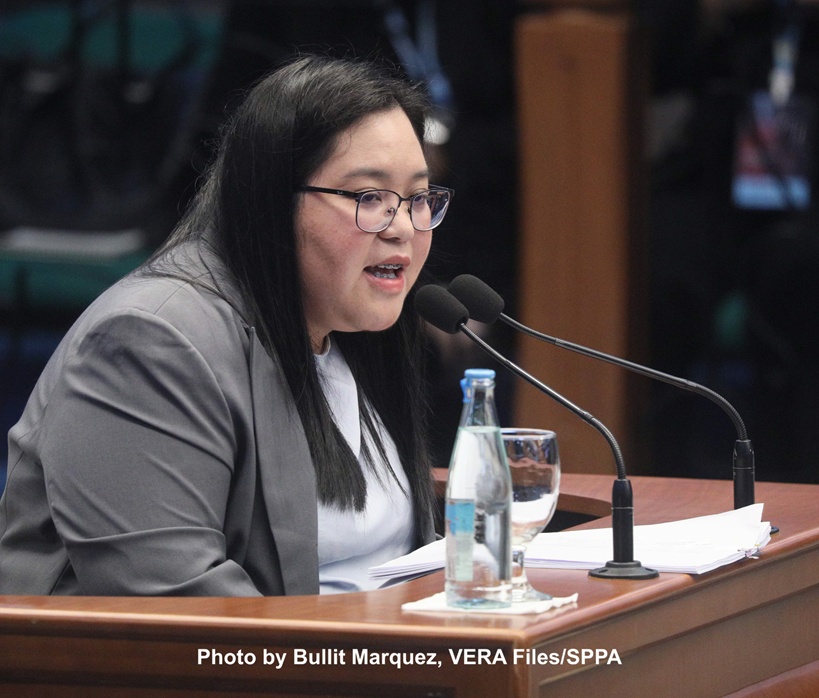

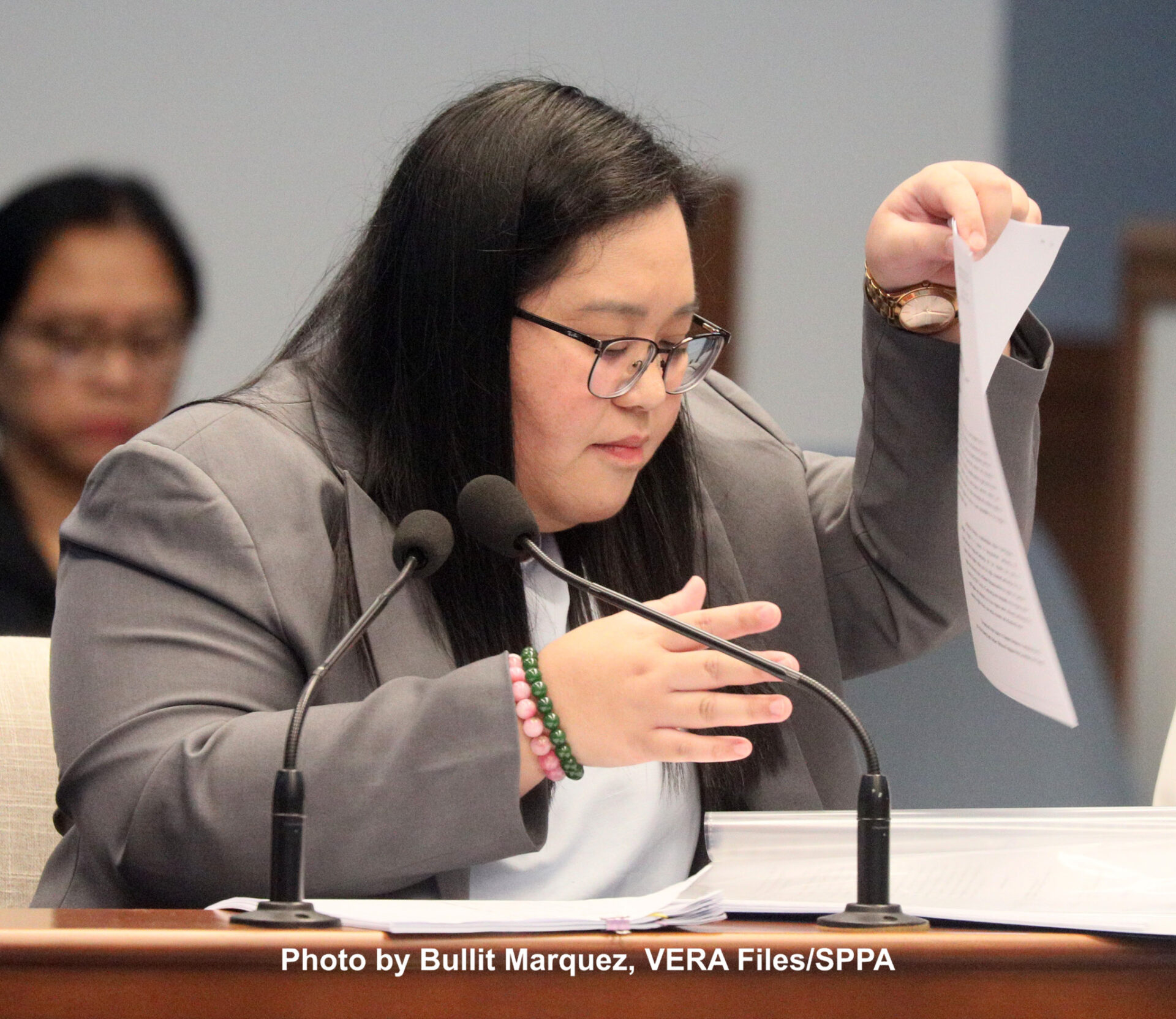
The impeachment trial of Vice President Sara Duterte took a sharper turn this week as a state auditor methodically picked apart the documentary trail behind hundreds of millions of pesos in confidential funds, while increasingly testy exchanges between lawyers forced the Senate impeachment court to draw attention to the conduct of the proceedings themselves.
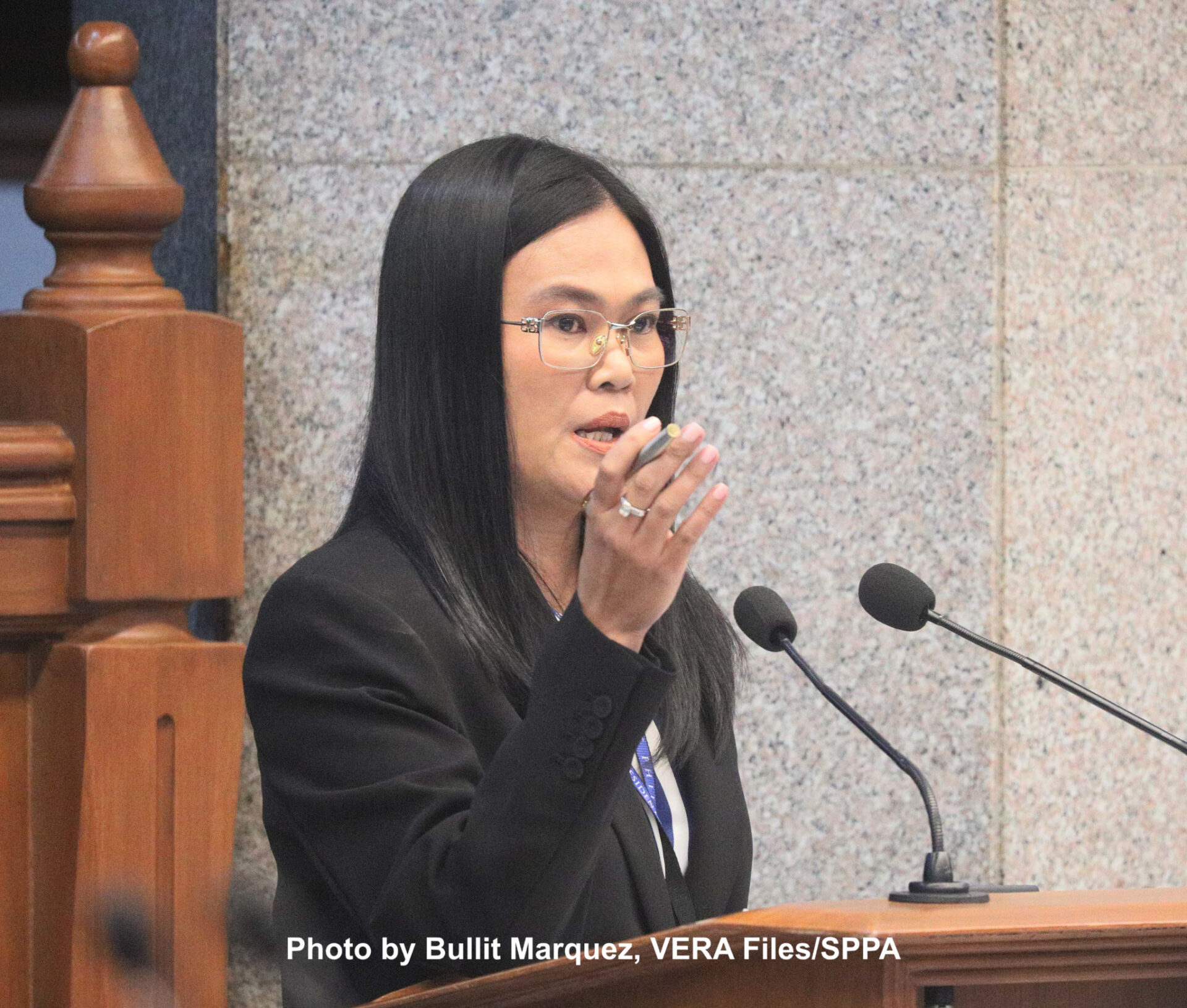
For two days, Aug. 11 and 12, Commission on Audit supervising auditor Xylene Mae del Campo returned to a deceptively simple point: Acknowledgment receipts may show that someone received money, but they do not, by themselves, establish why the money was paid, whether the expense was authorized or whether a claimed confidential operation actually succeeded.
That distinction has become central to the prosecution’s case on the alleged misuse of P612.5 million in confidential funds allocated to Duterte’s offices, the Office of the Vice President and Department of Education, from late 2022 through the third quarter of 2023.
Del Campo, of COA’s Intelligence and Confidential Funds Audit Office, testified that the rules governing confidential funds are strict precisely because these are public funds. Their sensitive nature may limit what can be publicly disclosed about an operation, she said, but it does not eliminate the requirement to account for the money.
Her testimony seemed too technical, but its implications were political and potentially far-reaching.
The prosecution is trying to establish that the controversy is not merely about missing receipts or unusual names appearing on liquidation documents. It is about whether the offices entrusted with public money had the authority to spend it in the first place, and whether they could demonstrate that the spending served the purposes for which confidential funds were intended.
A question of purpose
Del Campo said Joint Circular No. 2015-01 does not allow confidential funds to be used for Duterte’s personal activities, salaries or ordinary social-service programs.
Nor, she said, were confidential operations part of the official mandates of either the OVP or the DepEd during Duterte’s tenure.
“Based po doon sa nakalagay sa mandato nila hindi po,” she said when asked whether confidential operations were part of the OVP’s mandate. She gave a similar answer for DepEd.
This was one of the more consequential moments in her testimony.
The defense has sought to portray the expenditures as part of security and surveillance work surrounding Duterte’s nationwide engagements.
But Del Campo’s testimony moved the discussion away from whether security personnel were actually present and toward a more fundamental question: Was that kind of activity legally chargeable to a confidential-fund budget in the first place?
That distinction could shape how the impeachment court assesses the competing narratives.
A government official may have legitimate security concerns. But legitimate security concerns do not automatically make every related expense a legitimate confidential-fund expense.
And as prosecution counsel Lorna pointed out, Duterte has more than 400 people securing her under the Vice Presidential Security and Protection Group, which has its own budgetary allocation under the General Appropriations Act.
Del Campo repeated the testimony of Roderick Wamil, her predecessor at ICFAO, that under Item 8.3 of Joint Circular No. 2015-01, an accountable officer’s failure to properly liquidate confidential and intelligence funds upon demand constitutes prima facie evidence of personal use or benefit.
When the money was spent
Del Campo also highlighted something more concrete: dates.
The OVP received P125 million in confidential funds on Dec. 21, 2022. Yet its liquidation documents included expenses incurred from Dec. 13 to 18, days before the money was available.
The activities indicated in acknowledgement receipts the OVP and DepEd submitted to COA to liquidate confidential funds included Christmas gatherings, tree planting, gift-giving, medical missions, wheelchair distribution, consultations and thanksgiving meetings.
Del Campo said these activities were not among the uses permitted under the joint circular. More importantly, she said confidential funds could not be used to reimburse expenses incurred before the cash advance was granted.
This is perhaps where the case becomes easiest for the public to understand.
The question is not buried in an accounting formula. How can money released on Dec. 21 be used to liquidate activities that supposedly took place before Dec. 21?
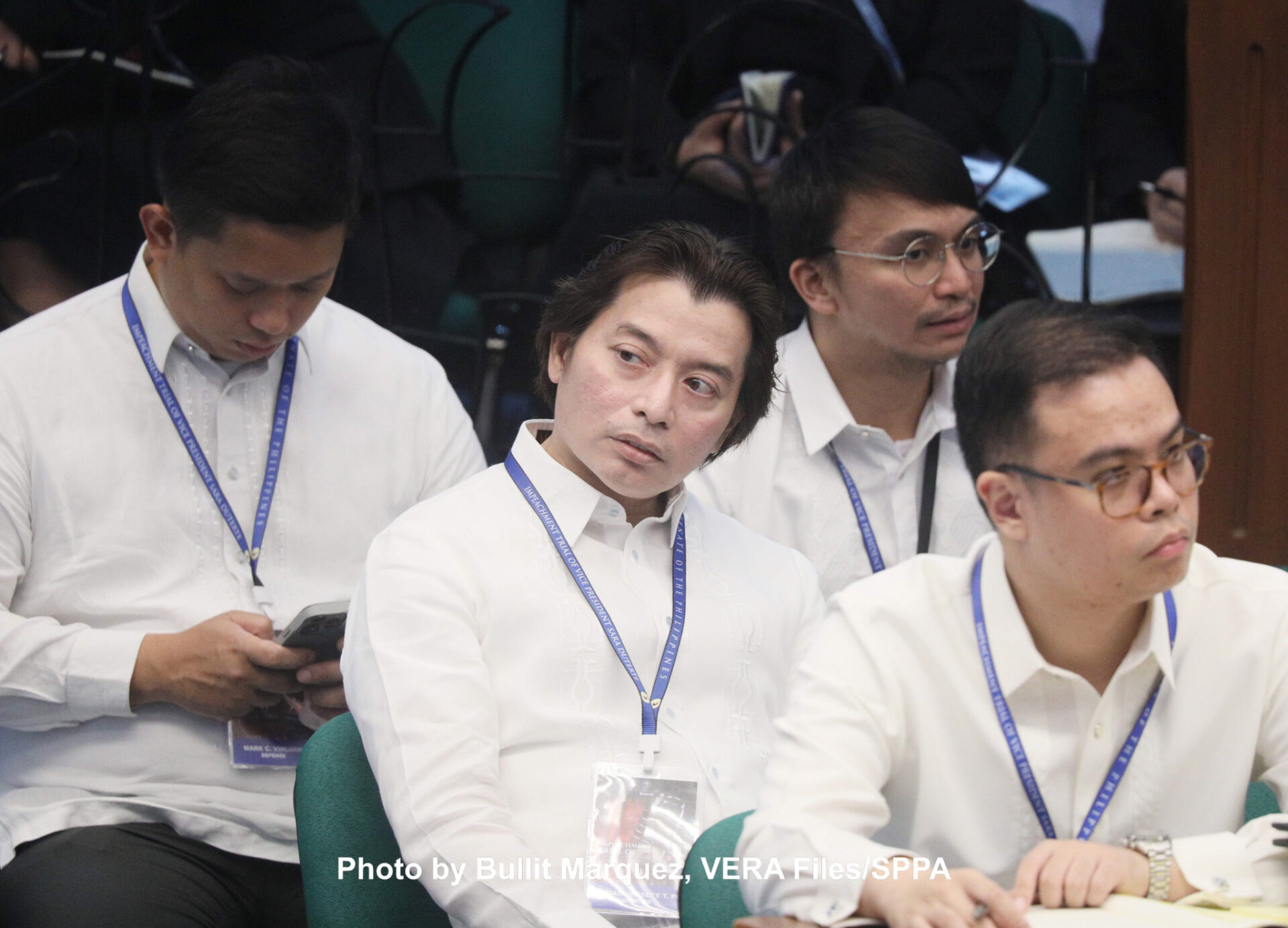
The defense lawyer Kristine Ferrer tried to argue that the activities occurred and that they were connected to legitimate government work. But Del Campo said confidential funds could not legally pay for them, unless they could show supporting documents to prove the funds were used for activities enumerated in the joint circular.
The rewards question
The same tension emerged over payments classified as rewards.
Ferrer argued that protective intelligence operations could be considered successful even if nothing happened. The very absence of an untoward incident, she suggested, could mean that the security operation worked.
Del Campo drew a careful line, saying that information that allowed authorities to prevent a threat could justify payment for information. But a payment classified as a reward required documentary proof of success.
In previous COA audits of other government agencies, she said, such proof could include the apprehension of a person identified through the information.
The distinction became a point of repeated questioning.
Ferrer’s argument reflects the difficulty of auditing intelligence work: Success can sometimes mean that nothing happened. A threat avoided leaves no obvious public event to point to.
But Del Campo’s answer underscored the other side of the problem. Without some objective evidence, an auditor has little basis to determine whether a payment was a legitimate reward or simply an expense described as one.
That tension—between the secrecy inherent in intelligence work and the accountability demanded of public spending—is likely to remain one of the most difficult issues for the impeachment court.
Who could handle the money?
Del Campo also testified that transferring confidential-fund cash advances from OVP special disbursing officer Gina Acosta to Col. Raymund Lachica, Duterte’s former security chief, violated the joint circular.
The rule requires cash advances to be drawn by the duly designated and bonded special disbursing officer or agency head and prohibits their transfer from one accountable officer to another.
The finding formed part of COA’s basis for disallowing P375 million in OVP confidential-fund expenditures for the first three quarters of 2023. Del Campo said P261 million of that amount was also disallowed because reward payments lacked documents demonstrating the success of information-gathering or surveillance operations.
Again, the significance goes beyond bookkeeping.
The chain of accountability matters because confidential funds are unusually difficult to scrutinize after the fact. Once money moves from the person officially responsible for it to another person, the paper trail, and consequently the ability of auditors to determine responsibility, becomes more complicated.
‘Funny names’
The defense tried another line of attack by focusing on acknowledgment receipts bearing unusual names.
Asked whether a “funny” name necessarily meant that a recipient was fictitious, Del Campo refused to speculate.
She could not say whether recipients such as Miggy Mango, Matthew Keso or Mary Grace Piattos were real or fictitious merely from their names.
The exchange was revealing precisely because the auditor did not take the bait.
The prosecution has raised questions about the recipients and documentation. But Del Campo’s testimony did not establish that unusual names were, by themselves, proof of fraud.
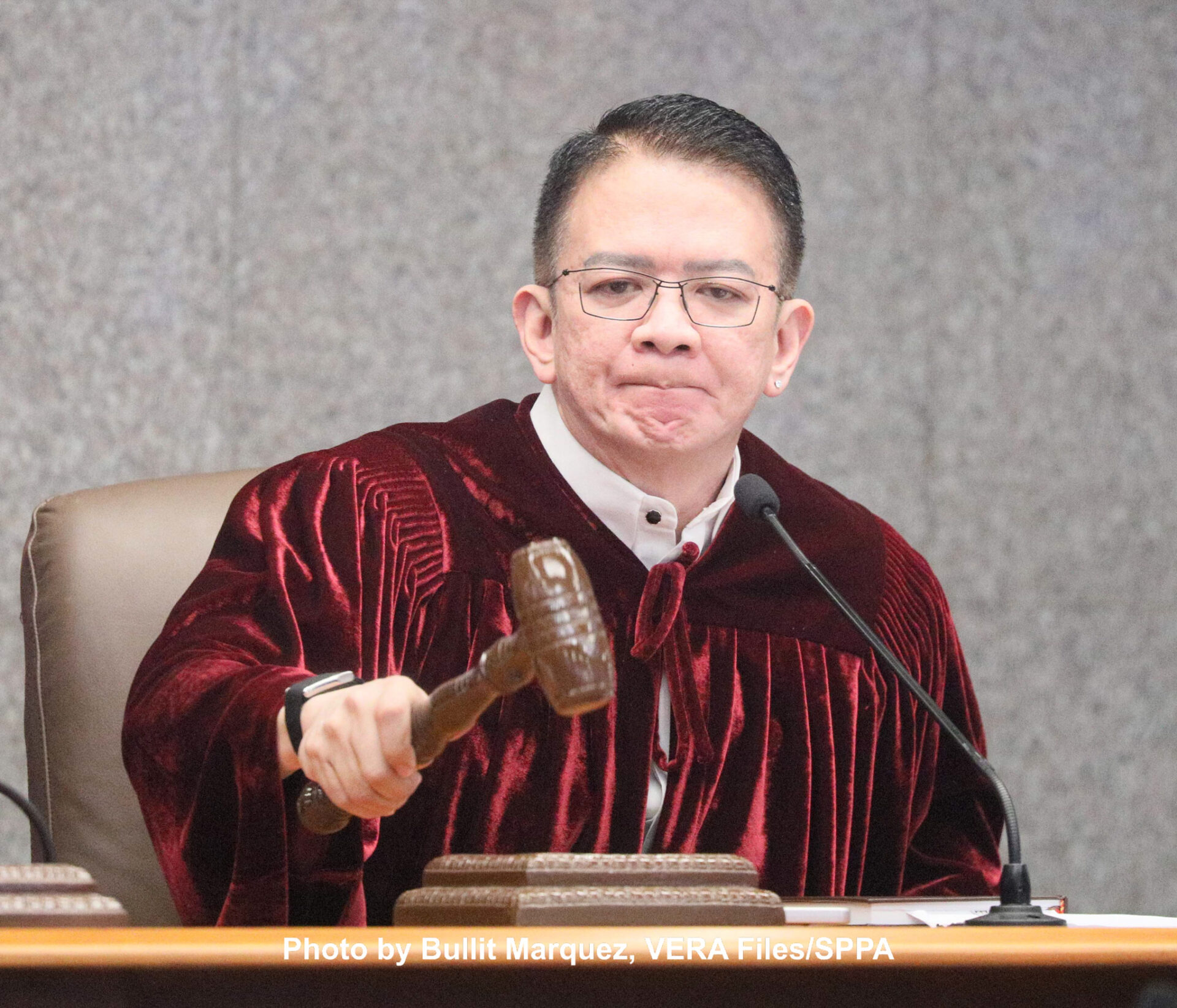
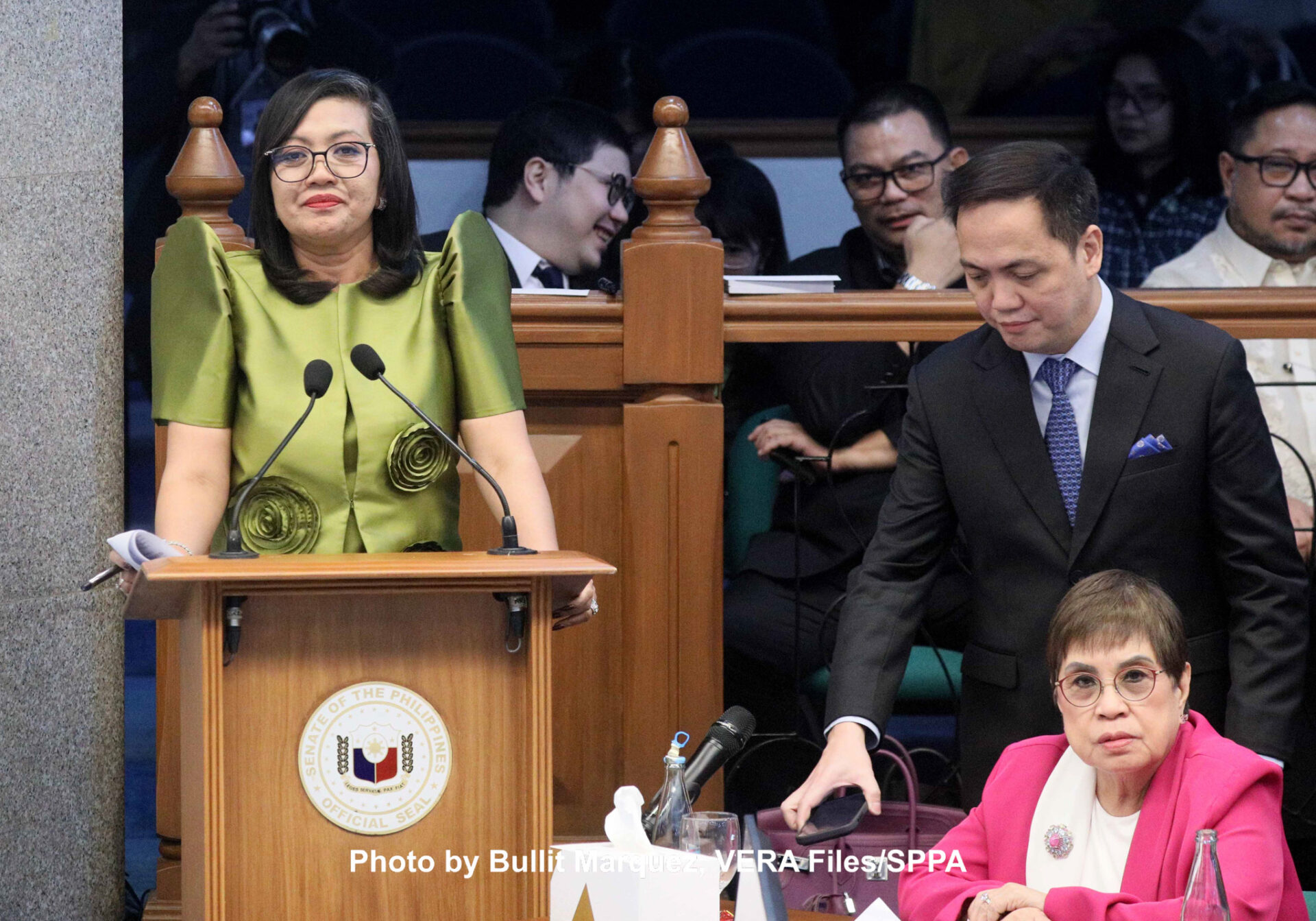
Kapunan objected when Ferrer concentrated on the names, saying the receipts were presented to demonstrate how the money was used, not simply because the names sounded unusual. Escudero allowed the defense to proceed, noting that Kapunan had also engaged with the names.
It was a small moment in a long trial, but it showed how easily the proceedings can drift from the substance of the audit into the theater surrounding it.
From audit to courtroom conduct
That drift became more pronounced as the questioning grew increasingly combative.
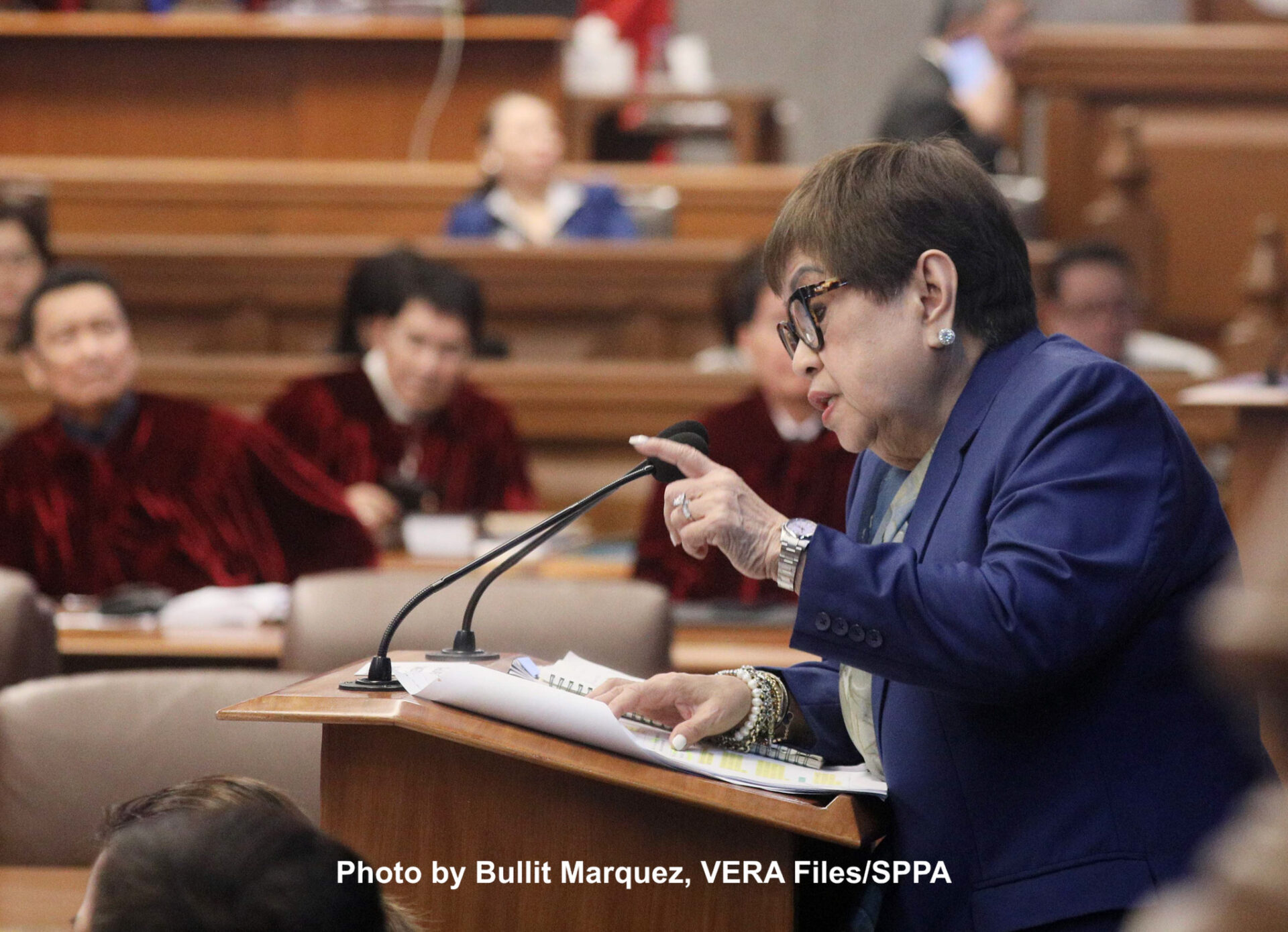
Kapunan objected to Ferrer’s questions as misleading. Ferrer countered that leading questions were permitted during cross-examination. At one point, Kapunan joked that she was restraining herself from giving Ferrer a “spanking.”
Ferrer objected, saying such remarks had no place in a professional courtroom. Escudero intervened as tensions rose.
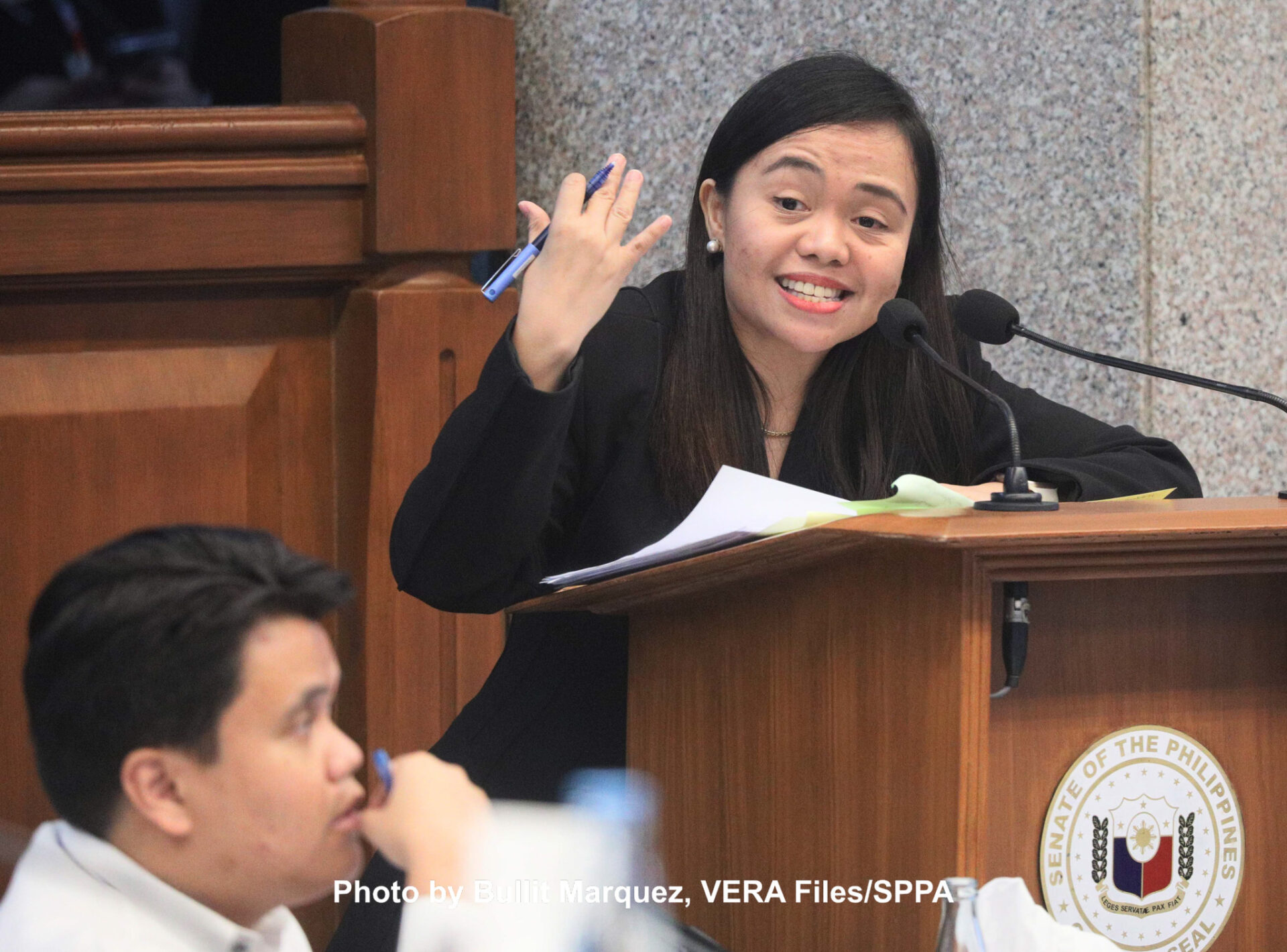
The argument did not end when the lawyers left the immediate exchange.
Before the trial adjourned, Duterte’s lead counsel Sheila Sison stood up and challenged a social media post by private prosecutor Amando Virgil Ligutan that said misleading questions were not allowed even on cross-examination. Sison argued that the post appeared to target Ferrer and was inappropriate during an ongoing trial.
Outside the court, the prosecution disputed that characterization, with House prosecutor Terry Ridon pointing to the transcript to argue that Ferrer herself had said misleading questions were permitted during cross-examination.
For Escudero, the dispute was no longer simply about courtroom etiquette.
He warned both sides about crossing the boundaries imposed by the impeachment court’s sub judice rule, particularly through social media commentary. He said the court would issue a formal ruling on the matter on Aug. 17.
That intervention may prove important.
An impeachment trial is already a political spectacle. Once lawyers begin arguing through social media and trading accusations in and around the courtroom, the proceedings risk becoming a contest of personalities rather than evidence.
Escudero’s warning therefore served a larger purpose: to remind both sides that the court, not the lawyers, their supporters or social media audiences, sets the boundaries of the trial.
The bigger picture
The contrast between the substance of Del Campo’s testimony and the lawyers’ increasingly personal exchanges was striking.
For much of the proceedings, the auditor patiently returned to rules, dates, documents and accountability. The lawyers, meanwhile, increasingly tested the limits of those rules, and of each other.
That may be an indication of how consequential the confidential funds issue has become.
The defense needs to show that the spending had a legitimate security or intelligence purpose. The prosecution needs to show that the expenditures were unauthorized, improperly classified, inadequately documented or otherwise contrary to the rules.
Del Campo did not purport to settle the ultimate question of Duterte’s liability. Her testimony instead supplied the audit framework against which the impeachment court can judge the competing claims.
And that may be the most important development of the proceedings so far.
The case is moving away from the question of whether there were activities, receipts or security operations. The sharper question is whether the government can prove that public money was spent lawfully and can be accounted for according to rules that applied to everyone.
That is a much harder question for both sides, and one that cannot be answered by a receipt, an unusual name or the absence of an untoward incident alone.
The trial resumes Monday, Aug. 17. Escudero is expected to issue the court’s ruling on the sub judice issue, putting an important boundary around what the lawyers may say and do while the impeachment proceedings remain active.