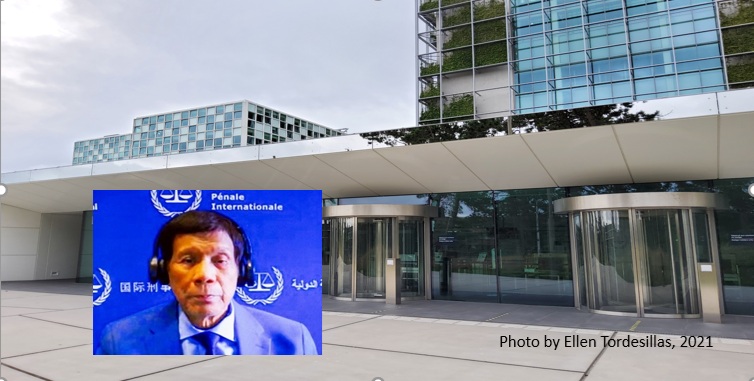

A major showdown begins today, Feb. 23, at the International Criminal Court in The Netherlands. But the man at the center of it all, former president Rodrigo Duterte, won’t be in the courtroom. Instead, he is playing a confusing double game: His lawyers say he is too sick to remember his own name, yet sharp enough to tell the world’s most powerful court to get lost.
This is the great paradox of the Duterte case at The Hague. A masterclass in excuse-making. It’s time to call it what it is: a performance.
Duterte’s British-Israeli lawyer Nicholas Kaufman has spent months arguing that the 80-year-old is unfit to stand trial. We are asked to believe that Duterte, nicknamed “The Punisher,” who once ruled with an iron fist, is now a confused, frail old man.
The defense claims “memory loss” and “cognitive decline.” They say he is too tired, too ill, to endure a long trial.
On Feb. 17, Duterte wrote the court, casting himself as the victim. He said he did not wish to attend a trial, he would “forget within minutes.” It is a clever move: paint the ICC as a bully dragging a “senile” grandfather into court. He even claims he was “kidnapped” by the current Marcos government.
The ICC did not simply take his word for it. The tribunal’s Pre-Trial Chamber I called the bluff. It is not excusing him because he is “weak.” It is proceeding because he knows exactly what he is doing. He may turn his back on the courtroom, but he cannot turn his back on history.
When Kaufman sought an indefinite adjournment in September 2025, citing “cognitive impairment in multiple domains,” the tribunal sent three independent experts in aging and neurology to examine him. Their Jan. 26 report was unequivocal: Rodrigo Duterte is fit to stand trial. He understands the proceedings and is capable of defending himself.
The clearest proof? The court allowed him to skip this week’s hearings because he signed a waiver. Under international law, such a waiver is valid only if the accused fully understands the consequences. If Duterte were as forgetful as claimed, the court could not accept it as informed and voluntary.
In plain terms, the Pre-Trial Chamber is saying this: Duterte is staying in his cell not because he is sick, but because he chooses to snub the court. It is a strategy, not a medical emergency.
After granting his waiver of appearance, the chamber denied defense requests to compel the prosecution to release a less-redacted version of its Document Containing the Charges and Pre-Confirmation Brief, and to disqualify the Filipino lawyers appointed as external legal representatives of victims.
In a nine-page decision released Friday night, the chamber said Kaufman failed to substantiate his bid to disqualify lawyers Joel Butuyan and Gilbert Andres, as well as their case manager, Nicolene Arcaina.
The defense also asked that the confirmation hearing be conducted in public to the maximum extent possible, that specific information about certain witnesses be disclosed, and that the prosecution publicly confirm the whereabouts and willingness of some witnesses to testify. The chamber rejected these requests, stressing witness protection and the integrity of proceedings.
Selective lucidity
What we are witnessing is selective lucidity. When it is time to face the victims of the drug war, Duterte is suddenly “frail” and “forgetful.” But when attacking the current government or rallying supporters, he appears sharp and defiant.
Is he too frail to remember, or simply too defiant to face the music?
Even his own prosecutor has described him as an “unreliable historian” of his health. In plain English: He adjusts the story as needed. The “sickly” act is a shield — one that spares him the gaze of mothers and children who lost loved ones in the drug war, some of whom have traveled to The Hague seeking justice. By remaining in his cell, he preserves the tough-guy image for supporters back home.
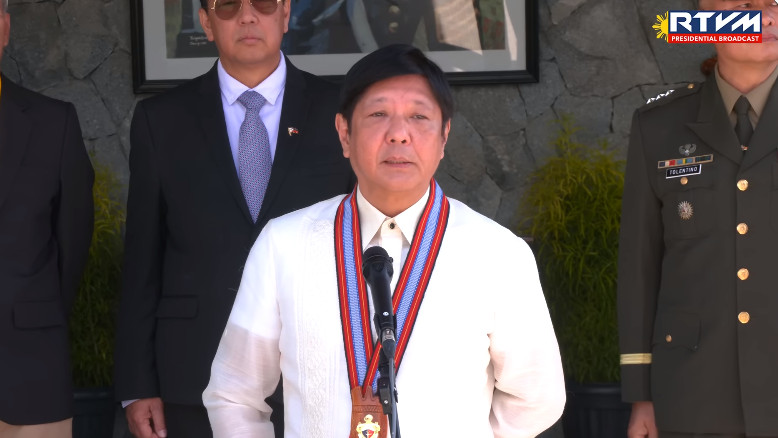
Meanwhile, politics in the Philippines are shifting. Over the weekend, President Ferdinand Marcos Jr. visited Naga City to meet his 2022 rival, former vice president and now Naga Mayor Leni Robredo. Officially, the trip was about flood control. Unofficially, it sent a message.
Marcos told reporters he wore pink socks “in honor of Mayor Leni,” whose campaign color was pink.
It was a quiet but unmistakable signal to the Duterte family. While the former president claims he cannot remember the day, former allies are forging ties with old rivals. The “UniTeam” is not merely fractured. It has been dismantled.
The Philippine government must do more than surrender Duterte to the ICC when convenient. Malacañang should dismantle the legal frameworks and policies that enabled the drug war killings in the first place.
At the same time, the ICC cannot allow “old age” to become an escape hatch. Being 80 is not a get-out-of-jail-free card for crimes against humanity. The rights of an aging defendant must be protected, but proceedings cannot be held hostage by selective amnesia.
Justice for the thousands of Filipinos killed in the drug war cannot be deferred because its architect finds it convenient to “forget.”
The defense is attempting a difficult trick: to portray Duterte as too cognitively impaired to recall his crimes, yet lucid enough to orchestrate a boycott of the court.
The “Punisher” may be tired. The law is not.
In the confirmation of charges hearings, the Pre-Trial Chamber will decide whether there is sufficient evidence to proceed to a full trial for crimes against humanity linked to the drug war, first as Davao City mayor, then as president.
ICC spokesperson Oriane Maillet has called the proceedings a “critical moment,” the first time evidence will be presented before the judges.
She clarified that the confirmation of charges is not yet a trial. It remains part of pre-trial proceedings.
“This is the first step,” she said, “for the judges to decide whether or not we are going to trial.”
The views in this column are those of the author and do not necessarily reflect the views of VERA Files.
This column also appeared in The Manila Times