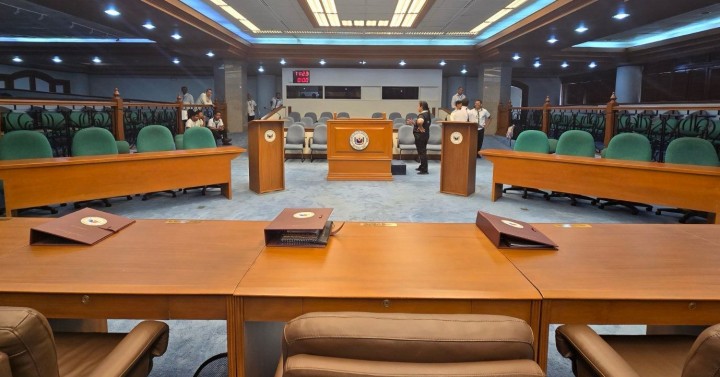
With a plenary vote scheduled anytime soon, the House of Representatives is expected to officially transmit the Articles of Impeachment against Vice President Sara Duterte to the Senate. If the one-third threshold is met—as the 53-0 vote in the Committee on Justice suggests—the vice president will become the first in the Philippine history to stand trial before the Senate for a second time in two years.
But while lawmakers debate “probable cause” and “constitutional duties,” a different conversation is happening in the humid markets of Quiapo and the tricycle terminals of Davao. For many Filipinos, the “probable cause” that matters isn’t in legal briefs but in supermarket receipts.
Labor Day last Friday underscored the strain. Inflation has climbed to 4.1% from 2.4% in February, driven by rising oil prices and transport costs due to tensions in the Middle East. This has significantly eroded purchasing power and inflation as the country’s top concern.
In the Visayas and Mindanao, the OCTA Research baseline data shows that over half of households are feeling “extreme pressure” on food security.
President Ferdinand Marcos Jr. offered familiar calls for “unity and compassion” to weather the economic fallout, even as labor groups pushed for a P200 legislated wage hike—an increase the Employers Confederation of the Philippines (ECOP) warned could trigger job losses and strain micro-enterprises.
The disconnect is stark. The country is watching two different movies on the same screen.
In one movie, the “Unity Team” of 2022 has been replaced by a “Dynastic Civil War.” The vice president has openly slammed the president’s “lack of sincerity” and “incompetence,” while the House Committee on Justice, chaired by Rep. Gerville Luistro, has countered by producing “overwhelming documentary evidence” of misused funds and alleged threats against the First Family. When the Marcos was asked about Duterte’s 2028 ambitions recently, his response was a chillingly brief: “Good luck.”
In the other movie, the one the “ordinary reader” is living in, the plot is about survival. A construction worker in Cebu, now preparing to host the 48th ASEAN Summit, still cannot buy rice at the promised P20 per kilo. Political fights over “power sharing” in Manila do nothing to lower actual power bills in the provinces.
Just last Wednesday, April 29, the Supreme Court issued a landmark 14-0-1 ruling that defined the very heartbeat of this process. The court was asked to force the Senate to convene immediately, but it declined. Instead, it clarified a single, powerful word in our Constitution: “forthwith.” The court ruled that “forthwith” means “within a reasonable time.”
Senate President Vicente “Tito” Sotto III said the Senate could convene “the following day” after the House sends the Articles of Impeachment.
Yet what counts as “reasonable” to politicians can feel very different to citizens struggling to eat.
The ruling cuts both ways. It preserves the Senate’s independence but also opens space for delay. Critics warn of “dilatory tactics”—a strategy to stretch proceedings through technicalities, court petitions, and absences, pushing any resolution closer to the 2028 elections and turning a legal process into a test of endurance.
At the same time, the vice president’s camp has moved aggressively in the court of public opinion. Rather than dwell on questions about P125 million in confidential funds spent over 11 days, the narrative has shifted to the administration’s broader failures. Prayer rallies and social media campaigns frame the impeachment as a politically motivated distraction from high food and transport costs. As one ally put it: “The people are hungry, yet the government is busy with a scrap of paper.”
It’s a familiar tactic: channel real economic pain to delegitimize a constitutional process. By casting the case as anti-poor, the goal is to generate enough public pressure to make the Senate hesitate—a risky strategy that uses hardship as political cover.
The vice president’s lawyers argue the proceedings “departed from the constitutional design,” claiming the House overreached into matters for a full trial. Luistro’s response was blunt: if there is nothing to hide, there is nothing to fear.
Meanwhile, governance risks grinding to a halt. As the Philippines prepares to host the 48th ASEAN Summit in Cebu, it seeks to project leadership on trade and maritime security while its own executive branch is locked in open conflict. Regional credibility is harder to project when domestic stability is in question.
Accountability matters. If the vice president crossed legal lines, the truth must come out. No one is above the law.
But if “reasonable time” becomes years of televised standoff, the costs will be borne elsewhere—by stalled reforms, persistently high electricity rates, and the elusive goal of affordable rice.
Filipinos understand the pattern. When politicians clash, the public absorbs the damage. The aborted 2025 impeachment attempt, derailed by the “one-year bar” rule, left many not enlightened but exhausted by a drama reset.
Deputy Speaker Paolo Ortega has dismissed allegations of payoffs, saying “the record speaks for itself.” Then the record should also reflect the 90 percent of micro-enterprises struggling to stay afloat—and the recurring tendency to prioritize 2028 positioning over 2026 survival.
“Reasonable time” should not mean delay until the next election cycle. It should mean a process that is swift, transparent, and not all-consuming.
As the gavel falls in the House this week, and the Senate prepares its robes, leaders would do well to remember: You can impeach a person, but not the hunger of a nation. If this trial becomes the government’s sole focus, then regardless of the verdict, the public will have already paid the price.
Justice must be served in the courtroom, yes. But it shouldn’t be the only thing on the table when there is no food on the plate. If the “forthwith” trial becomes an excuse for a “standstill” government or a platform for endless destabilization, then regardless of the verdict, the Filipino people will have already lost.
The views in this column are those of the author and do not necessarily reflect the views of VERA Files.
This column also appeared in The Manila Times.