FACT CHECK: List of pro-China officials from Teodoro FAKE
A circulating graphic shows a list of alleged pro-China officials supposedly exposed by Defense Secretary Gilberto Teodoro Jr. This is fake.

Try

A circulating graphic shows a list of alleged pro-China officials supposedly exposed by Defense Secretary Gilberto Teodoro Jr. This is fake.
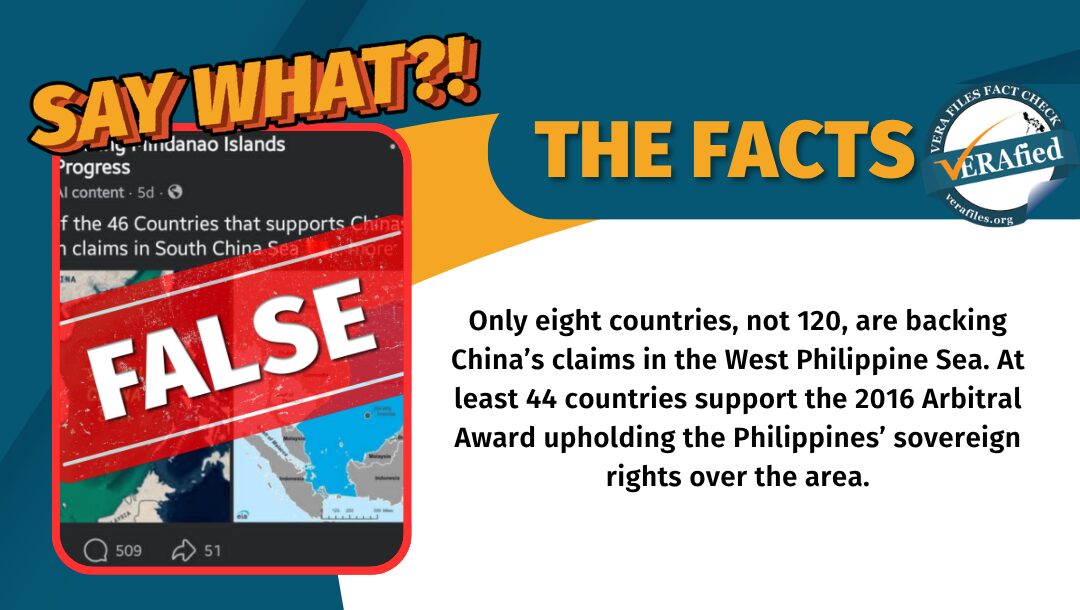
A Facebook post claims that at least 120 countries back China's assertion in the West Philippine Sea while only 13 support the Philippines. This is false.
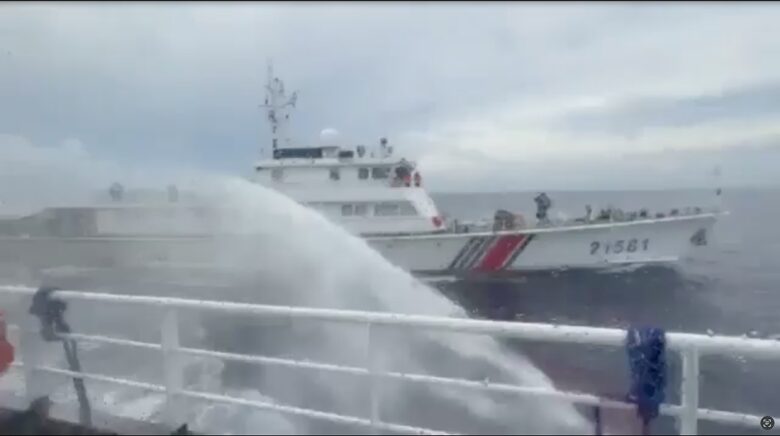
Retired associate justice Antonio Carpio reiterated on July 21 his recommendation for the Philippine government to ask the Arbitral Tribunal to add common fishing rules in Scarborough Shoal to its 2016 ruling.
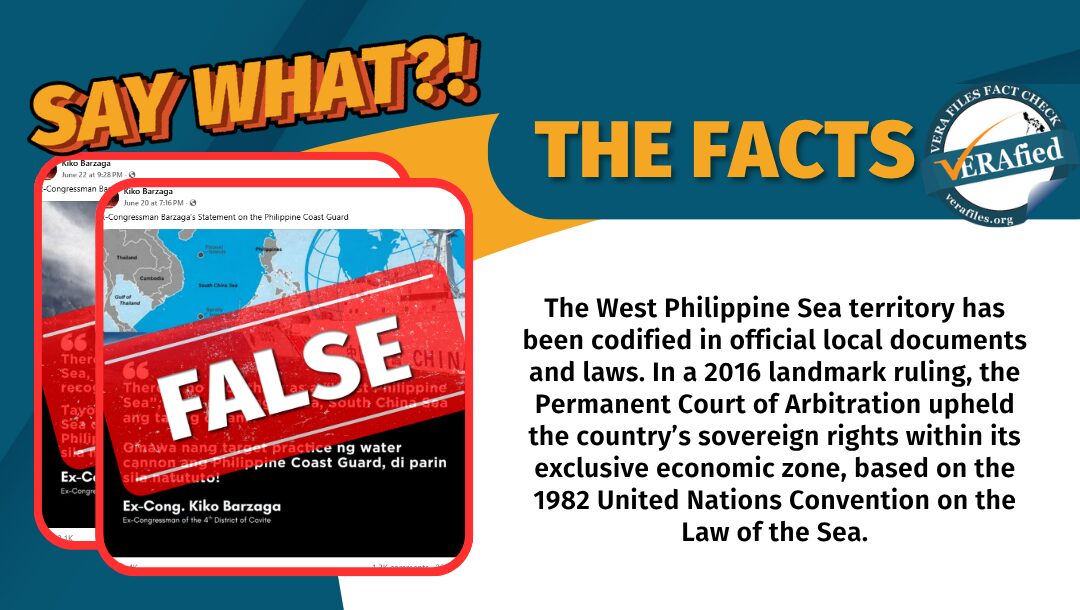
Expelled congressman Kiko Barzaga revives claims that the West Philippine Sea does not exist and lacks legal basis under international law. This is not true.
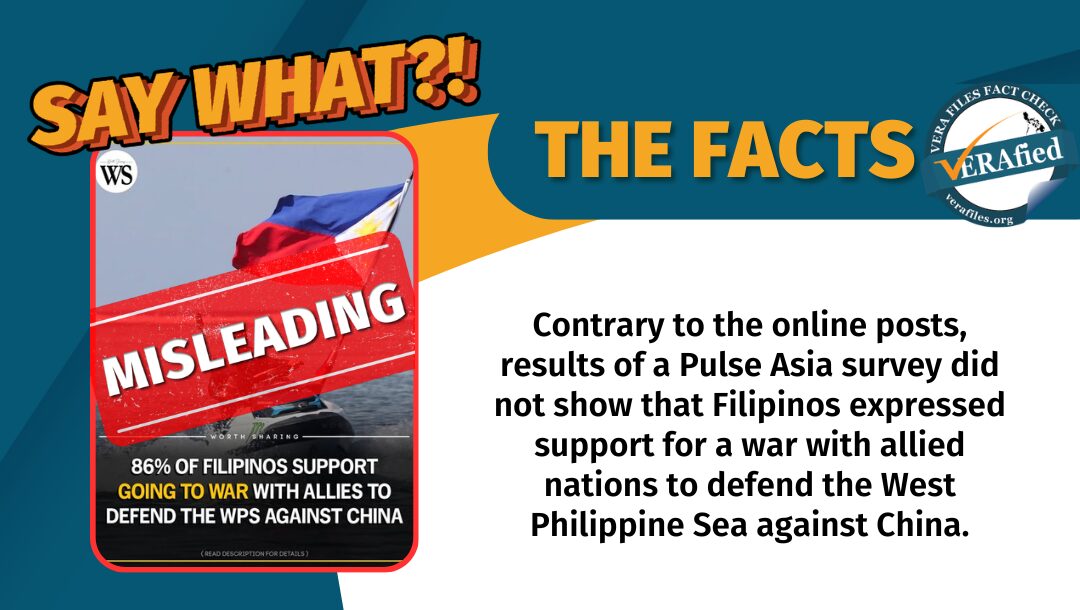
A graphic circulating online claims that a majority of Filipinos “support going to war with allies to defend the [West Philippine Sea] against China,” citing an actual survey result. This is misleading.
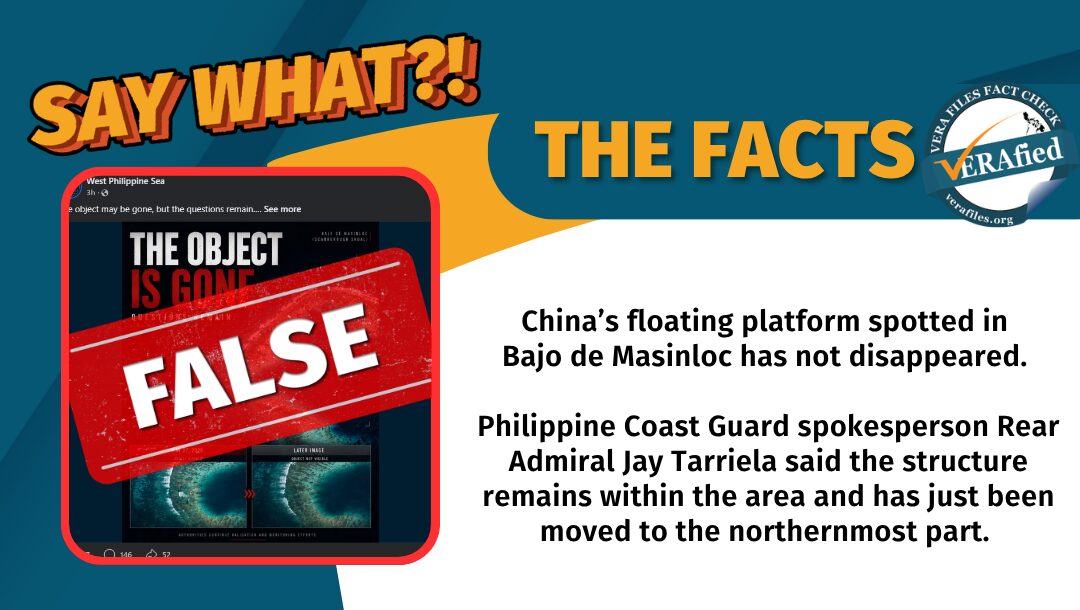
A Facebook page posted an alleged satellite image claiming that the Chinese floating structure spotted within the disputed Bajo de Masinloc has disappeared. This is not true.
Viral posts claiming Vice President Sara Duterte threatened to throw former senator Antonio Trillanes IV into the West Philippine Sea are fabricated.

Talk is cheap. We should have learned that lesson yesterday. Our verbosity alone will not drive China’s ships away from our exclusive economic zone. Words must be backed up by a coherent strategy and determined responses that imposes costs on them. Recovering control of our waters, after it was given up by the Duterte administration before, will require a long, arduous and incremental campaign, one island at a time, one feature at a time, one mission at a time.
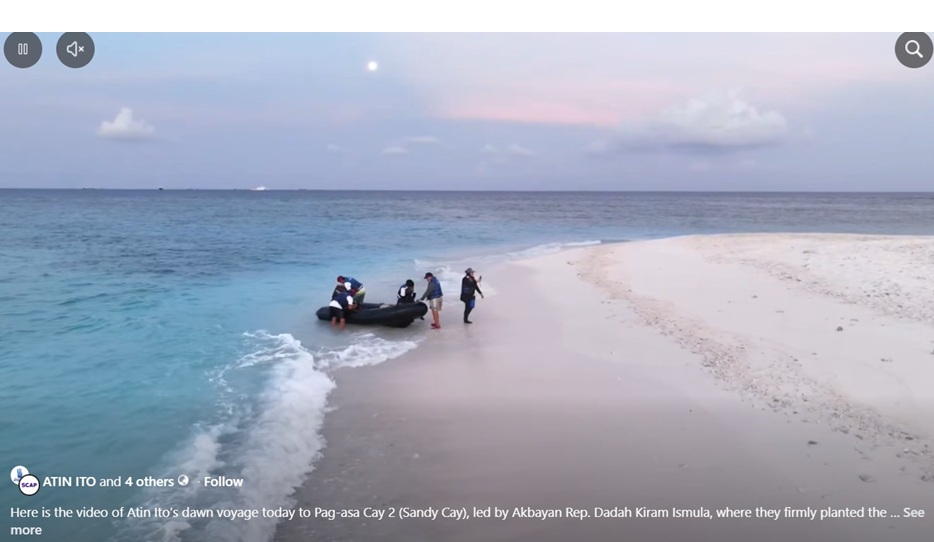
For the Philippines, the task is not simply to remember the Award. It is to operationalise it through law, practice, diplomacy, and sustained presence. The real anniversary question is not whether Manila won in 2016, but whether it can convert that victory into enduring maritime resilience, regional leadership, and legal resistance in the face of power.That is the unfinished work of the Award.
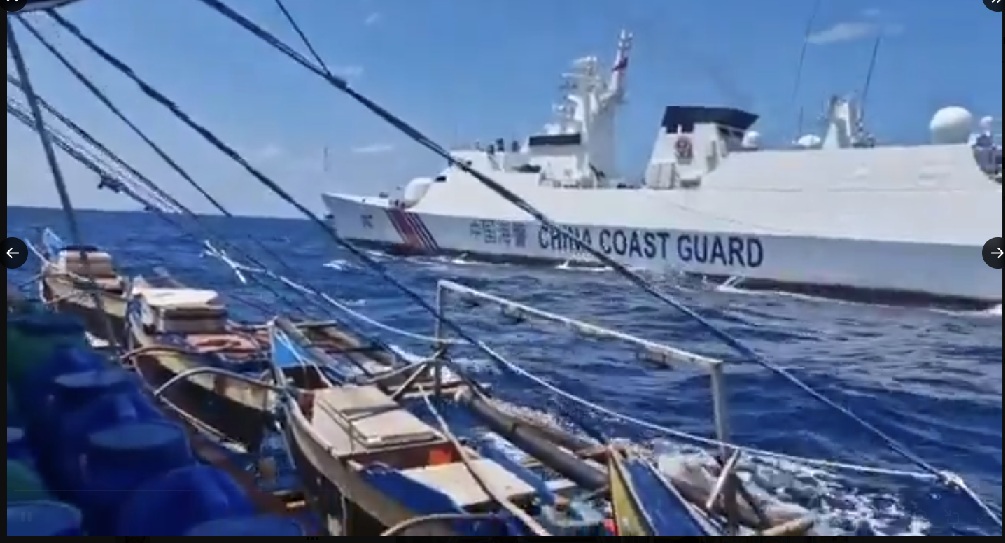
For fishermen in Zambales, the Philippines’ legal victory at the Arbitral Tribunal has not translated into greater access. “The 2016 ruling may have mattered at the top level, but we don’t feel it when we’re out at sea,” said Leonardo Cuaresma, who’s been fishing at Bajo de Masinloc for almost five decades and president of the New Masinloc Fishermen Association.