
Usually it should be that people and nations learn from history and not repeat the mistakes of the past. However in the case of the People’s Republic of China, in its desire to erase the historical wrongs that were committed against it by imperialist powers during the 19th and 20th Centuries, it has opted to ape that very imperialism that it so despised. It is attempting to turn the seas adjacent to it into Chinese lakes and hopes to eventually subjugate the many island nations such as Japan, the Philippines and Taiwan that rely on those maritime domains for trade and resources. Its self- proclaimed ever evolving dash lines that are contrary to international law excludes any other power in the regions stretching from East Asia to Southeast Asia. Consolidating that, it then hopes to project well into the Central Pacific and contest that area from the dominant power there which is the United States. The Communist Chinese want to recreate Imperial China, but this time on a global scale.
Philippines -Japan security relations
In its reckless manner of bullying countries in East Asia and Southeast Asia, China has managed to make two nations become close military partners despite having been adversaries during the Second World War. Although both the Philippines and Japan have been enjoying warm relations since the end of the Second World War, this relationship was anchored on economic assistance, investments and other soft power approaches by Tokyo to Manila. There was barely any defense and security feature in that relationship.
Under the U.S. security umbrella of bases and advanced deployed American forces, for much of the Cold War, the Philippines and Japan were expected to augment that presence with their own military capabilities, the provision of base facilities, or both. In any attempt to make the defense relationship in that region more multilateral, Japan would be excluded or at most be offered observer status due to the restrictions imposed by the Japanese Constitution on the Self Defense Forces.
The end of the Cold War changed that as the U.S. sought to encourage its allies to do a little bit more in the defense of the region against potential hegemons which China was appearing to be. This was especially apparent that following the closure of the U.S. bases in the Philippines in 1992, China seized Mischief Reef in 1994 and began to make assertive statements against other Philippine maritime features such as Bajo de Masinloc/Scarborough Shoal.
The Chinese never dared to do that when both Clark and Subic were still fully operational American bases. Japan on the other hand responded to the U.S. by doing activities that it could classify as peaceful but actually signaled the slow shift towards external power projection. The first significant thing that the Japanese did was to deploy peacekeepers to Cambodia in 1992. Then in the early 1990s the Japanese Maritime Self Defense Force introduced a landing ship that had all the appearances of a mini carrier, the Osumi Class. On July 2005, Japanese F-15 fighters for the first time were deployed in exercises to Guam.
Japan’s Haiyan humanitarian aid
On 2013 in the aftermath of Typhoon Haiyan in Central Philippines, the Japanese deployed 1,400 personnel and three major naval vessels in what was then Japan’s largest overseas military deployment albeit on humanitarian assistance and disaster response (HA/DR). The aircraft carrier Ise and the Osumi formed part of that Japanese deployment. In September 2025, a flight of Japanese F-15s and several military transport aircraft were sent to the United Kingdom to participate in exercises there which is one of the farthest deployments of the Japanese military and a first for the Japanese military in Europe.
The Philippines though never really recovered from the loss of the American bases and struggled for decades trying to fund a very protracted modernization program facing a number of obstacles along the way. Filipinos had become thoroughly dependent on the largesse provided by the Americans for the use of the bases and when it ended it was traumatically felt by the Armed Forces of the Philippines.
The Philippine military being internally oriented at that time was more of a glamorized constabulary that ran after rebels than a full-fledged military capable of defense against external threats. For the longest time, its thinking was locked on internal security operations. Furthermore, attempts to modernize the Philippine military were met with numerous challenges ranging from constitutional obstacles that mandated that the defense budget would always be below the education budget, the Asian Financial Crisis of 1997 practically killed that effort, and the wastage caused by corruption within the Philippine government that saw funds vanishing into the pockets of corrupt national and local leaders. This perennial problem of attempting to carry out the modernization of the Philippine military coupled with China’s aggression in the region that affects many nations in it brought Tokyo closer to Manila from a defense and security posture due to the shared threat from Beijing.
The success of the Japanese HA/DR Haiyan mission further encouraged exploratory discussions between the Japanese government and the Pnoy administration as to how cooperation between the two countries could be expanded. The Chinese seizure of Bajo de Masinloc in 2012 provided the backdrop for those discussions and meetings. Furthermore Japan could help in the much troubled modernization of Philippine defense and security capabilities wherein initial focus was on maritime surveillance and patrol. Loans were then granted by Japan to the Philippines for the acquisition of modern patrol craft for the Philippine Coast Guard. Two classes have so far been acquired by the Philippines of which the first is the 44 meter long Parola Class of which 10 are in service and the 97 meter long Teresa Magbanua Class of which two are in service with three more being built. During the Duterte administration discussions focused on mirroring the agreements that the Philippines has with the United States, namely the Visiting Forces Agreement, and the Acquisition and Cross Servicing Agreement and that both Manila and Tokyo should have the same as well.
Japan-Philippines Reciprocal Access Agreement
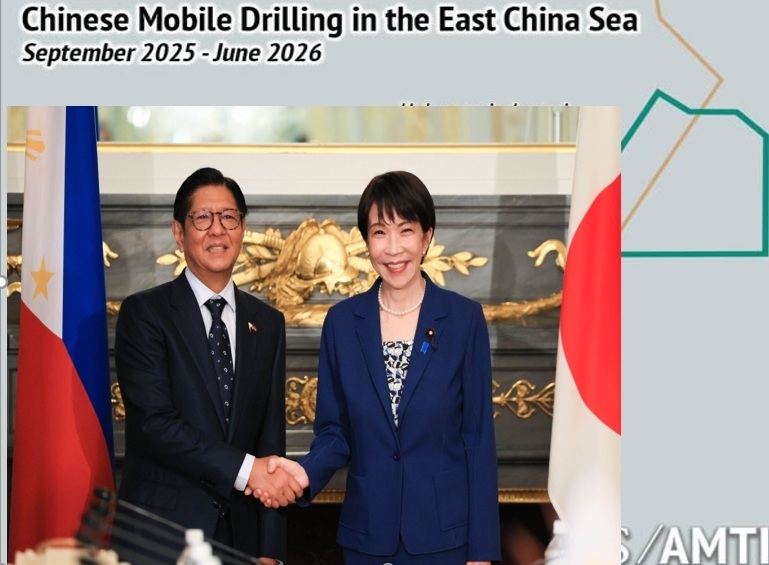
While that was going on, members of the JSDF were invited to be observers of bilateral and multilateral exercises held in the Philippines. On September 11, 2025 the Japan-Philippines Reciprocal Access Agreement that governed Japanese troop visits to the Philippines and paved the way for their large scale participation in exercises like the annual Balikatan was signed. The following year, during the 2026 Balikatan exercises approximately more than a thousand Japanese military personnel were sent to participate in the activity. This was not anymore for HA/DR purposes as the Japanese came fully equipped for combat with state of the art modern weapons systems. Also in January 15, 2026, the Acquisition and Cross Servicing Agreement that was signed that provides the framework upon which logistics, equipment and material support would be conducted by both countries in furtherance of bilateral and multilateral activities among them as well as possible Japanese support to Philippine modernization efforts. The Japanese Diet ratified this agreement on June 19, 2026.
Regarding additional capability enhancement, Japan has offered to donate to the Philippines six units of the Abukuma class of destroyers after having decommissioned them. Discussions are going on between the two countries as to how many can the Philippines reasonably and practically obtain and operate. Earlier donations to the Philippines consisted of patrol aircraft and monitoring systems and with Japan’s relaxing of weapons export restrictions, modern or surplus Japanese armor, aircraft, missile systems and artillery may be acquired by the Philippine military.
China’s response to all these is to resort to crude propaganda that depicts modern Japan as an imperialist country that is allegedly hoping to revive its Greater East Asian Empire. Editorial cartoons flood social media news sites connected with the Chinese government that portray the Japanese as bestial entities. It is sometimes reminiscent of racist Allied propaganda against Imperial Japan in World War Two. Sometimes the cartoons and editorial pieces that accompany it tend to warn the Philippines about Japan’s alleged real nature. In other times, it outrageously lumps both the Philippines and Japan as troublemakers in the region. However Chinese accusations are in reality a projection of their illegal imperial ambitions in East and Southeast Asia. Therefore their propaganda does not have any effect on the vast majority of either the Japanese or Filipino people and it will only resonate with the most diehard pro-China traitors of which there are many in the ranks of the Duterte camp.
The thing with the Chinese is that if one reviews their history with Japan they would see that they really never defeated the Japanese in any war. There were some battles that they managed to prevail over the Japanese but these were not enough to prevent Japan from occupying large swathes of Chinese territory. Such was the impotence of China against Japan that even as late as 1944 when in other theaters of the Second World War where the Japanese were in full retreat, only against the Chinese could the Imperial Japanese Army launch a massive offensive that managed to achieve most of its objectives.
The fact that the Japanese stripped their best units from China and deployed them to places like the Philippines in 1944 only shows their regard for Chinese capabilities and the lack thereof. The defeat of Japan in China was not brought about by any Chinese feat of arms which is what the PROC is trying to claim in recent commemorations of the Second World War. It was brought about by the invasion of Manchuria by the Soviet Union that almost destroyed the Japanese occupation army in China, and the atomic bombings of Japan that brought about a quick acceptance by the Japanese government of the demand for unconditional surrender from the Allies. Of all the countries ranged against China now, it is Japan that brings out all the traumatic and humiliating historical memories for them and which is why the Chinese communist government reserves a special hatred for the Japanese.
Now that the Japanese have cast off the restrictions in their security and defense posture and have adopted one that is regional and even possibly global in scope, and with Tokyo and Manila seemingly inching closer and closer into a formal alliance, China has no one else to blame but itself and its greed for this.
The views in this column are those of the author and do not necessarily reflect the views of VERA Files.