


In a time of increasing global pressures, the fight for truth must endure.
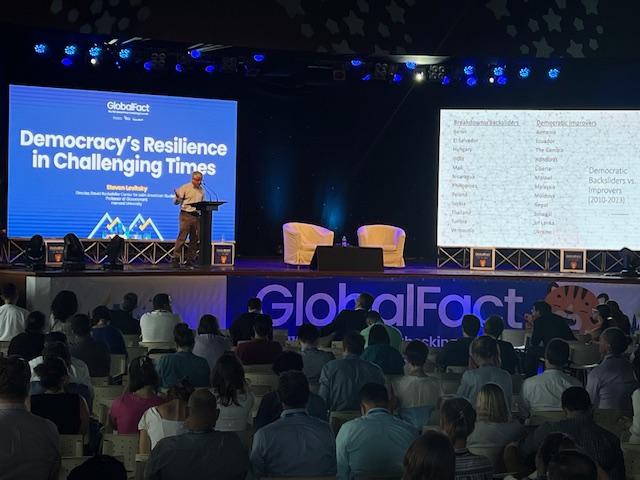
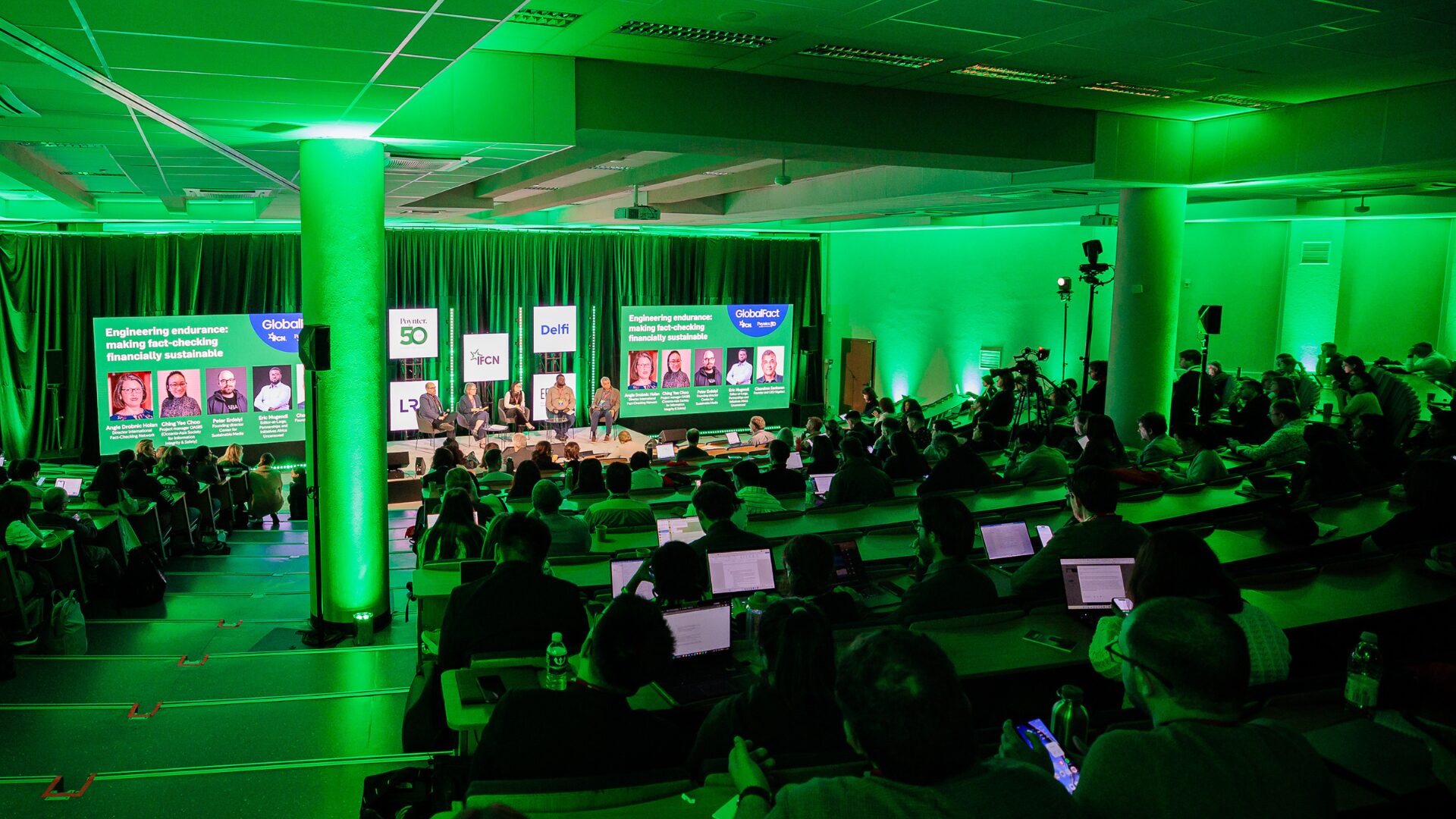
Fact-checkers from different parts of the globe gathered in the historic capital city of Vilnius, Lithuania for the annual Global Fact-checking Summit to reaffirm this commitment.
Like the centuries-old churches of Vilnius that endured political upheavals throughout history, the spirit of resilience resonated throughout the summit. From June 17 to 19, more than 500 participants from 80 countries convened to discuss the challenges and opportunities shaping the fact-checking field.
Angie Drobnic Holan, Director of the International Fact-checking Network, opened the summit with a hopeful speech for the alliance that has been facing a range of challenges across regions – from attacks by political actors seeking to evade accountability, accusations of partisanship, to the growing impact of artificial intelligence in the industry, among others.
“[Truth] has always been our guiding star. And so I urge you fact-checkers, follow that star. Stay the course in spite of setbacks. Preserve and endure. Do not quit. Not now, when the work is hardest, and yet the need is greatest,” Holan said.
She further urged major technology companies to strengthen their commitment to information integrity and join the fight against disinformation.
“To the technology platforms not in this room today, rejoin us in the work of making high-quality, accurate information accessible to everyone. Fact-checking is not censorship. It is not partisan. It never was. We need technology that promotes a healthy information environment for the good of all,” the IFCN director added.
Neil Brown, President and Chairman of the Board of Trustees of the Poynter Institute where the IFCN is based, also stressed the need for journalists to adapt to technological advancements while remaining grounded to their values.
“We will stay true to our values, to our code of principles, to transparency, and to standing up to authoritarians. But we need not be shackled by the status quo. We must put creativity and imagination to work to assure our relevance,” he said.
Cognitive resilience as defense against cognitive warfare
In his speech, Lithuania’s National Defense Minister Robertas Kaunas emphasized the role of a resilient society in national defence, citing cases of disinformation and influence operations peddled by Russia to their constituents.


He said the media, government agencies, academics, technology platforms and non-government organizations all have a role to play towards having a “cognitively resilient” society.
“It means our answer must be serious, steady and built in many layers. Free journalism. Periodical fact checking. Responsible platforms. Public institutions. Education. Technology. And that is why you all here matter so much. No country can defend its information space alone,” Kaunas said.
“An enemy who cannot make you panic has lost his best weapon. In all of this, accurate information [is] in our front line. So, let me be clear about the role of the media today. You are democratic infrastructure. As important as [an] air defense system or artillery,” he added.
Ieva Gajauskaitė, head of the country’s Defence Ministry’s Total Defense and Crisis Management Group, shared that their citizens’ cognitive resilience is part of their national defense, adding that Lithuania has developed textbooks with topics on disinformation tactics, information warfare and foreign influence operations for 11th and 12th grade students.
“We’re starting actually to teach that in schools in order for our society to become resilient because they are going to be our future leaders, our future businesses, our future health of non-governmental organizations, and so on and so forth,” she explained.
Fact-checkers play catch up with AI
The rise of artificial intelligence that has supercharged the spread of disinformation across regions, was also taken up at the summit. Fact-checkers have seen a significant rise in deepfakes used in financial scams, health frauds as well as those imitating journalists, public officials and celebrities.
Media organizations from the Global South have raised challenges in verifying AI-generated or manipulated content, which includes AI-detection tools struggling to keep pace with evolving AI models. Most tools are also trained primarily on Global North datasets and do not perform properly on local languages and dialects.
In a panel on detecting deepfake content, VERA Files Head of online verification Celine Samson, shared that the organization has developed a deepfake fact-checking protocol that focuses more on traditional verification methods, such as checking for visual inconsistencies and using primary sources, and not only relying on AI-detection tools.


Samson also echoed the importance of collaborating with other AI-detection experts such as those from the Deepfakes Analysis Unit of the India-based Trusted Information Alliance to give the public more insights when dealing with AI-related disinformation.
Scam as a growing problem worldwide
Several panel discussions revolved around online scams and the role of fact-checkers in addressing them.
Cybersecurity experts noted how fact-checking complements cybersecurity efforts. Fact-checkers can help by identifying and debunking false content, while tech experts can track and dismantle the infrastructure behind the scam operations. Panelists also shared information on scam tactics and cases in Germany, Mongolia and India – which include emotional hijacking, identity harvesting and social welfare phishing, among others.
The sessions identified collaboration among media organizations, fact-checkers, cybersecurity experts, financial institutions, and other stakeholders as the way to effectively disrupt sophisticated scam networks.
Innovative information and media literacy drives
Several sessions also explored innovations in media literacy and new ways fact-checkers can present information to the public.
In one panel discussion, fact-checkers and media literacy advocates shared the challenge of keeping audiences engaged in an online environment that competes for their attention. Panelists highlighted strategies such as partnering with content creators who share their advocacy goals, producing short-form videos with experts and authorities, and creating clips that humanize the fact-checkers behind the work.
Media literacy advocates likewise discussed initiatives aimed at strengthening public resilience to disinformation. These include tailored training programs for the elderly, community dialogue workshops designed to better understand grassroots concerns, and the development of AI literacy guides and resources for teachers.
The importance of collaboration among media organizations, academics, government agencies, tech platforms and civil society in order to address the problem of disinformation echoed throughout the summit.
All facing similar challenges, the participants left the summit with a renewed sense of purpose, solidarity, and determination to continue the fight for truth.