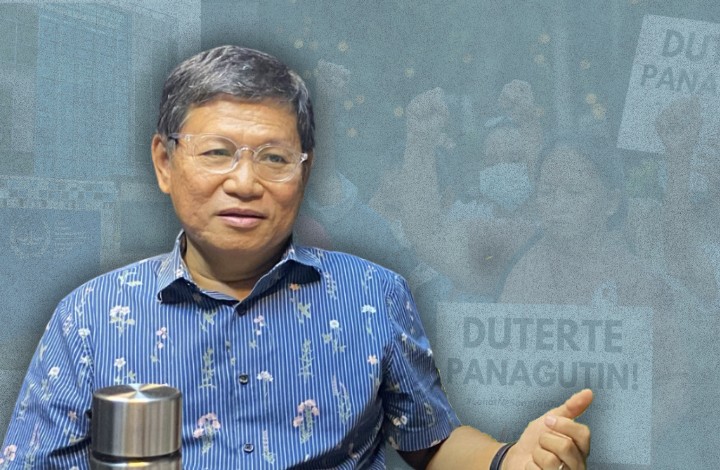
In more than three decades of practicing law, Joel Butuyan says he still feels a flicker of nerves before stepping into a courtroom.
That familiar feeling has followed him all the way to The Hague, where he now represents victims before the International Criminal Court in the high-profile case against former president Rodrigo Duterte.
“Nandun lagi ang kaba,” he said with a shy smile. “Parang ‘yung nagpe-perform na mga singers na hindi nawawala ‘yung kaba nila on stage.”
The nerves, he says, never really disappear. “It’s an integral part of the job na talagang kakabahan ka every time.”
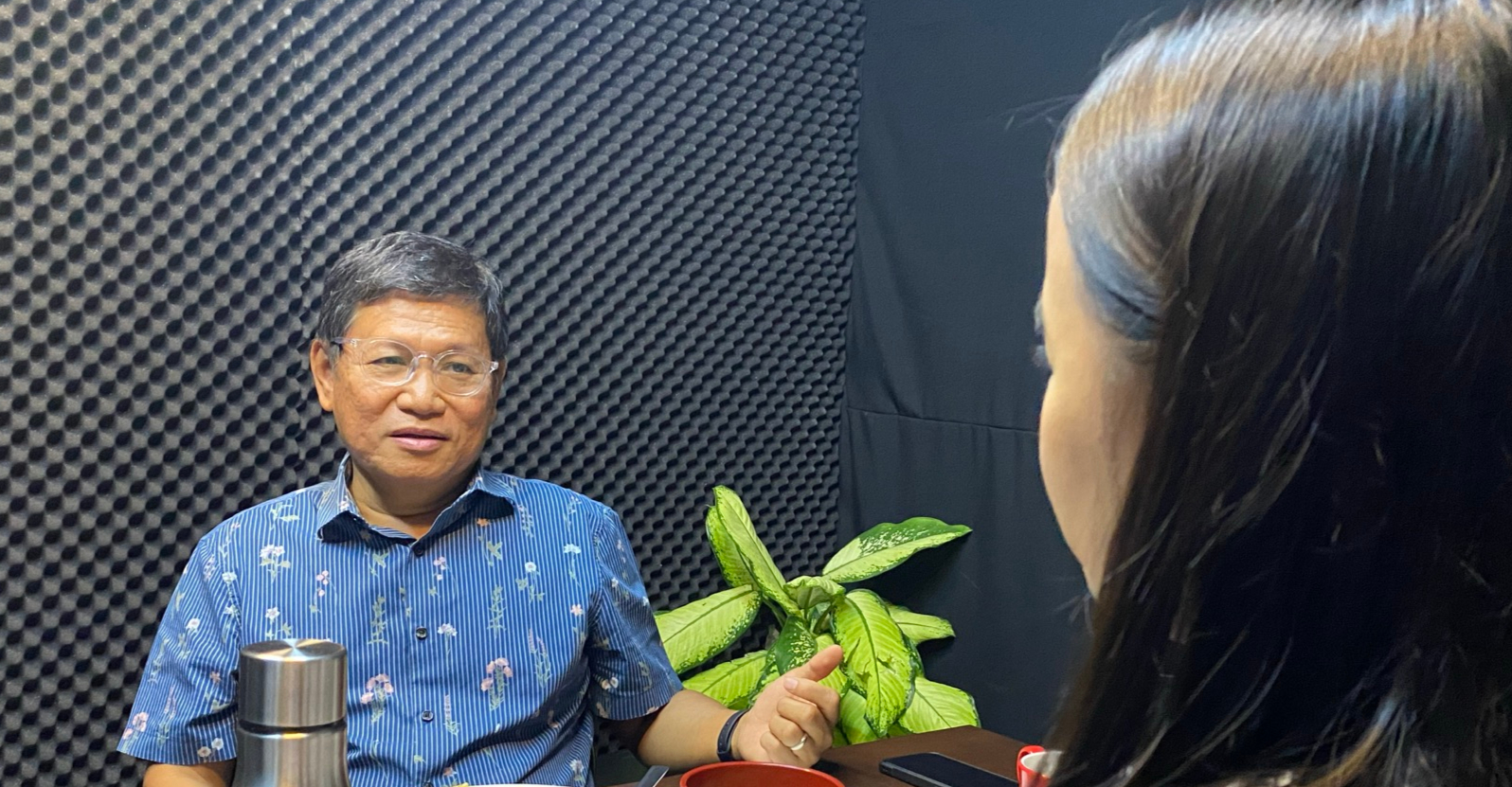
Nothing in his appearance, however, suggests the weight he carries. Butuyan has an easy manner and a light, unassuming presence. On one recent day, he wore a blue striped polo with small floral prints, washed black pants and transparent-framed eyeglasses—an understated figure for a lawyer working on one of the most consequential cases in Philippine history.
But the responsibility is immense.
On Jan. 26, Butuyan was appointed one of the Common Legal Representatives of Victims, alongside lawyer Gilbert Andres of the Center for International Law and Paolina Massidda, head of the ICC’s Office of the Public Counsel for Victims.
Their task is to ensure that the interests, views and concerns of the victims are heard throughout the proceedings.
“I felt the weight of responsibility,” Butuyan recalled. “Oh my gosh, totoo na pala ito.”
Once appointed, he said, the victims’ stories pass through their lawyers:“It’s going to be your responsibility to get their stories.”
A blank page
The weight of that responsibility became painfully real as he prepared for the pre-trial hearing last February.
For three weeks, Butuyan stared at a blank page, unable to write an opening statement that could capture what the families of drug war victims wanted to say.
Then he went back to the source.
“I read all of them—or most of them—because I wanted to internalize everything,” he said, referring to the victims’ statements. “Ano ba ‘yung gusto iparating ng mga victims?”
Only then did the words come.
His statement opened with the victims’ lament over Duterte’s absence from the courtroom after the ICC granted the former president’s request not to attend the confirmation-of-charges hearing.
“The sight of Mr. Duterte being read and being confronted with the grave and horrible charges against him would have constituted a vital component of justice for the victims,” Butuyan told the court.
He ended with an appeal to the judges to honor “the sacrifices of our ancestors who bequeathed to us the right to life.”
“We owe it to them to defend the supreme legacy for our generation and for the generations to come.”
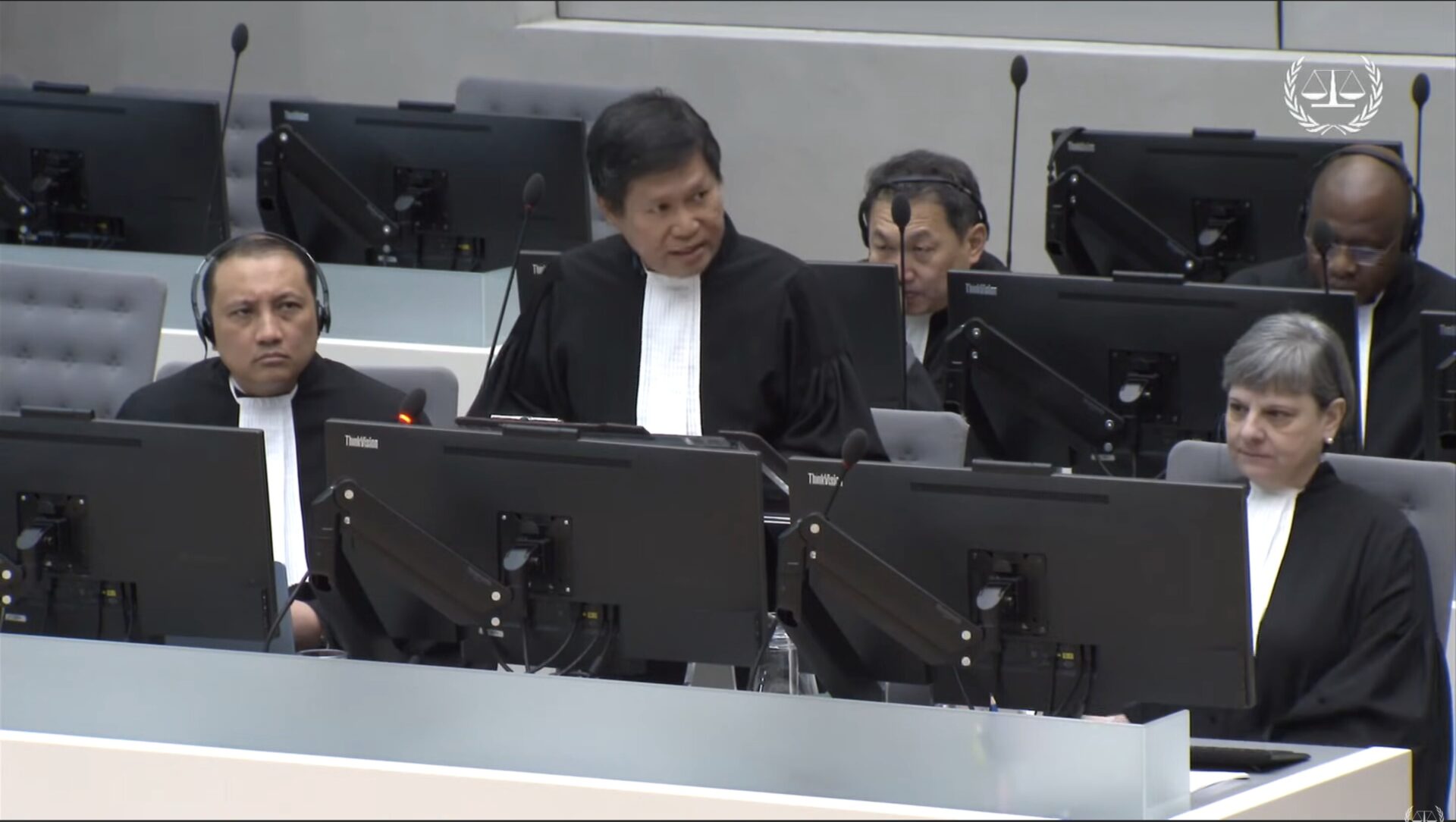
The words moved many in the courtroom to tears. Months later, when he returned to the Philippines, strangers still recognized him for that speech.
“I get amazed,” he said. “Parang… wow! Ganun pala ‘yung power ng words kapag naka-connect ka. Talagang it resonates deeply.”
The stories began long before The Hague
Butuyan’s work with drug war victims did not begin at the ICC.
In 2017, he was among the lawyers who filed a petition for a Writ of Amparo for the lone survivor , Efren Morillo, and families of the four civilians who were killed in a tokhang operation in Payatas, Quezon City. The Supreme Court granted the petition and ordered a one-kilometer protective perimeter around the homes and workplaces of the victims’ families.
Eight months later, Butuyan and his colleagues sought similar protection for residents of 26 villages in San Andres Bukid, Manila, where communities had been gripped by brutal killings allegedly involving policemen.
Those cases brought him face to face with families living in fear and struggling to make sense of sudden, violent loss.
Now, before an international court, the victims are seeking justice, reparations and, perhaps most fundamentally, the truth.
Carrying grief, but not drowning in it
Before Butuyan can represent victims in court, he must first absorb their stories—their grief, anger and loss.
“Even now, 10 years after, they are still crying when they talk about their loved ones,” he said.
Those conversations keep him going.
There are days when he wakes at 3 a.m. to pore over thick stacks of testimonies and documents, searching for details that can strengthen the victims’ case.
But he has learned that empathy requires limits.
“It’s a balancing act,” he said. “You have to internalize their narratives because you need to distill them and come up with your strategy and advocacy. But at the same time, you also have to distance yourself, kasi if you let it in your system, it will [eat you up].”
When the work becomes too heavy, Butuyan turns to art.
He regularly visits galleries and collects paintings by social realist artists whose work carries strong social and political themes. The CenterLaw office itself resembles a small gallery.
Even his escape, it seems, remains connected to the causes he has spent much of his life defending.
‘There was really no drug war’
Outside the courtroom, Butuyan confronts another challenge: a public narrative that, he says, still justifies violence.
Duterte’s influence remains strong in and outside the Philippines, and supporters, whom Butuyan calls “mini-Dutertes,” continue to defend the killings as a legitimate answer to the country’s problems.
For him, the struggle over what happened is also a struggle over truth.
“The truth is still ambiguous for a lot of Filipinos because of disinformation, because of the narrative of the Dutertes,” he said. “So there’s really a chance to uncover the truth.”
Then he put it more starkly.
“Kasi Duterte said there was a drug war. There was really no drug war. There was really a massacre.”
For the families, the pursuit of justice is inseparable from the losses left behind.
Many lost breadwinners. Children dropped out of school. Some families were forced to move to survive. Reparations, Butuyan said, are also about recognizing the lives and futures shattered by the killings.
“I think the Philippines has been going through a cycle of leaders who really violate the fundamental rights of their constituents,” he said. “And this has got to stop.”
Back to court
The full courtroom battle is only about to begin.
In November, Butuyan is expected to return to the halls of the ICC for the trial that will determine whether Duterte is guilty of the crimes alleged against him.
He will probably still feel nervous.
After more than 30 years as a lawyer, that has not changed.
But the unease no longer seems to be the point. It is simply part of the work, part of standing before a court and trying to find the right words for people whose voices might otherwise go unheard.
For Butuyan, the task is clear: to carry the victims’ stories, with all their grief and anger, toward a reckoning years in the making.
And when he steps into the courtroom again, the nerves will be there.
So will the stories.