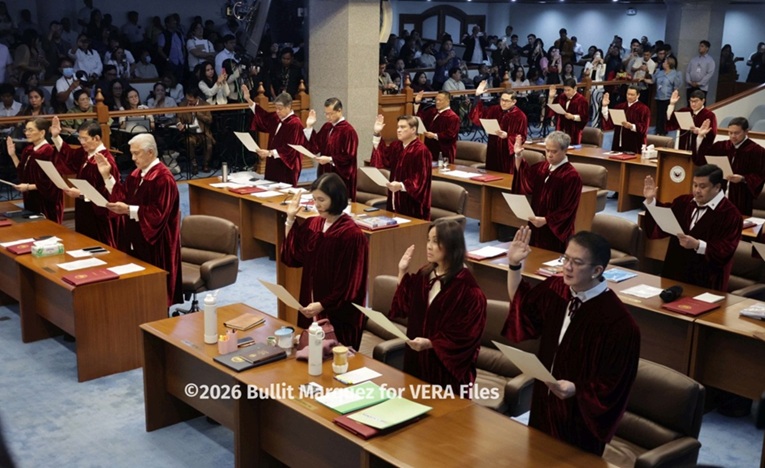
The Senate impeachment court emerged from Week 10 of Vice President Sara Duterte’s trial facing two questions that could shape its outcome: whether the evidence shows that confidential funds were misused or misappropriated, and how many votes will ultimately be needed to convict her.
The court’s decision to revisit the constitutional two-thirds voting requirement came as the prosecution streamlined its case, dropping 15 witnesses on the alleged misuse of P612.5 million in confidential funds while reserving the right to call Duterte herself.
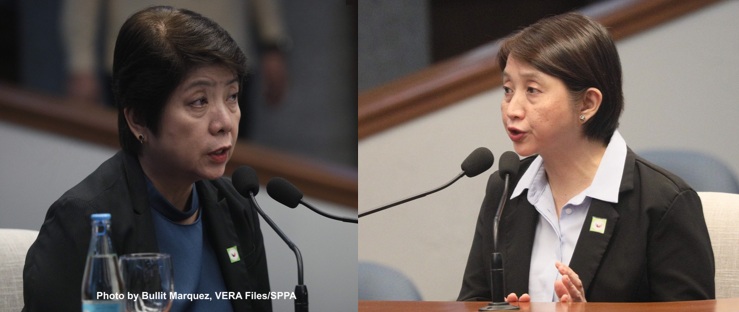
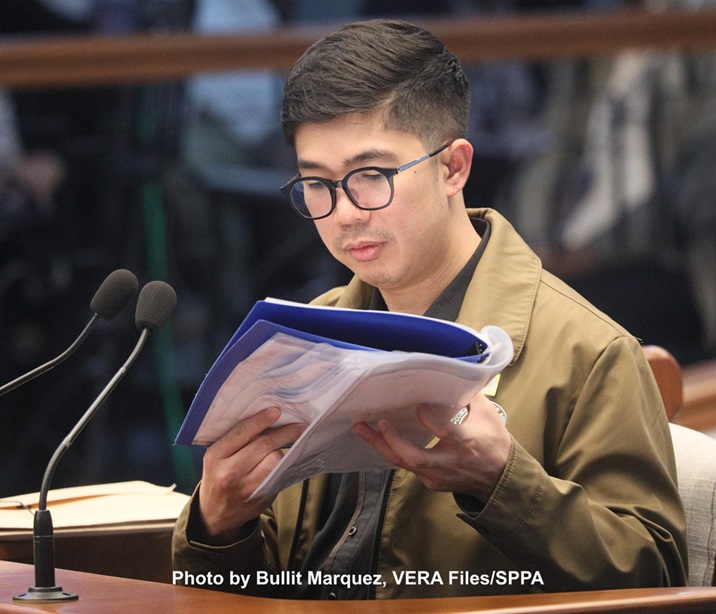
At the center of the week’s proceedings was the testimony of Philippine Statistics Authority Assistant National Statistician Marizza Grande, which raised fresh questions about thousands of unusual names listed as supposed recipients of confidential funds from the Office of the Vice President and the Department of Education.
Grande told the court on Monday, Day 22 of the trial, that 1,685 of 2,669 names submitted by the House committee on justice for verification had no corresponding birth, marriage or death records in the PSA’s Civil Registry System, about 63% of the names checked.

Babies, dead among ‘recipients’
The findings became more striking when PSA records showed that at least 37 names matched people who were already dead and 25 matched minors, including children as young as one year old when the payments were supposedly made.
One receipt, for instance, listed two one-year-old babies as receiving P400,000 each. Other records showed supposed recipients as young as about one year old and three years old receiving hundreds of thousands of pesos.
The testimony gave the prosecution one of its strongest pieces of numerical evidence so far, supporting its argument that the confidential fund liquidations contained fictitious or questionable recipients.
But Grande also made an important qualification: the PSA could establish only whether names matched its civil registry records. The absence of a record did not, by itself, prove that a person did not exist.
Defense says unusual names were aliases
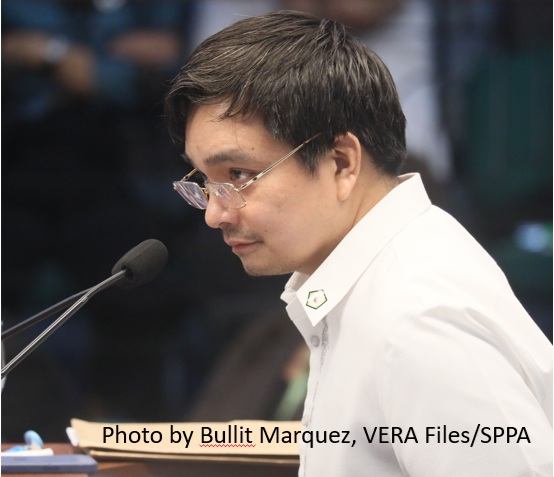
The defense offered another possible explanation: that some of the unusual names were aliases used to protect confidential informants. Defense counsel Justin Gular said the names were “in fact, aliases” when questioned by Senator-judge Risa Hontiveros. That was the first time the defense team acknowledged that the sometimes funny names were aliases, and that they would present their arguments when their time comes.
Private prosecutor Mae Divinagracia objected to the admission, arguing it was late in the proceedings to adopt the alias theory, while the defense maintained that the burden of proof remains with the prosecution.

An alias would naturally fail to match a person’s birth, marriage or death record. The prosecution therefore still has to show that the names and supporting documents were used to conceal or falsely represent the actual recipients of public money.
Even so, the scale of the discrepancies was difficult to ignore. Grande said only about 7% to 8% of names typically yield negative results in other verification exercises, compared with roughly 63% in the Duterte-related lists.
The court also heard that different supposed recipients appeared to have identical handwriting and signatures. Senator-judge Raffy Tulfo questioned why supposedly separate confidential informants would appear to have signed documents in the same handwriting.
Taken together, the testimony moved the issue beyond irregular paperwork to a more consequential question: Who actually received the money?
The key test for the court will be whether it considers the PSA findings evidence of fabricated or fictitious recipients, or records that can reasonably be explained by aliases and the limits of civil registration.
Either way, the testimony has made the confidential fund allegations harder to dismiss as a mere dispute over documentation. The impeachment court is being asked to determine whether the names on the receipts corresponded to real recipients and, ultimately, whether public money actually reached them.

Kapunan casts VP Sara as ‘queen’ of confidential funds
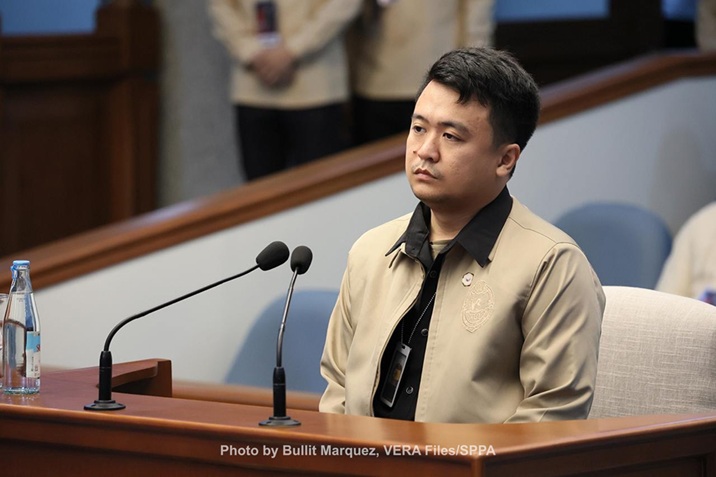
Private prosecutor Lorna Kapunan argued that the evidence ultimately points to Duterte as the person accountable for the confidential-fund transactions.
Kapunan used a chessboard analogy, saying the “pawns,” “castles,” “horses” and “bishop” all pointed toward the vice president. In effect, she cast Duterte as the “queen”—the central figure to whom the transactions and witnesses eventually led.
The metaphor was also a tactical response to the court’s earlier warning against inflammatory terms such as “scam,” “mastermind” and “illegal.” Instead, Kapunan used the chessboard to argue that the testimony established a pattern and a chain of accountability.
The prosecution now intends to reserve Duterte herself as a possible witness after presenting all four impeachment articles.
The defense objected, arguing that compelling Duterte to testify would violate her constitutional protection against self-incrimination.
Lead counsel Sheila Sison said Duterte was already participating in the proceedings through her lawyers and could not be forced to become a witness against herself.
The issue could become the next major legal fight in the trial.
Two-thirds vote in question
At the same time, the impeachment court opened another constitutional question with potentially greater consequences: How many senators must vote to convict?
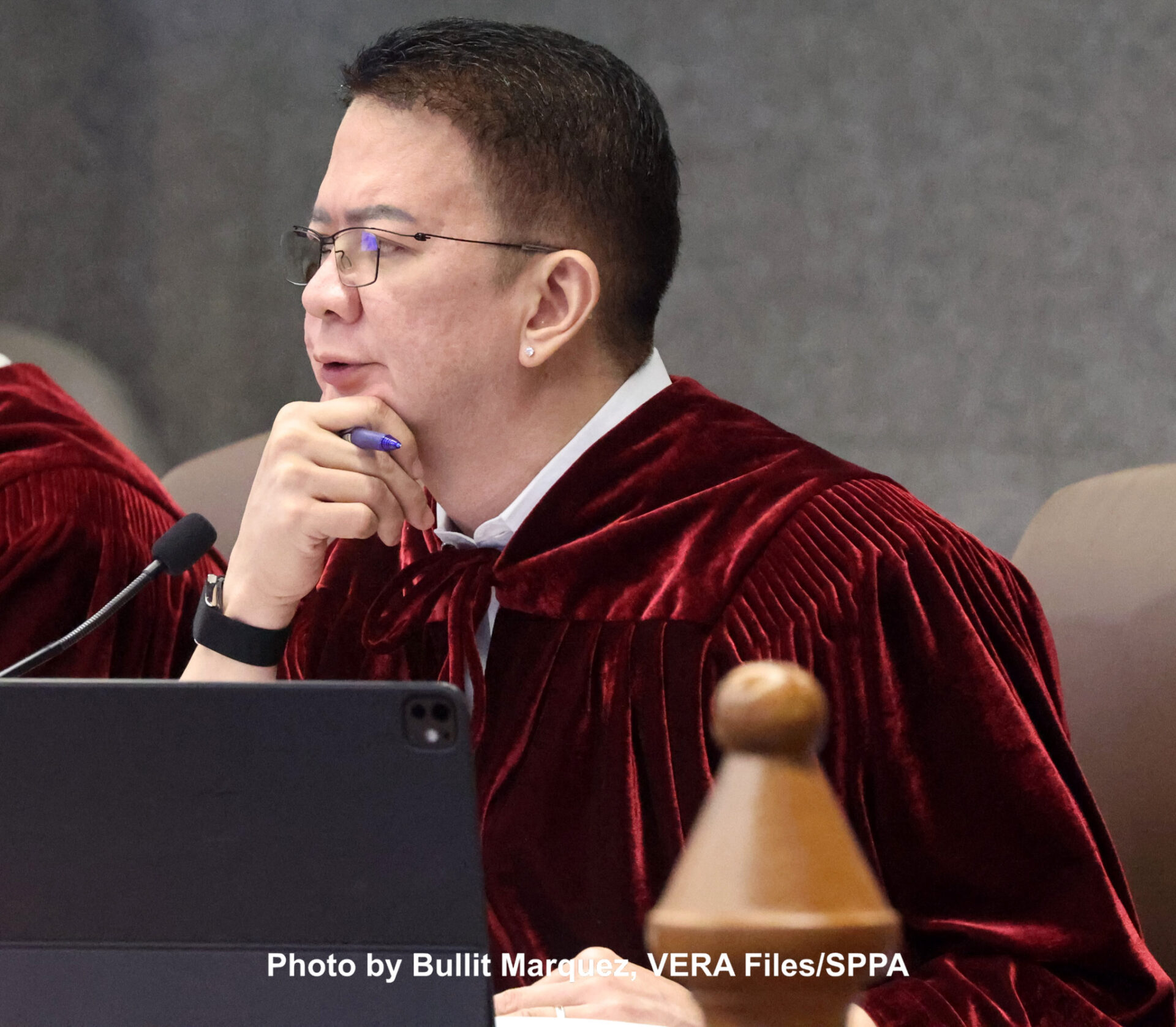
Presiding Officer Francis “Chiz” Escudero ruled in July that conviction requires 16 votes, or two-thirds of all 24 senators.
But Senator-judge Erwin Tulfo asked the court on Tuesday to reconsider the ruling because four senators are currently unable to participate in the proceedings.
They are Jinggoy Estrada and Rodante Marcoleta, who are detained over nonbailable cases; Ronald “Bato” dela Rosa, who is in hiding; and Loren Legarda, who is on extended medical leave.
The dispute centers on the constitutional requirement for the concurrence of “two-thirds of all the members of the Senate.”
One interpretation holds that the denominator remains 24 because all senators remain members of the chamber. Another argues that only senators legally capable of participating as impeachment judges should be counted.
The court will hear legal experts and amici curiae on Sept. 16, followed by oral arguments from the prosecution and defense on Sept. 23. The senator-judges are expected to vote on the threshold question after the arguments.
On Thursday, the court named (photo below from top left to right) retired Chief Justices Reynato Puno, Hilario G. Davide Jr., and Artemio Panganiban, and retired Associate Justice Adolfo Azcuna as amici curiae, or friends of the court, to advise it on whether the 16-vote requirement should be revisited in light of the nonparticipation of four senator-judges.

The issue is more than constitutional arithmetic. If the voting base changes, the number required for conviction could change as well, potentially altering the mathematical path to either conviction or acquittal.
Trial speeds toward December
Senate President Sherwin Gatchalian said Wednesday that the proceedings could be completed and voting held by December, following the prosecution’s decision to drop 15 witnesses and indications that the defense could also shorten its witness list.
The Senate plans whole-day impeachment sessions on several dates in October, allowing two or three witnesses to testify in a single day when possible.
Gatchalian’s December target is ambitious, but it reflects a clear shift. After weeks of testimony and procedural disputes, the impeachment court is moving toward a compressed schedule in which the remaining evidence, the defense case and the rules governing the final vote will increasingly converge.
That leaves Duterte with a narrowing strategic window. The prosecution has completed its presentations on confidential-fund misuse and alleged threats against President Ferdinand Marcos Jr. It is expected to move next to unexplained wealth and bribery as Week 11 begins on Monday.
For next week, the prosecution has asked the court to subpoena three witnesses: retired Sandiganbayan Presiding Justice Amparo Cabotaje-Tang, who is expected to testify on public accountability and integrity in public office, including mechanisms for addressing undisclosed or unexplained wealth and prohibited business interests; Karen Batu, officer-in-charge of the Office of the Ombudsman Records Division, on Duterte’s statements of assets, liabilities and net worth; and Gerardo del Rosario, director of the Securities and Exchange Commission’s Company Registration and Monitoring Department, to authenticate and identify SEC records involving companies registered in Duterte’s name.
The trial is entering a phase where the evidence and the mechanics of conviction may become equally decisive.