

The people were still in a post-holiday mood – relaxing and heaving a sigh of relief with the de-escalation of the U.S.-Iran conflict – which could have endangered relatives working in the Middle East.
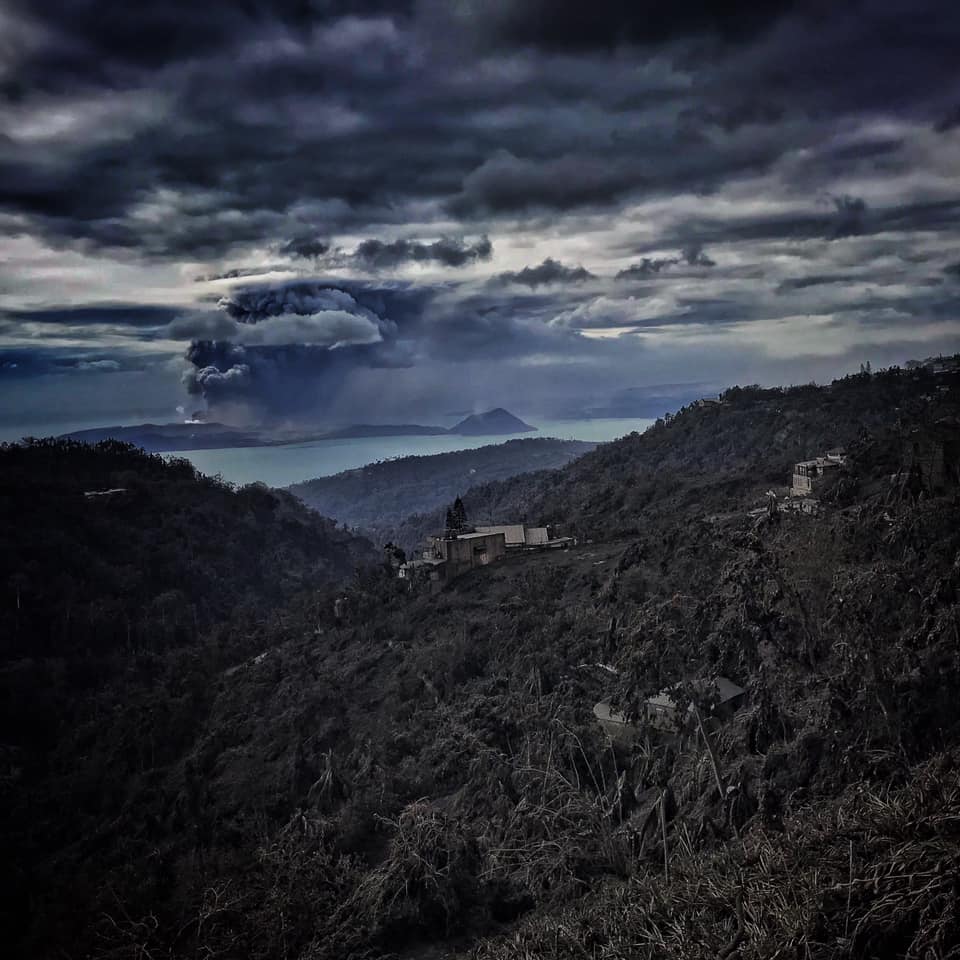
Then, mid-afternoon Sunday, residents of Batangas were startled when Taal Volcano, which has been quiet most of the time for more than four decades – suddenly rumbled and spewed ashes that enveloped nearby towns and cities and reached even as far as Quezon City and Antipolo.
Thousands of families living near the volcano had to evacuate.
While the people were surprised, Renato Solidum, chief of the Philippine Institute of Volcanology and Seismology (PHIVOLCS) said Taal was actually showing signs of unrest as early as March last year.
Immediately, PHIVOLCS raised Alert Level 2, at 2:30 pm, Sunday, warning the people of “moderate unrest that could lead to eruption.”As of Tuesday, Alert Level 4 was still up.
Taal, which now has 34 recorded historical eruptions, had its last eruption on October 3, 1977.
PHIVOLCS advised affected populations to protect “their mouths and noses using N95 grade face masks or wet cloth or towel.”