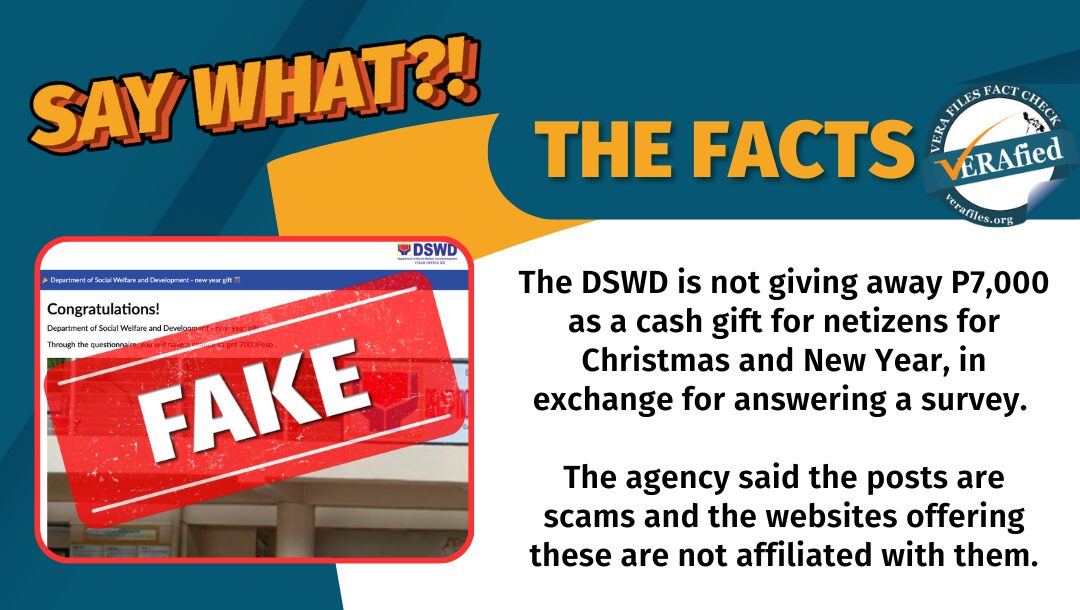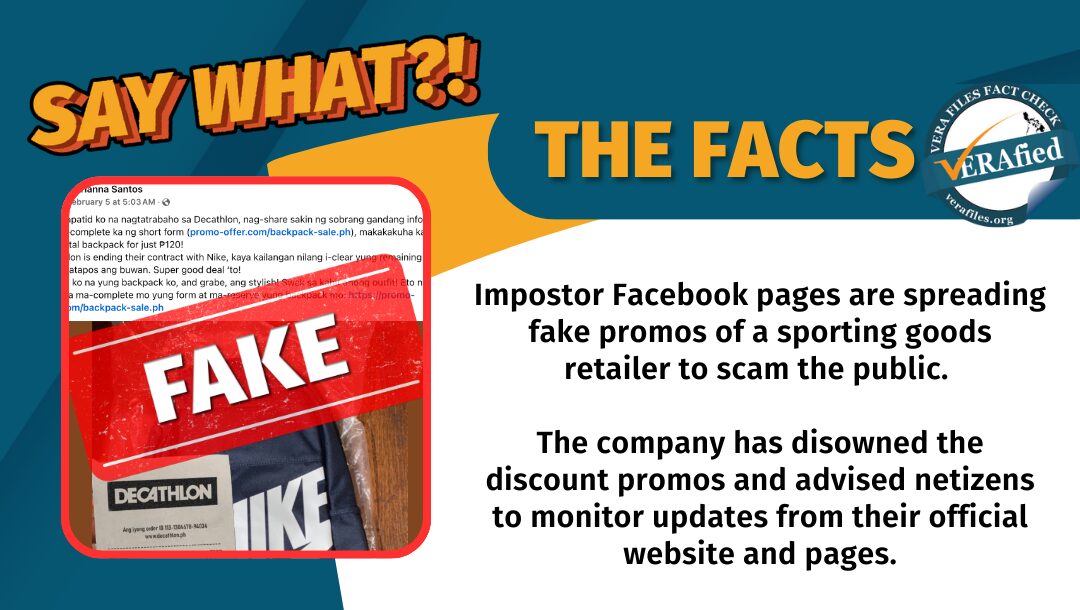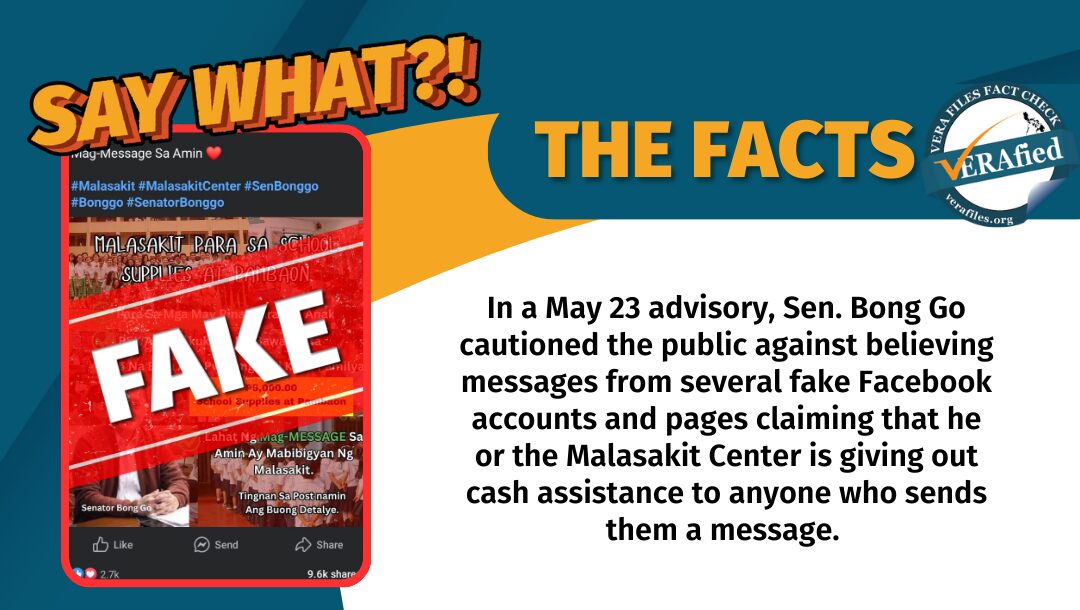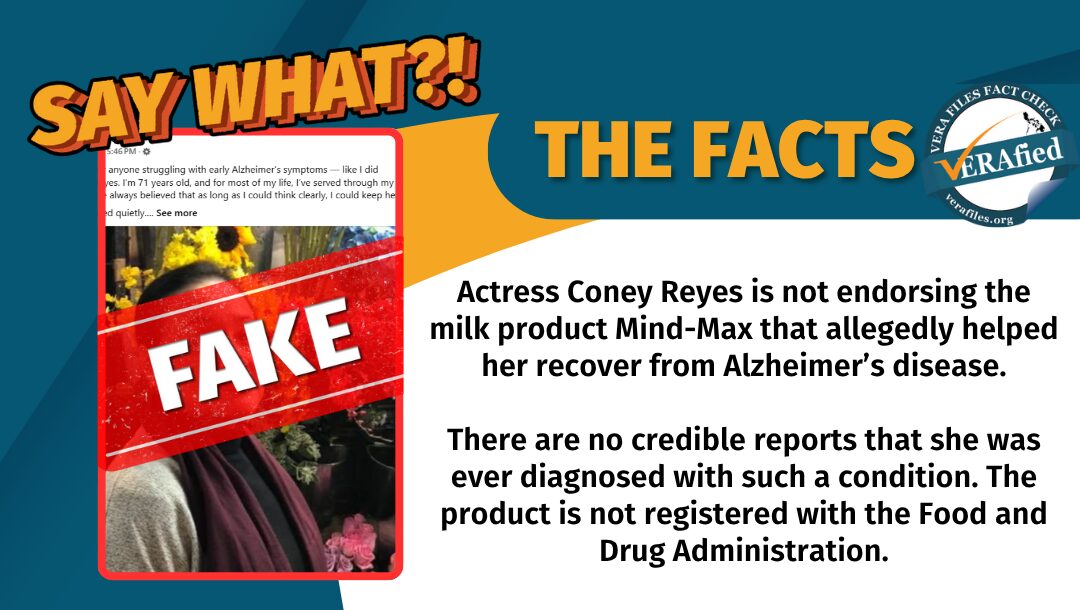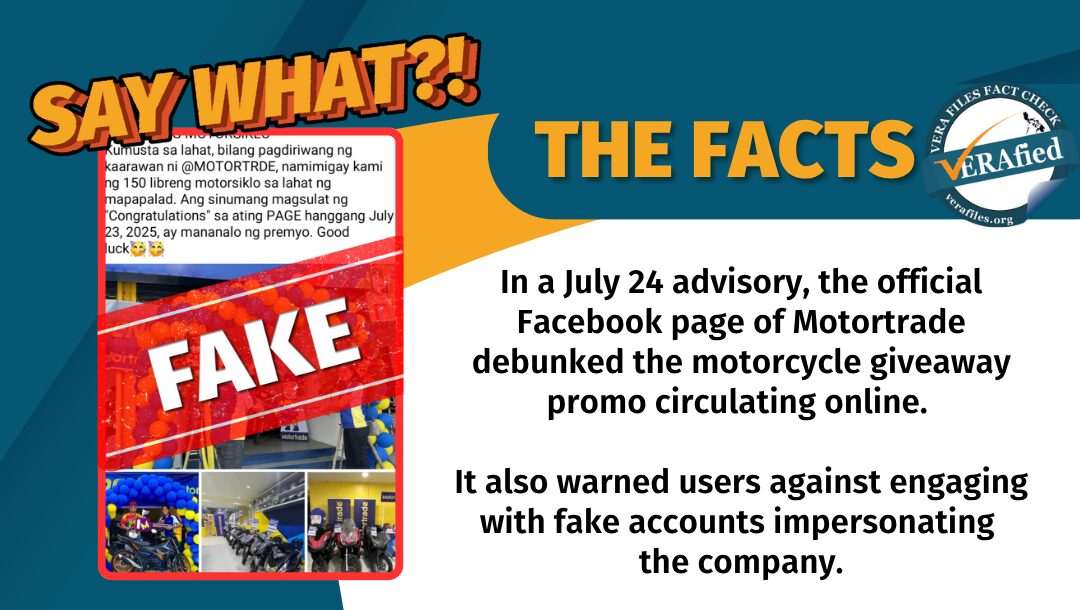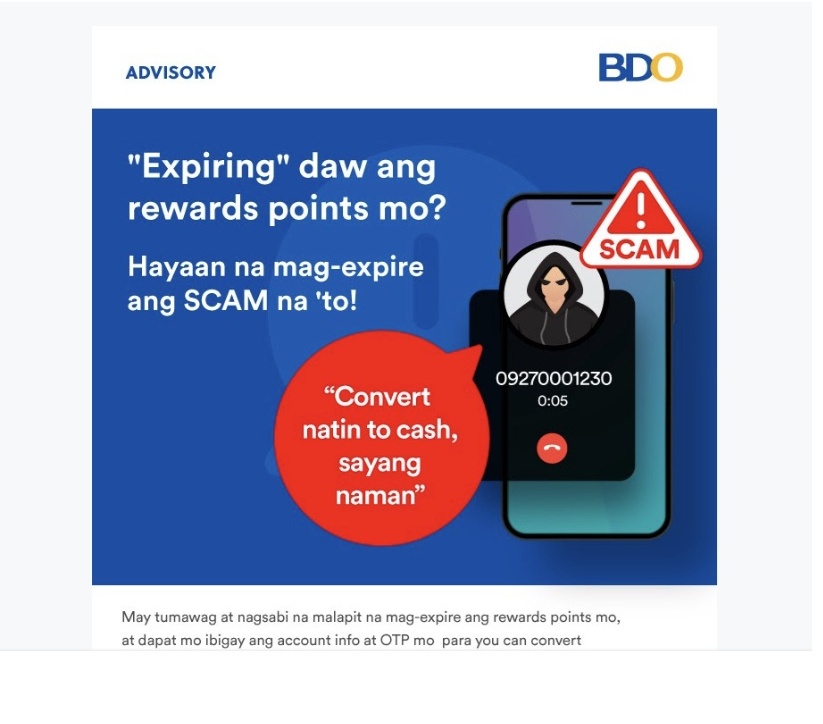

I was nearly scammed recently, which would have resulted in the scammer getting access to my credit card.
Friday afternoon last week, I got a message saying my credit card points were supposed to expire that day and that I could choose an equivalent gift from its product catalog.
A sucker for freebies, I clicked on the link and chose something. I was jolted from my state of stupidity when it asked for my credit card CVV (card verification value). All those anti-scam reminders that came through texts and emails had been retained by my brain, and it sent out a warning alert. Thanks, God.
I get scam attempts several times a week, in various ways. The “dugo-dugo” tactic is still being used. My sister-in-law got a call from a man saying he was calling on my behalf because I had figured in an accident and was brought to the hospital. He gave instructions on where to bring the money.
My sis-in-law told the caller she knew about their scam. He immediately ended the call.
Yesterday, I got a call asking if I was his wife’s gynecologist. I said, “I’m not a doctor.” He asked, “Who are you?” I said, “Who are you calling, in the first place?” and ended the call.
He texted me saying his wife was bleeding and asked for financial help. I ignored it.
The numbers are alarming
A State of Scams in the Philippines study conducted last year by The Global Anti-Scam Alliance (GASA), a non-profit organization whose mission is to protect consumers worldwide from scams, revealed that over three quarters (77%) of Filipinos had encountered a scam in the last 12 months, with an average of one scam encounter every two days. That translates to an average of 239 scam encounters per person, per year.
With that frequency, one may be fortunate to escape a scam once or twice, but the possibility of getting victimized remains high.
The same study showed that 65% of Filipinos were scammed last year.
So, what is a scam?
The United Nations Office on Drugs and Crime (UNODC) describes it as an intentional deceptive scheme where criminal actors use manipulation, false promises, or impersonation to trick individuals or entities into stealing funds or sensitive personal data from unsuspecting victims.
In the GASA Philippine study, the top two platforms where scam encounters occur are Facebook (73%) and Telegram (41%). The most common form of scam is investment scams. Most commonly, money is scammed through digital/e-wallets (74%).
The same report put the estimated amount lost in the last 12 months at ₱280 billion, from Q1 2024 to Q1 2025.
“These losses devastate households, strain economic stability, and undermine confidence in digital finance,” the report said. They also cause severe emotional and mental stress to victims.
Scams have no borders
Scams also do not observe geographical boundaries.
The United Nations Human Rights Office, in its report released last February, exposed the horrifying inhumanity in what it calls scam farms in Southeast Asia. “Experts have highlighted that the cybercrime operations in South-East Asia have taken on industrial proportions, with some single scamming sites reportedly containing many thousands – and up to tens of thousands – of workers at one time,” the report said.
Victims described being lured into scamming jobs under false pretenses and then being coerced into perpetrating online fraud, ranging from impersonation scams and online extortion to financial fraud and romance scams.
“The treatment endured by individuals within the context of scam operations is alarming,” the report said, based on interviews with survivors from Bangladesh, China, India, Myanmar, Sri Lanka, South Africa, Thailand, Viet Nam and Zimbabwe. They had been trafficked into scam centers in Cambodia, Lao People’s Democratic Republic, Myanmar, the Philippines and the United Arab Emirates between 2021 and 2025.
News reports last July quoted migration authorities saying that online scam centers in East Asia remain active. The UN says some 300,000 people from more than 80 countries are currently being exploited and abused.
We don’t even have the data
In the Philippines, government efforts have been scattered and lack the most basic element in finding a solution to a problem: data.
Jocel de Guzman, co-founder of Scam Watch Philippines, said, “The Philippines does not have centralized scam data, which means we still cannot confidently answer basic questions about the true scale of the problem.”
The other day, however, there was one positive development in efforts to rationalize anti-scam efforts: Information and Communications Technology Secretary Henry Aguda said in a DZMM talk show that his department is adopting the Scam Watch Pilipinas Anti-Scam Quad Model as the national anti-scam education and awareness strategy.
De Guzman, who was also on the radio talk show, said this decision by Aguda will provide a unified framework for building anti-scam behavior and strengthening community participation in scam prevention.
The Philippine Anti-Scam Quad Model is a first-of-its-kind framework that combines behavioral change campaigns, volunteer-driven community action, multi-sector collaboration and technology-enabled reporting.
Giving people the tools to fight back
It empowers citizens through the 1326 national anti-scam hotline operated by the Cybercrime Investigation and Coordinating Center, the eGovPH app’s eReport tool, Scam Vault PH and the Whoscall app powered by Gogolook.
“This holistic approach equips communities to defend themselves against scams while enabling government and institutions to respond swiftly with intelligence-driven action,” De Guzman said.
He added that the Quad Model has already been tested on the ground in the Philippines through major nationwide campaigns. #HolidayWatchPH warned consumers about the “12 Scams of Christmas,” #UnMatchPH profiled romance scams during Valentine’s season, and #OnlineBantayLakbay raised awareness about fake bookings and phishing during peak travel months.
The Anti-Scam Quad Model was ranked as one of the top two best Scam-Fighting Awareness Campaigns in the World at the 2025 GASA Scam Fighter Awards in Singapore.